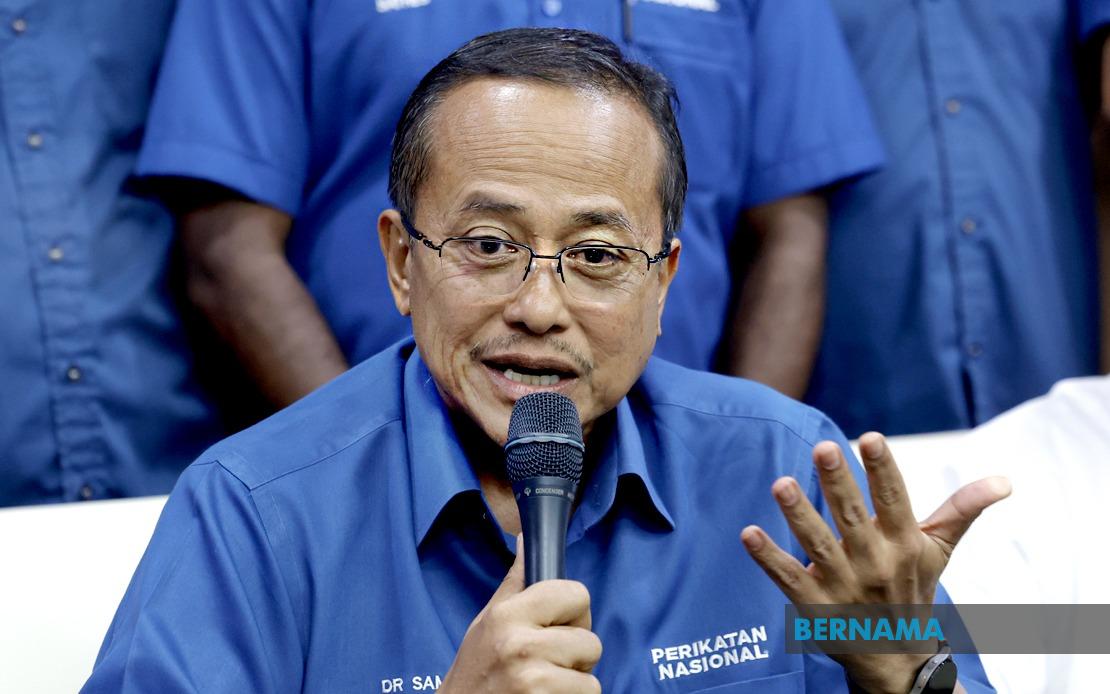
Perikatan Nasional has signalled its readiness to enter into substantive discussions with Barisan Nasional regarding a potential coalition arrangement for the forthcoming Melaka state election, according to the opposition coalition's chairman. The overture, made by Datuk Seri Dr Ahmad Samsuri Mokhtar at an event in Taiping on Thursday, represents a significant shift in political positioning as both coalitions weigh their electoral strategies ahead of polling day. While no formal negotiations have commenced between the two major political groupings, PN's leadership has made clear that a window of opportunity remains open, contingent on the timing of the state assembly's dissolution.
Ahmad Samsuri emphasised that the absence of prior discussions does not preclude meaningful talks, provided that negotiations occur before the Melaka State Legislative Assembly is officially dissolved. Speaking after his address to the 23rd Perak PAS Convention at Hotel Perdana Taiping, the PN chairman indicated that his coalition stands prepared should BN initiate dialogue on the subject. This positioning reflects a pragmatic approach to electoral mathematics, where neither coalition may command sufficient legislative seats independently to secure control of the state government.
The timing of this announcement carries particular significance for regional politics in the southern Selangor corridor. Melaka, as a traditionally BN stronghold that has undergone considerable political flux in recent years, represents crucial strategic territory for both coalitions. The state's relatively compact voter base and recent electoral history demonstrate the volatility that can emerge when established political structures face challenges from resurgent opposition forces. For PN, which operates primarily from an opposition platform nationally, a state-level victory through cooperative arrangements would constitute a meaningful political breakthrough.
Ahmad Samsuri presented a compelling case for collaboration, arguing that joint PN-BN positioning offered approximately 75 per cent probability of capturing government control in the state election. This statistical assessment reflects a detailed mathematical analysis of current voter distribution patterns and likely electoral outcomes under various scenarios. The calculation suggests that while neither coalition may independently guarantee a winning position, their combined strength would substantially exceed the arithmetic requirements for state government formation. Such analysis drives the logic behind PN's overture, as the alternative of contesting separately could fragment anti-incumbent support and benefit other political actors.
However, Ahmad Samsuri also articulated the considerable political complexities inherent in pursuing such cooperation. In carefully measured language, he acknowledged that the pathway toward coalition government would be neither straightforward nor free from obstacles. The PN chairman likened the prospective journey to a challenging terrain rather than a well-maintained thoroughfare, warning that achieving the stated objective would demand substantial tolerance, patience, and careful strategic judgment from all participating parties. These comments hint at the philosophical and programmatic differences that have historically divided PN and BN, differences that cannot be simply swept aside despite the attractive mathematics of cooperation.
The potential transformation from opposition to governing coalition represents a substantial reorientation of PN's political trajectory. Currently operating in opposition at the national level, Melaka offers the coalition a crucial opportunity to demonstrate governance capacity and administrative competence. Control of a state government would provide resource advantages, patronage opportunities, and enhanced credibility in bargaining with other political forces. These considerations animate PN's willingness to engage in what would constitute a significant strategic compromise with its long-time rival BN.
From BN's perspective, the overture from PN carries mixed implications. While the coalition would benefit from PN's electoral support and activist mobilisation, collaboration would necessarily involve power-sharing arrangements and policy compromises that might alienate some traditional BN constituencies. BN must weigh whether the certainty of joint victory outweighs the political costs of accommodation with PN, particularly given residual tensions from their contentious recent political history. The coalition's response to PN's signals will reveal whether pragmatic electoral calculus can overcome deeper organisational rivalries.
The Malaysian political landscape has witnessed increasing fluidity in coalition arrangements at the state level, a pattern that reflects the fragmentation of the national political system since 2018. What once appeared as fixed, permanent political alignments have given way to more transactional, interest-based partnerships. Melaka's forthcoming election will test whether this trend toward coalition flexibility can extend to formal government-formation arrangements between historically antagonistic political forces. The precedent established here may influence subsequent electoral competitions in other states where power balances remain contested.
For observers in Malaysia and across Southeast Asia, this development underscores the pragmatic, flexibility-oriented nature of contemporary Malaysian politics. Unlike systems with entrenched party structures and ideological divisions, Malaysian political formations increasingly prioritise electoral victory and access to state resources over doctrinal consistency. PN's willingness to consider cooperation with BN, and the latter coalition's receptiveness to such overtures, demonstrates how political actors adapt strategies in response to evolving demographic and electoral realities. This adaptability, while sometimes frustrating to those seeking ideological clarity, reflects the complex pluralism of the Malaysian electorate.
The emphasis on timing in Ahmad Samsuri's comments carries particular weight. By insisting that serious discussions should occur before assembly dissolution, PN ensures that negotiations would take place under conditions of relative transparency and deliberation rather than rushed, last-minute arrangements that might provoke internal dissension. This procedural insistence suggests that PN leadership recognises the need to build consensus within its own membership and allied parties before committing to formal coalition arrangements. Premature announcement of cooperation could destabilise PN's internal cohesion, making the careful sequencing of political moves essential to success.
The path forward remains uncertain, dependent on whether BN leadership perceives mutual benefit in engaging with PN's overture. Should negotiations proceed, the resulting arrangements could reshape the political configuration of not only Melaka but potentially influence coalition calculations in other state governments. Should BN decline meaningful discussions, PN and BN would contest Melaka as separate entities, potentially fragmenting the opposition vote and creating openings for other political forces to capitalise on divided anti-BN sentiment. The coming weeks will prove decisive in determining which trajectory Malaysian politics follows.

