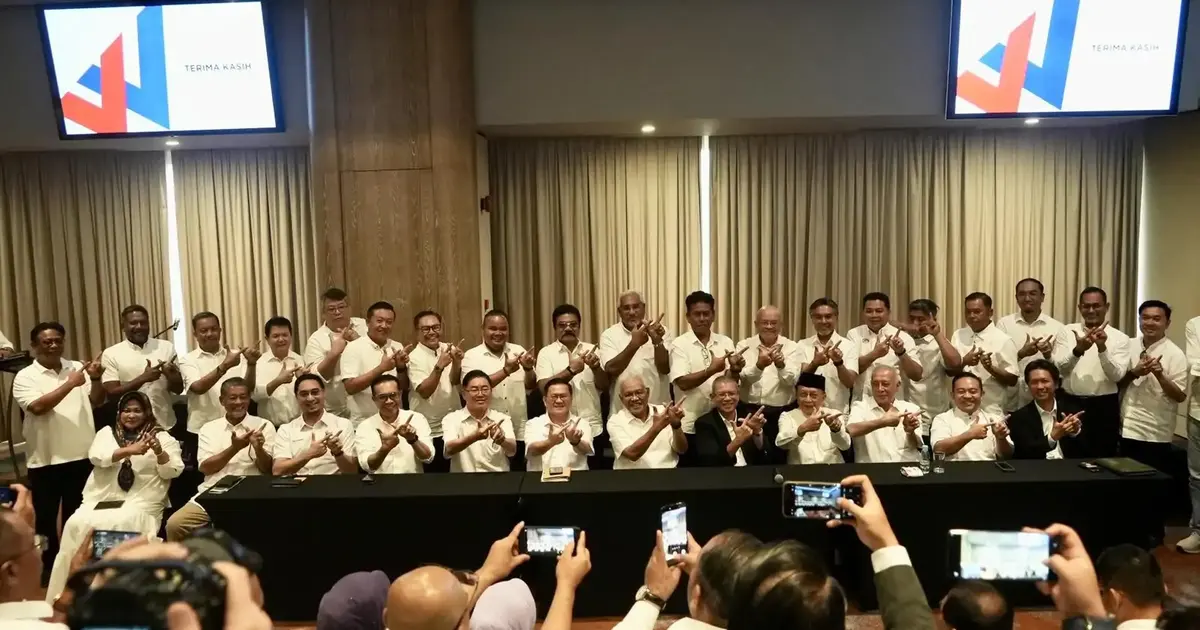
The leadership of Perikatan Nasional has moved to settle internal tensions surrounding the admission of Wawasan into the opposition coalition, with the election director confirming that the decision followed proper democratic procedure through a Supreme Council vote. Sanusi, serving as PN's election director, stated that while Bersatu's concerns have been acknowledged, the coalition's governing body ultimately approved the inclusion based on majority support among its members, lending legitimacy to a decision that had sparked debate within the broader alliance.
Wawasan's entry into Perikatan Nasional represents a significant shift in Malaysia's complex political landscape, where coalition formations often determine electoral viability and parliamentary influence. The admission process underscores how opposition alliances must navigate competing interests from constituent parties, each bringing their own strategic calculations and member bases to negotiations. For Malaysian voters attempting to understand the opposition's direction, such decisions about internal structure carry implications for how PN might govern should it return to federal power.
The acknowledgment of Bersatu's objections signals that the party, historically a key pillar of Perikatan Nasional, maintains substantial influence within coalition deliberations despite not securing its preferred outcome on this particular matter. Bersatu's reservations likely stem from concerns about internal influence dilution or ideological compatibility, considerations that become increasingly relevant as PN seeks to broaden its electoral appeal across different demographic segments. The willingness to formally record dissenting views suggests a coalition committed to internal transparency, though such public acknowledgment also highlights fissures that political opponents may seek to exploit.
The Supreme Council's decision-making process reflects established protocols within PN's governance structure, where major strategic questions are elevated beyond individual party leadership to collective deliberation. This approach theoretically prevents any single coalition member from unilaterally dictating direction, though execution of such agreements depends on sustained commitment from all parties involved. For Malaysian political observers, understanding these procedural elements matters because they reveal how opposition coalitions actually function beyond their public messaging.
Wawasan's integration into Perikatan Nasional likely serves multiple strategic purposes for the coalition's leadership. The inclusion could bring new constituencies or demographic supporters into the PN fold, potentially strengthening its appeal in regions where it previously held limited presence. Additionally, expanding the coalition's membership before elections creates an impression of growing momentum and broad-based support, messaging that opposition parties consistently emphasize when attempting to challenge incumbents.
The timing of this clarification suggests Sanusi sought to preempt further speculation about internal divisions that might undermine PN's public image as an increasingly cohesive force. Opposition coalitions in Malaysia face constant scrutiny regarding their stability and internal cohesion, with critics routinely suggesting that fundamental incompatibilities between member parties make unified governance impractical. By emphasizing the democratic legitimacy of the Supreme Council's decision, PN leadership attempted to reframe internal disagreement as normal deliberative process rather than fundamental crisis.
Bersatu's position within Perikatan Nasional has undergone substantial evolution since the coalition's formation, reflecting the party's own complex political journey and changing alliances. The party's willingness to express objections to Wawasan's admission, combined with its apparent acceptance of the majority outcome, demonstrates how established coalition members balance influence preservation with the need for unity on coalition-level strategy. For observers tracking Bersatu's political trajectory, this moment reveals how the party continues calibrating its role within larger political structures.
The precedent established through this Supreme Council vote may influence how future admission requests are evaluated within PN, potentially regularizing the process for incorporating additional parties or political formations. As Malaysian politics continues fragmenting into increasingly specialized political groupings, coalitions must develop mechanisms for integrating new members while maintaining internal stability. Sanusi's emphasis on majority voting suggests PN intends to operate through clear procedural rules rather than behind-closed-doors power negotiations.
For the broader Malaysian electorate, PN's management of internal disputes carries practical implications for whether the coalition can translate its current opposition status into effective governance should voters return it to federal office. Coalition partners who feel systematically overruled on significant decisions may eventually withdraw, fracturing the alliance and undermining its ability to govern effectively. Conversely, coalitions that successfully navigate internal differences while maintaining unity tend to govern more stably and pursue coherent policy agendas.
Wawasan's presence within Perikatan Nasional also signals PN's continued evolution as a coalition entity. Where previously PN largely comprised established parties like Bersatu, PAS, and others, the inclusion of formations like Wawasan suggests the coalition increasingly functions as an umbrella organization for diverse political actors dissatisfied with current federal arrangements. This expanding membership potentially strengthens PN's electoral reach while simultaneously creating management challenges rooted in ensuring diverse constituents feel adequately represented in coalition decision-making processes.
The clarification by Sanusi ultimately reaffirms Perikatan Nasional's intention to operate through democratic procedures at the coalition level, even when specific member parties express reservations about particular decisions. As Malaysian politics enters phases where multiple large coalitions compete for dominance, how effectively these organizations manage internal deliberation while maintaining public unity will significantly influence their electoral fortunes and governmental capacity.

