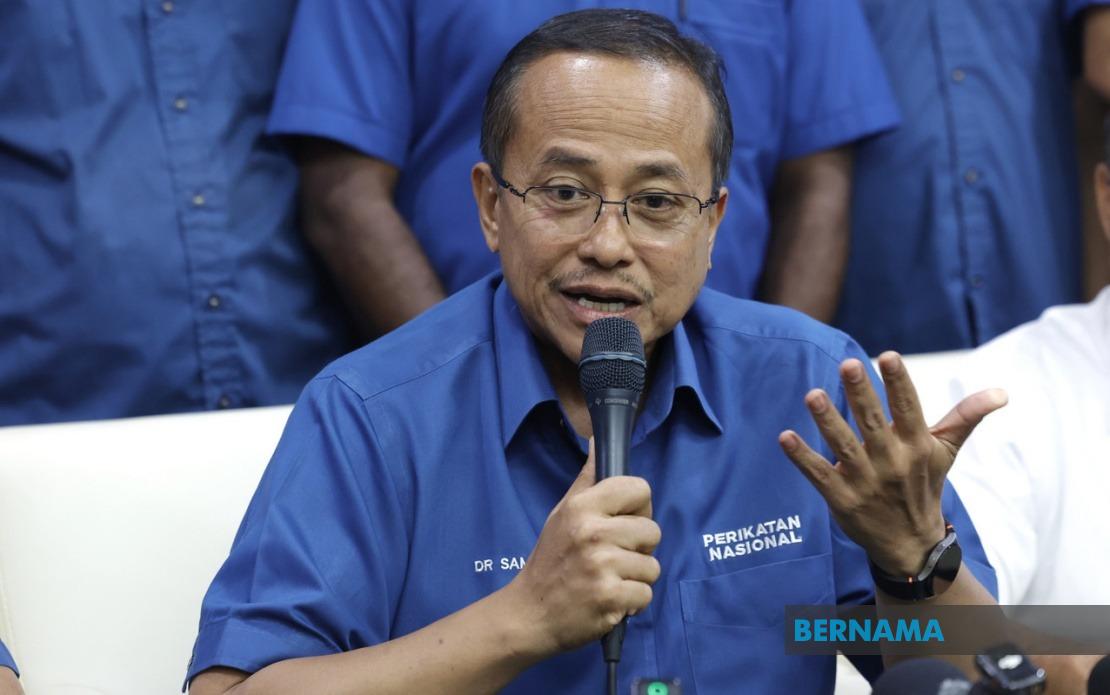
The Perikatan Nasional coalition has solidified its electoral strategy for the 16th Negeri Sembilan state election, with the Supreme Council formally endorsing seat distribution arrangements among its component parties and confirming that all candidates will campaign under the PN brand. The decision, announced by PN chairman Datuk Seri Dr Ahmad Samsuri Mokhtar following a special meeting in Seremban on July 16, represents a critical consolidation of the opposition alliance as it prepares to contest the state polls.
The seat allocation framework encompasses PAS, Gerakan, Wawasan, and MIPP—four parties whose combined representation will carry the Perikatan Nasional banner throughout the campaign. This unified presentation under a single coalition logo is strategically significant for Malaysian electoral politics, as it demonstrates PN's commitment to projecting a cohesive alternative to the incumbent administration. By consolidating the party identities into one visual and organizational symbol, the coalition aims to maximize voter recognition and facilitate smoother coalition governance should it secure victory.
Dr Ahmad Samsuri emphasised that the election participation reflects PN's broader vision for Negeri Sembilan's trajectory. The coalition framed its candidacy around championing public welfare, accelerating the state's development agenda, and safeguarding communal harmony in a pluralistic society. This messaging strategy targets multiple constituencies—emphasizing economic performance and governance quality alongside social cohesion, a combination that holds particular resonance in Negeri Sembilan, where Malay-Muslim voters constitute a substantial portion alongside significant Chinese and Indian communities.
The PN chairman's statement also served a secondary purpose: clarifying the decision-making process and his personal authority within the coalition structure. Dr Ahmad Samsuri underscored that all preliminary negotiations with partner parties were conducted with his explicit knowledge and approval, positioning himself as the central coordinating figure in PN's organizational hierarchy. This clarification appears designed to reinforce his leadership credibility and demonstrate effective coalition management to party members and voters alike.
However, the PN leadership's statement came directly in response to significant dissension within the broader opposition umbrella. Bersatu president Tan Sri Muhyiddin Yassin publicly contested PN's decision-making process, asserting that his party had been excluded from discussions regarding the seat allocation framework and any cooperation arrangements with Barisan Nasional. Muhyiddin's intervention introduced a critical fracture point within Malaysian opposition politics, revealing that consensus-building within the PN structure had faltered at a crucial juncture.
Bersatu's position reflects deeper strategic disagreements and organizational tensions that have simmered within the opposition coalition. Rather than accepting the collective decision, Bersatu opted for independent participation in the Negeri Sembilan contest using its own party symbol. This decision carries substantial implications for PN's overall electoral competitiveness, as Bersatu's withdrawal introduces vote-splitting risks and complicates coalition mathematics in contests where multiple opposition candidates might fragment support across competing non-government parties.
For Malaysian political observers, this rupture illustrates the structural vulnerabilities inherent in broad-based opposition coalitions. Unlike monolithic ruling alliances with established hierarchies and resource distribution mechanisms, opposition groupings frequently struggle to maintain cohesion across ideological divides and competing organizational interests. Bersatu's departure from the unified PN approach demonstrates how miscommunication, perceived marginalization, or genuine disagreement on electoral strategy can rapidly destabilize opposition unity.
The Negeri Sembilan election has assumed heightened significance within Malaysia's political landscape as a barometer of opposition organizational maturity and governing capability. Regional observers view state-level contests in strategically important states as testing grounds for national-level coalition viability. Negeri Sembilan's relatively manageable scale—with its concentrated electorate and established political dynamics—makes it a consequential microcosm for evaluating how effectively PN and its components can function as a coordinated political force.
From a Southeast Asian perspective, Malaysia's internal political realignment carries broader implications for regional stability and democratic governance patterns. Coalition dynamics, intra-opposition negotiations, and electoral outcomes in Malaysia influence broader perceptions of institutional strength and democratic competition across the region. The PN-Bersatu friction and subsequent independent contestation represent significant shifts in opposition organizational architecture that neighboring democracies monitor closely.
For Negeri Sembilan voters, these developments translate into expanded electoral choices but also potential confusion regarding opposition positioning and coordination. Voters must now navigate multiple opposition parties competing separately—PN components running under unified coalition branding alongside Bersatu's independent campaign. This fragmentation complicates voter decision-making and potentially advantages the incumbent administration if opposition votes splinter across competing non-government candidates.

