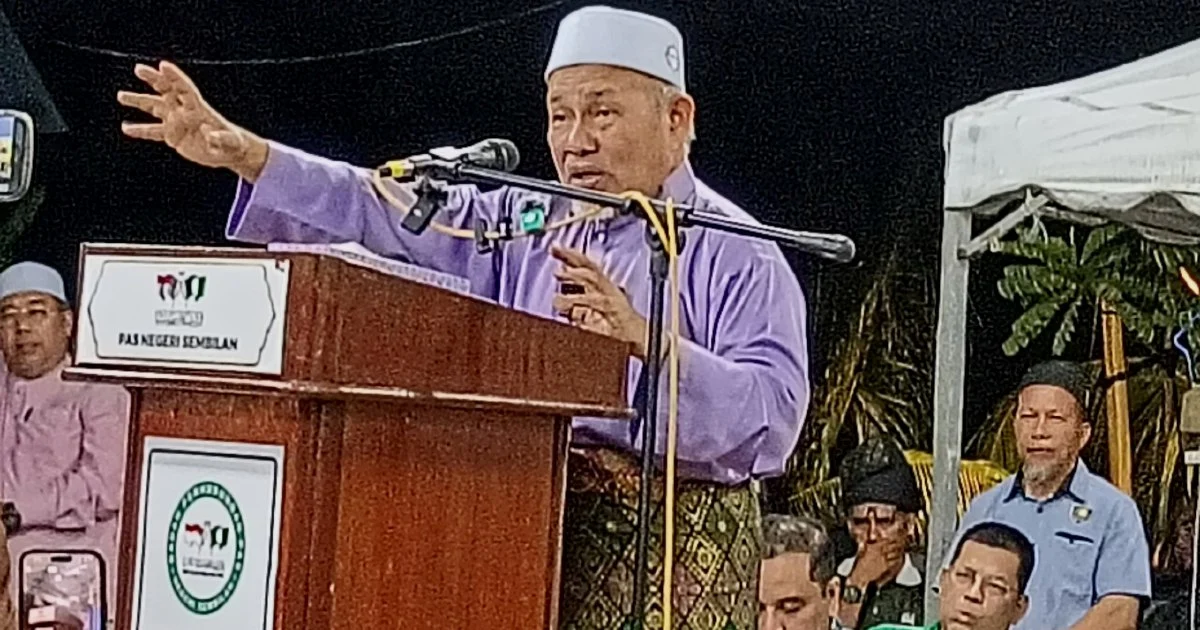
Perikatan Nasional (PN) is not the exclusive property of Bersatu but rather a shared coalition owned by each of its component parties, according to Datuk Seri Tuan Ibrahim Tuan Man, deputy president of PAS. His remarks came as a direct response to suggestions that Bersatu maintains singular control over the increasingly influential political grouping that has reshaped Malaysia's political landscape since its formation in 2020.
Tuan Ibrahim's intervention highlights simmering tensions within PN regarding decision-making authority and representation. The clarification appears aimed at establishing that no single party—regardless of its size or historical prominence—can unilaterally dictate the coalition's direction. This assertion carries significant weight given PAS's position as one of PN's most dominant components, particularly in terms of grassroots membership and electoral performance across Malaysia.
The ownership dispute reflects deeper structural questions about how PN operates as a governing coalition. Unlike formal written constitutions that might clearly delineate power-sharing arrangements, PN has functioned through implicit understandings and regular leadership consultations among its constituent parties. Such informality can breed misunderstandings when internal frictions surface, as demonstrated by the current exchange.
Bersatu, founded by former Prime Minister Mahathir Mohamad and later led by Tan Sri Muhyiddin Yassin, brought considerable political capital when it joined PN. However, its electoral performance and membership base remain substantially smaller than PAS, which has deep organisational roots spanning decades. This disparity in relative strength may underpin PAS's concern about being sidelined in crucial decisions affecting the coalition's future.
The Malaysian political context makes such clarifications necessary because coalition stability directly impacts national governance. PN's trajectory from opposition grouping to kingmaker, and eventually to a governing partner at federal and state levels, has depended on maintaining unity among ideologically diverse members. Any perception of dominance by a single party risks destabilising the delicate balance that keeps PN functional.
Tuan Ibrahim's statement also carries implications for the broader Malaysian political landscape, where coalition management remains notoriously challenging. Voters observe how established alliances handle internal disagreements, and party rank-and-file members interpret leadership communications about their organisation's status within larger political structures. Reasserting collective ownership reinforces that PAS retains meaningful influence over PN's trajectory.
The timing of Tuan Ibrahim's remarks suggests rising stakes within PN as its leaders navigate complex decisions regarding state-level governance and upcoming electoral cycles. Disagreements about coalition ownership often mask deeper conflicts over resource allocation, candidate selections, and policy priorities. By emphasising collective ownership, PAS signals it will not accept subordinate status in such negotiations.
For Malaysia's broader political ecosystem, clear understanding of how PN operates internally remains crucial for investors, civil society observers, and international partners attempting to assess governmental stability. Coalitions that fail to establish transparent mechanisms for resolving internal disputes frequently experience sudden ruptures with severe consequences for policy continuity and institutional credibility.
Tuan Ibrahim's intervention also reflects the complex dynamics of Islamist-oriented politics in Malaysia, where PAS, Bersatu, and other PN components operate within distinct philosophical frameworks while maintaining coalition membership. Establishing that no single ideology or party dominates decision-making helps preserve the coalition's ability to accommodate these differences constructively.
Moving forward, PN's sustainability depends on whether member parties can operationalise the principle of collective ownership that Tuan Ibrahim articulated. This requires not merely rhetoric but concrete mechanisms—perhaps formalised agreements or structured consultation processes—that prevent future misunderstandings about authority and resource distribution. The current exchange suggests such mechanisms may need strengthening as PN matures from its formative phase.
For Malaysian voters and observers, these internal coalition discussions offer insights into how governance might function if PN becomes the dominant federal political force. Whether the coalition can maintain internal equilibrium while exercising power will significantly influence Malaysia's political stability and policy direction throughout the coming years.

