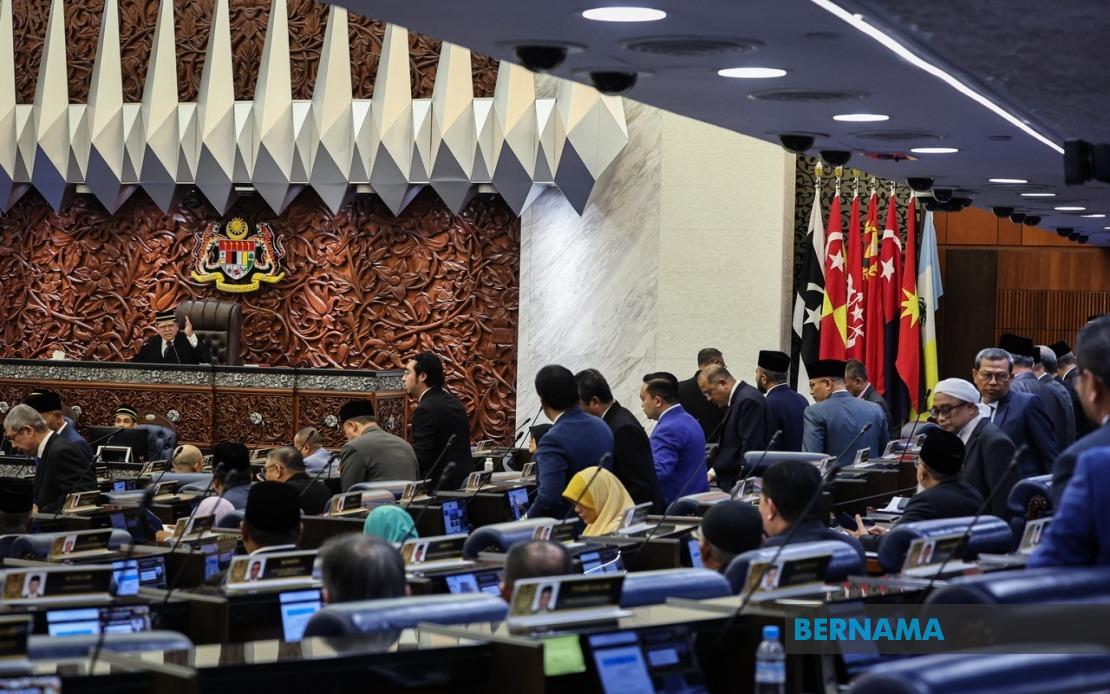
The Prime Minister's non-attendance at Parliament's special sitting on the Lembaga Tabung Haji (TH) Royal Commission of Inquiry report should not serve as justification for lawmakers to sidestep their responsibilities in examining the issue, according to Senior Political Adviser to the Prime Minister Tengku Datuk Seri Zafrul Tengku Abdul Aziz. His remarks came after several Perikatan Nasional (PN) MPs, including Opposition Leader Datuk Seri Hamzah Zainudin, absented themselves from the parliamentary debate examining the 211-page RCI report tabled by Minister in the Prime Minister's Department (Religious Affairs) Dr Zulkifli Hasan on August 11.
Through a social media statement, Tengku Zafrul articulated a pointed critique of the boycott strategy, emphasising that the parliamentary sitting was fundamentally about protecting the financial interests and accumulated savings of Muslims held within the TH scheme rather than a forum to challenge the Prime Minister personally. This distinction proved crucial to his argument, as he sought to reframe the debate beyond partisan political positioning. He questioned the logic underlying the decision by some members to leave the chamber, suggesting that the absence of any single individual should not excuse elected representatives from their duty to engage with substantive policy matters affecting their constituents.
The adviser stressed that members of Parliament possess multiple avenues for effective parliamentary engagement even when a specific minister or the Premier is not present in the chamber. Rather than abandoning their role, MPs can deploy these mechanisms to hold the government accountable on matters of public importance. He advocated for a more constructive approach centred on evidence-based critique, where lawmakers dissatisfied with government action should present factual counterarguments, articulate their disagreement through formal debate, and demand accountability through substantiated claims rather than theatrical gestures.
Tengku Zafrul's intervention underscored the gravity of the Tabung Haji matter within Malaysia's economic and social landscape. He characterised the TH situation as one of the most consequential episodes affecting the Muslim and Malay economic sphere throughout the nation's modern history, extending its significance beyond religious demographics to encompass the broader population whose retirement savings and investment commitments were entrusted to the institution. This framing positions the RCI inquiry not merely as a political event but as a critical mechanism for safeguarding public welfare and financial security for millions of Malaysian families.
The August 11 special sitting represented a significant moment in Parliament's oversight function, as it provided the first comprehensive public examination of TH's management and operational practices spanning 2014 to 2020. The government's decision to release the RCI report publicly on July 29, rather than maintaining confidentiality, reflected a commitment to transparency regarding an institution managing substantial Muslim pilgrim funds and broader investment portfolios. This openness created an opportunity for parliamentary scrutiny that Tengku Zafrul argued should not be squandered through boycotts.
The departure of PN chief whip Datuk Seri Takiyuddin Hassan and PN chairman Datuk Seri Dr Samsuri Mokhtar alongside the Opposition Leader illustrated a coordinated response from the opposition coalition. Their collective absence signalled either dissatisfaction with the proceedings' timing, the government's handling of the RCI findings, or both. However, the strategic implications of such boycotts remain contested, particularly when parliamentary debate serves as the formal mechanism through which elected officials can interrogate government responses and propose alternative approaches to addressing institutional failures.
From a Malaysian governance perspective, the TH controversy reflects broader concerns about institutional accountability within statutory bodies managing public funds. The RCI's establishment and subsequent inquiry indicated systemic concerns warranting public explanation and remedial action. For policymakers across Southeast Asia monitoring Malaysia's institutional reforms, the parliamentary debate represented a test of whether elected legislatures could effectively engage with complex financial investigations independent of partisan theatre. Tengku Zafrul's comments implicitly advocated for parliamentary procedures to function as mechanisms of genuine accountability rather than platforms for political posturing.
The adviser's emphasis on factual critique rather than absence-based protest carries implications for parliamentary culture within Malaysia and comparable democracies throughout the region. When elected representatives choose non-engagement over substantive challenge, they forfeit opportunities to shape policy responses, extract commitments from government, and create legislative records demonstrating their scrutiny efforts to constituents. This reasoning suggests that opposition parties achieve greater political leverage through active participation, pointed questioning, and documented disagreement than through symbolic boycotts that surrender the chamber entirely to government speakers.
For Muslim Malaysians with retirement savings held within Tabung Haji, the parliamentary debate offered potential clarity regarding institutional failures and corrective measures. The RCI report's detailed examination of management practices from 2014 to 2020 presumably contained findings about investment decisions, governance failures, or operational deficiencies requiring public explanation and accountability. Tengku Zafrul's criticism of the PN walkout effectively argued that opposition lawmakers had a fiduciary responsibility to those constituents to engage with the report's contents rather than symbolically rejecting the process.
The controversy also illuminates divergent approaches to parliamentary opposition within Malaysia's political system. While boycotts or walkouts serve as dramatic expressions of dissent, they cede the parliamentary record and media narrative to government voices, potentially allowing authorities to define the terms of discussion around contentious issues. Conversely, sustained parliamentary engagement, even when fundamentally critical, creates documented exchanges that inform public understanding and establish clear lines of political difference for electoral accountability.
Looking forward, Tengku Zafrul's intervention suggests the government views the TH RCI examination as an opportunity to demonstrate institutional responsiveness and transparency rather than an existential threat requiring defensive posturing. His emphasis on factual debate and good-faith engagement reflects a broader argument about parliamentary standards and the responsibility of opposition figures to engage substantively with governance issues affecting millions of citizens, regardless of symbolic disagreements with specific ministers or the ruling coalition.

