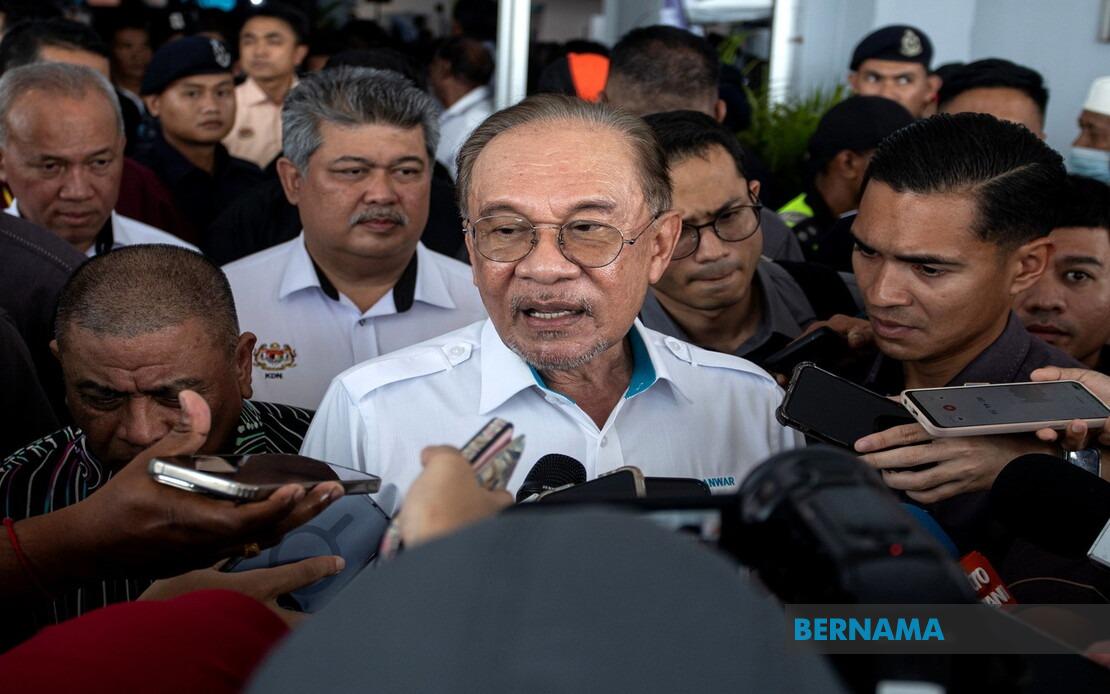
Prime Minister Datuk Seri Anwar Ibrahim has issued a firm directive to government officials campaigning in state elections, insisting they maintain strict discipline and refrain from publicly attacking the Federal Government. Speaking in Ipoh after a community programme, he underscored that such attacks would poison the political environment and undermine governmental effectiveness at a critical time when multiple states are holding elections.
Anwar's cautionary remarks reflect the inherent tensions within Malaysia's coalition-based governance structure, where parties aligned at the federal level often compete fiercely against one another in state-level contests. This arrangement, while democratically legitimate, creates a delicate balancing act that requires careful management to prevent federal stability from being compromised by local political rivalries. The Prime Minister acknowledged this reality, stating that parties pursuing different agendas in state elections is entirely consistent with democratic principles. However, he drew a clear line regarding the conduct expected of those simultaneously holding federal office.
The distinction Anwar articulated is crucial: government officials remain free to campaign on state-specific issues and advocate for their parties' state-level platforms. What they cannot do, he made plain, is weaponise their positions or criticise the federal administration they serve while seeking electoral advantage at the state level. This boundary is essential because officials who cross it face a straightforward choice—either adhere to governmental discipline or vacate their posts. The message carried real consequences, signalling that the Prime Minister will not tolerate what he views as disloyalty masquerading as legitimate political competition.
Anwar disclosed that he has already discussed this matter directly with his two deputies, Datuk Seri Dr Ahmad Zahid Hamidi and Datuk Seri Fadillah Yusof, indicating the seriousness with which the administration views potential breaches. By engaging the deputy prime ministers, Anwar ensured that the message cascades through the government hierarchy, with senior leaders empowered to enforce compliance among their respective portfolios and allies. This structural approach prevents the directive from appearing as an isolated admonishment and instead frames it as a coordinated governance principle.
Beyond individual accountability, Anwar sought to reinforce a broader institutional understanding among all Unity Government coalition partners. The administration has urged these parties to prioritise the preservation of cordial relations at both federal and state levels, recognising that internal conflict at either tier ultimately diminishes governmental capacity to serve citizens effectively. This appeal to collective interest—the ability to continue delivering services—reframes compliance not merely as obedience to the Prime Minister but as a practical necessity for maintaining the coalition's governing legitimacy.
The timing of these remarks carries particular significance given Malaysia's recent electoral calendar, with several state elections having taken place or scheduled. The Unity Government comprises diverse political parties with distinct electoral bases and historical rivalries, making it vulnerable to destabilisation when state contests pit coalition members against one another. Anwar's intervention seeks to establish ground rules that allow legitimate political competition without metastasising into federal-level conflict that could fracture the government itself.
For Malaysian voters and observers, this directive illustrates both the strength and fragility of coalition governance. The system allows multiple parties to collaborate on national matters while competing locally—theoretically offering voters choice and preventing any single party from monopolising power. Yet this same structure creates obvious incentive problems, as politicians may be tempted to score points against their coalition partners by criticising federal policies or performance. Anwar's warning attempts to constrain these incentives through clear rules and the threat of consequences.
The Prime Minister's emphasis on maintaining strong working relationships between federal and state governments also addresses practical governance concerns. Malaysia's federal system requires coordination between these tiers on numerous policy matters, from development to service delivery. When politicians from the same national coalition openly war with one another at the state level, it poisons interpersonal relationships, complicates bureaucratic coordination, and can paralyse decision-making. By calling for cordiality, Anwar was defending not abstract principles but the machinery of government itself.
This episode reflects broader patterns in Malaysian politics, where governing coalitions must constantly manage internal diversity while projecting unity to the electorate. The Unity Government, comprising Pakatan Harapan, Barisan Nasional, and other partners, brought together groups with different ideologies and constituencies. Anwar's role as both Prime Minister and Pakatan Harapan chairman gives him leverage to enforce discipline, yet his ability to compel compliance depends ultimately on coalition partners recognising that cooperation serves their long-term interests better than confrontation. The directive thus functions as both a warning and an appeal to shared interest.
Looking forward, whether coalition partners heed this counsel will test the durability of the Unity Government arrangement. Continued attacks by government officials against the federal administration could trigger dismissals or resignations that destabilise the coalition's parliamentary majority. Conversely, strict adherence would demonstrate that Malaysia's diverse political actors can subordinate state-level ambitions to federal-level stability. The Prime Minister's warning establishes the stakes clearly and offers all parties an opportunity to chart a responsible course.

