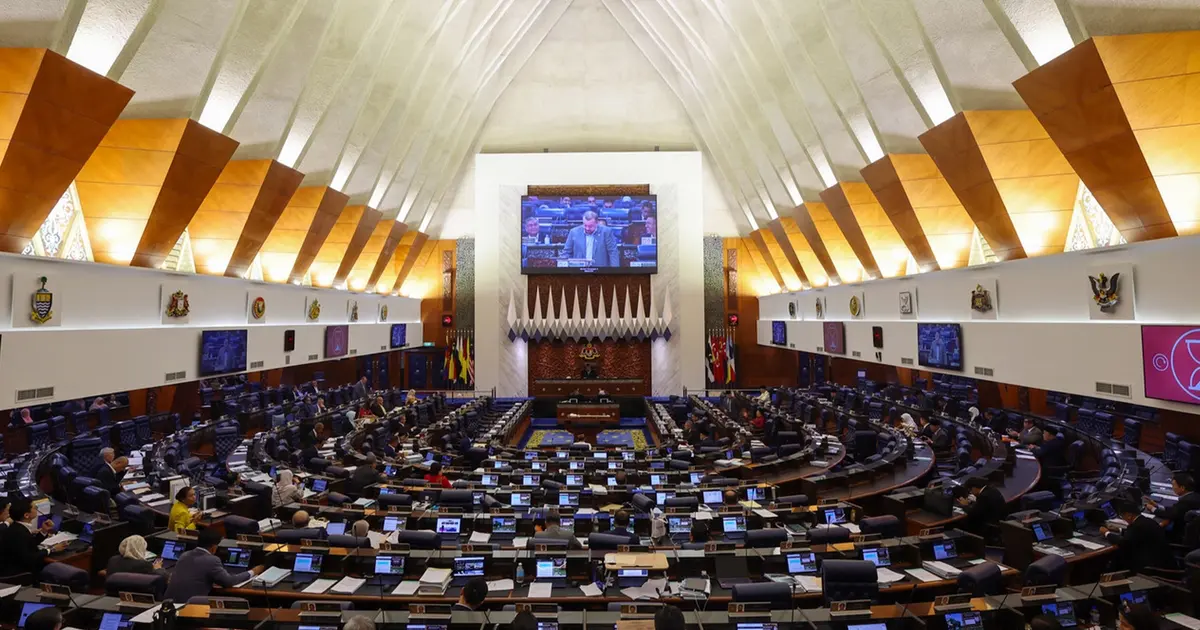
Parliament is set to tackle a suite of constitutional and legislative matters beginning Monday, with renewed effort to pass a bill that would establish a maximum 10-year term for Malaysia's prime minister—one of four substantial pieces of legislation lined up for parliamentary debate. This fresh attempt comes after the proposal encountered parliamentary headwinds during the previous sitting, when it proved unable to garner the supermajority threshold necessary for constitutional amendments to proceed.
The prime ministerial term-limit bill represents a significant constitutional intervention, as Malaysia's current framework imposes no statutory ceiling on how long an individual may serve in the nation's highest elected office. Supporters of the measure argue that entrenching a two-term limit would strengthen democratic governance by preventing extended concentration of executive power and encouraging orderly succession planning within the political system. Proponents contend that many mature democracies operate under similar constraints, viewing term limits as a safeguard against institutional decay and the accumulation of patronage networks that can undermine institutional independence over prolonged tenures.
Securing a two-thirds majority in the Dewan Rakyat remains a formidable parliamentary hurdle, requiring the backing of 148 of the 222 current members to pass constitutional amendments. During the previous parliamentary session, the bill fell short of this demanding threshold, signalling fractured consensus among lawmakers across the government and opposition benches. The setback underscores persistent disagreements about whether the measure constitutes prudent democratic reform or an unnecessary constraint on executive authority. Some MPs have questioned whether a rigid constitutional limitation might handicap Malaysia during complex governance crises requiring seasoned leadership, while others worry that circumventing term limits through creative interpretations could create worse precedents.
The composition of the current Dewan Rakyat has evolved since the earlier failed attempt, with recent by-elections and shifting parliamentary coalitions potentially altering the arithmetic needed to pass contentious constitutional legislation. Government strategists appear to believe that renewed momentum, combined with evolving political circumstances, might now enable passage where previous efforts stalled. The timing of Monday's sitting suggests coordinated parliamentary planning to advance the administration's legislative agenda systematically.
Beyond the term-limit proposal, the parliamentary sitting will address three other major bills that collectively signal the government's priorities in key governance domains. While the full slate of legislation remains to be formally disclosed, such multi-bill parliamentary sittings typically address issues spanning institutional reform, economic regulation, or social policy matters deemed urgent by the executive branch. The bundling of multiple significant bills into a single sitting reflects parliamentary convention of concentrating substantive debate into intensive legislative periods.
The constitutional amendment route itself carries political weight in Malaysian parliamentary practice. Unlike ordinary legislation requiring only a simple majority, constitutional changes demand extraordinary consensus-building across ideological and partisan lines. This high bar theoretically protects foundational constitutional principles from capricious alteration through narrow parliamentary majorities, though it simultaneously means that even broadly supported reforms can languish if opposition parties withhold cooperation. The term-limit proposal's previous failure suggests that despite apparent public support for the concept in opinion surveys, translating such sentiment into parliamentary votes has proven elusive.
Regional observers have noted Malaysia's particular constitutional context, where unelected institutions and state-level political structures create complex governance layers absent in more centralised systems. Any reform affecting prime ministerial authority necessarily intersects with federalism arrangements, the position of the monarchy, and state-federal power distribution. These interconnections likely explain why some legislators approach term-limit proposals cautiously, fearing unintended consequences for Malaysia's carefully calibrated constitutional balance. Understanding these institutional complexities proves essential for appreciating why straightforward democratic reforms often encounter resistance in Malaysia's distinctive constitutional architecture.
Parliamentary passage would still require simultaneous consideration of several related questions. If enacted, should the 10-year limit reset with each new government or remain absolute across an individual's lifetime political career? Would it apply retroactively to sitting prime ministers or only prospectively to successors? These technical questions, though less prominent in public debate, significantly shape the measure's practical implications and may occupy parliamentary discussion time. Such drafting questions often prove contentious precisely because they determine whether constitutional reform reshapes actual power relationships or merely symbolises reform while preserving existing practises.
Monday's sitting also invites speculation about whether opposition parties might condition their support for term limits on concurrent parliamentary reforms addressing their own concerns about government accountability, transparency, or electoral arrangements. Constitutional amendments negotiated in Malaysia's polarised contemporary environment frequently involve implicit trade-offs, with parliamentary blocs leveraging support for favoured measures to extract concessions on separate issues. The four-bill agenda may therefore serve as vehicle for broader bargaining about parliamentary governance beyond the formal legislative text.
The stakes extend beyond procedural constitutional mechanics into questions about Malaysia's democratic trajectory. Supporters frame the term-limit initiative as modernisation aligned with international democratic best practises, while critics view it as potentially arbitrary restraint on democratically-elected leaders. This foundational disagreement about the measure's merits will likely structure Monday's parliamentary debate, with legislators articulating contrasting visions of democratic governance before voting on whether to advance the measure toward potential passage.
As the sitting approaches, all eyes focus on whether improved political circumstances and renewed parliamentary effort can surmount the substantial obstacle that blocked the previous attempt. The outcome will signal not merely whether Malaysia adopts a specific constitutional constraint on executive tenure, but more broadly whether Parliament can achieve sufficient consensus on governance reform despite the fractious partisan environment characterising contemporary Malaysian politics.

