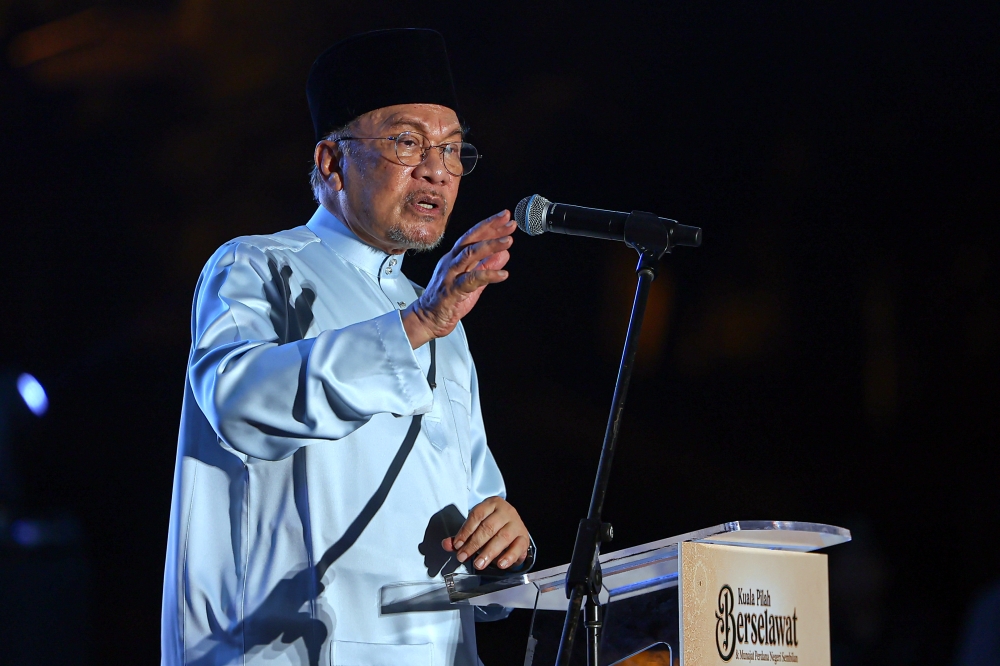
Prime Minister Datuk Seri Anwar Ibrahim has delivered an unequivocal commitment to transparency and accountability surrounding the Tabung Haji Royal Commission of Inquiry, declaring an end to what he characterised as prolonged delays and alleged concealment in addressing the pilgrim fund's governance failures. Speaking in Kuala Pilah, the Prime Minister emphasised that Malaysian society has endured an extended period of uncertainty and that the time for evasive tactics has definitively passed.
The Tabung Haji saga represents one of Malaysia's most consequential institutional crises in recent years, involving questions about fiduciary responsibility, investment decisions, and financial stewardship of a fund entrusted with managing savings belonging to millions of Muslim pilgrims intending to perform the Hajj. The establishment of the Royal Commission of Inquiry itself followed mounting public pressure and documented concerns about the fund's operational integrity, making the Prime Minister's pledge to resist obstruction particularly significant given the historical pattern of bureaucratic resistance to accountability mechanisms.
Anwar Ibrahim's forceful language—rejecting the prospect of further cover-ups—signals a potential recalibration in how the federal government intends to manage high-profile institutional investigations. This approach contrasts sharply with previous administrations that faced persistent criticism for limiting the scope of inquiries, restricting access to evidence, or diluting investigative findings through selective disclosure. The Prime Minister's statement appears designed to reassure stakeholders that the current administration regards this investigation as genuinely consequential rather than performative.
The implications for Malaysian governance extend beyond Tabung Haji itself. How the government handles this inquiry will substantially influence public confidence in its ability to conduct independent institutional oversight across other sensitive domains—from sovereign wealth funds to regulatory bodies to government-linked companies. The credibility of any Royal Commission depends fundamentally on the political environment permitting investigators to pursue leads wherever evidence leads, without external pressure to reach predetermined conclusions or protect institutional reputations at the expense of truth-seeking.
For pilgrims and potential Hajj travellers, the inquiry carries immediate practical dimensions. Thousands of Malaysians have accumulated substantial savings within Tabung Haji accounts, expecting these funds to be professionally managed and available for pilgrimage purposes. Revelations regarding investment losses, governance lapses, or misallocation of assets directly affect retirement planning and religious obligations. The Prime Minister's commitment to transparency partially addresses fears that systemic problems might be minimised or concealed to avoid political embarrassment.
The Malaysian public has demonstrated considerable fatigue with incomplete institutional accountability across multiple sectors. Previous inquiries that concluded with limited remedial action or prosecutorial follow-up have deepened scepticism about the genuine independence of investigative commissions. Anwar Ibrahim's explicit rejection of cover-ups represents a necessary rhetorical repositioning, though observers will ultimately judge the government's sincerity through concrete actions—whether investigators receive full cooperation, whether evidence remains confidential only when genuinely sensitive, and whether substantive reforms follow any damaging findings.
Regional observers also note that institutional accountability mechanisms carry broader importance for Southeast Asia's financial landscape. Malaysia's position as a major Islamic finance hub depends partly on demonstrated trustworthiness in managing funds and institutions serving Muslim constituencies across the region. Allowing a major scandal affecting pilgrims to be buried would undermine confidence not only domestically but among neighbouring Muslim communities considering how to structure their own Hajj savings mechanisms.
The political economy of the Tabung Haji inquiry also reflects broader patterns within Malaysian governance. Previous decades witnessed investigations into institutional failures where political considerations frequently superseded evidentiary imperatives. The transition toward governments that rhetorically prioritise accountability—even when implementation remains inconsistent—suggests incremental progress in public expectations about institutional integrity. However, systematic change requires sustained pressure rather than one-time policy declarations.
Anwar Ibrahim's emphatic language serves multiple audiences simultaneously. To pilgrims and citizens, it signals governmental seriousness about protecting their interests. To potential whistleblowers and investigators, it provides reassurance that coming forward with inconvenient information carries reduced reputational risk. To international observers and rating agencies assessing Malaysia's governance framework, it indicates commitment to institutional oversight consistent with international standards. Such multi-directional messaging reflects sophisticated political communication, though it ultimately requires operational verification.
The Tabung Haji RCI represents a crucial test case for contemporary Malaysian governance frameworks. Decades of institutional development have established increasingly sophisticated regulatory architectures, yet implementation of those frameworks remains uneven, partly reflecting political considerations that supersede technical requirements. The Prime Minister's pledge to eliminate cover-ups tacitly acknowledges that previous governance approaches proved inadequate for building genuine public confidence in major institutions.
Moving forward, substantive indicators will determine whether this commitment translates into meaningful change. These include the scope of investigation permitted, access to critical documentation, freedom of investigators to pursue leads without political interference, and most importantly, visible accountability measures resulting from any findings of misconduct. The Malaysian public understands that sincere institutional reform requires more than rhetorical flourishes; it demands systematic changes to incentive structures that previously rewarded concealment over disclosure.

