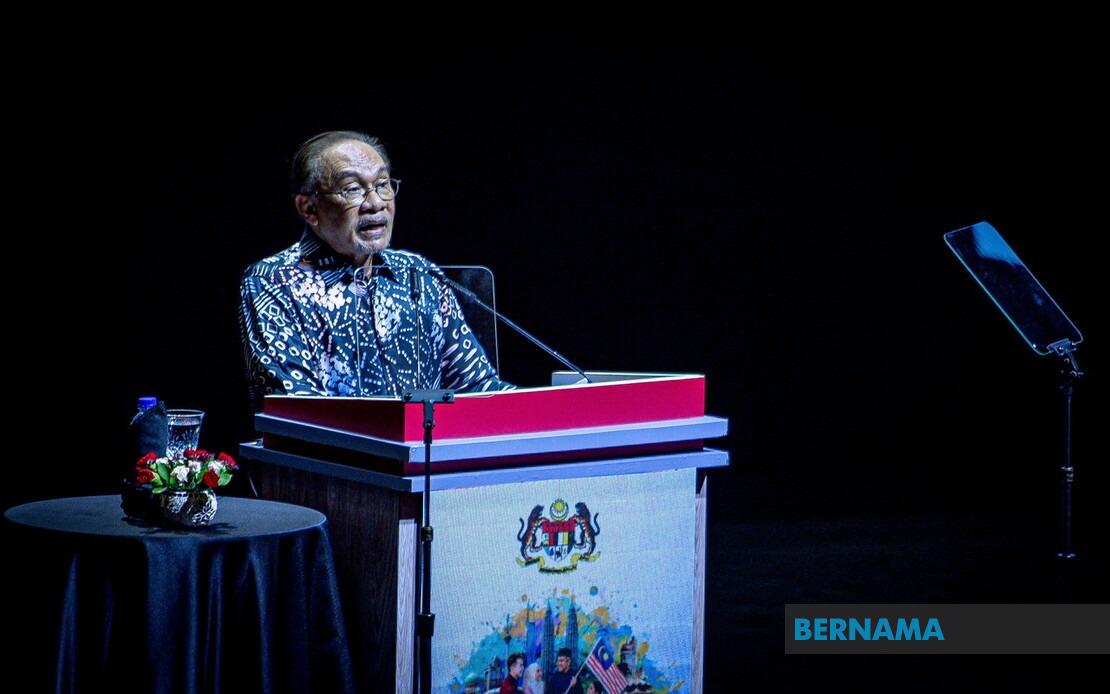
Prime Minister Datuk Seri Anwar Ibrahim has announced a fresh package of six immediate measures designed to provide relief to Malaysian households grappling with rising living costs and daily economic pressures, with all initiatives set to commence on September 1. Delivered during the 2026 National Day Prime Minister's Address at the Putrajaya International Convention Centre, the announcement represents a renewed effort by the federal government to address mounting public concerns about affordability and household financial strain.
The six-pronged strategy encompasses interventions across multiple sectors critical to household budgets and national economic development. The package includes continued fuel subsidies, enhanced school maintenance programmes, expanded artificial intelligence initiatives, accelerated healthcare digitalisation, broader e-invoicing implementation, and improved microfinancing access. By concentrating on these interconnected areas, the government aims to create cascading benefits that touch schoolchildren, young professionals, working parents and household managers across different income levels and demographics.
Anwar's announcement carries particular significance as it underscores the administration's acknowledgement that previous policy measures, while substantial, have not fully resolved the cost of living crisis affecting ordinary Malaysians. The Prime Minister explicitly rejected any suggestion that the government considers its work complete, stating that the Cabinet remains acutely aware of ongoing struggles faced by citizens navigating inflationary pressures and stagnating real wages. This candid recognition signals a recalibrated approach wherein policymakers accept responsibility for persistent economic discomfort rather than claiming victory prematurely.
The fuel subsidy component directly targets one of Malaysian households' largest recurring expenses. Despite global oil price volatility, maintaining affordable fuel remains politically sensitive and economically critical, particularly for rural communities and lower-income urban workers dependent on personal vehicles for work. The continued subsidy framework aims to insulate consumers from international market shocks whilst the government pursues longer-term energy transition strategies. This balancing act reflects Malaysia's position as an oil-producing nation attempting to gradually shift towards renewable energy without imposing sudden economic hardship on dependent populations.
The school maintenance initiative addresses deteriorating educational infrastructure across the country, a concern that has periodically surfaced in public discourse regarding educational quality and student safety. Enhanced maintenance budgets signal commitment to ensuring learning environments meet basic standards, potentially reducing indirect costs for families who otherwise might compensate through private tutoring or school fees to access better facilities. This measure carries implications for educational equity, as it targets public institutions serving predominantly lower and middle-income families.
Artificial intelligence advancement represents the government's positioning of Malaysia within the global digital economy transformation. By announcing AI initiatives during a cost-of-living address, Anwar emphasises that technological development and immediate relief are complementary rather than competing priorities. AI-driven efficiencies across both public and private sectors could theoretically generate productivity gains that eventually translate into lower consumer prices and expanded employment opportunities, though such benefits typically materialise over medium to long-term horizons rather than providing immediate relief.
Healthcare digitalisation extends telemedicine capacity and reduces administrative burden on the health system, outcomes that directly benefit patients by decreasing travel costs, waiting times, and consultation expenses. For rural and semi-urban Malaysians, digital health services potentially eliminate the necessity for costly journeys to distant medical facilities, representing meaningful relief for households managing multiple healthcare needs. The initiative also supports the government's efficiency objectives by reducing strain on physical infrastructure and administrative resources.
E-invoicing standardisation enhances supply chain transparency and reduces transactional friction, benefits that should gradually reduce hidden costs embedded in goods and services. By simplifying business administrative processes, particularly for small and medium enterprises, the measure aims to lower operational expenses that merchants ultimately pass to consumers. The rollout also strengthens government tax collection and economic data visibility, supporting more informed policymaking regarding inflation and cost pressures.
Microfinancing expansion addresses a critical gap for lower-income entrepreneurs and self-employed workers excluded from conventional banking systems. Access to affordable working capital enables small business operators to improve productivity and income stability, creating pathways toward household economic resilience. Given Malaysia's significant informal economy participation, expanded microfinance availability could facilitate gradual transition toward formal economy engagement whilst simultaneously strengthening household financial buffers against external shocks.
The announcement's timing, delivered on the eve of National Day celebrations, carries political symbolism suggesting government responsiveness to public sentiment and commitment to national welfare. Deputy Prime Minister Datuk Seri Dr Ahmad Zahid Hamidi, Communications Minister Datuk Seri Fahmi Fadzil, and cabinet colleagues' presence underscored ministerial alignment on these priorities, essential for coherent implementation across government agencies responsible for policy execution.
Implementation effectiveness will depend substantially on bureaucratic coordination and sustained funding commitment beyond the September 1 launch date. Malaysian policy history demonstrates that announced measures frequently encounter implementation delays, resource constraints, and departmental coordination challenges. Sustained public communication regarding these initiatives' tangible impacts on household finances will prove essential for validating government credibility on economic stewardship, particularly given widespread public scepticism regarding whether announced interventions genuinely address personal financial anxieties.
For Malaysia's broader economic narrative, this announcement reflects government recognition that sustainable development requires addressing both immediate household pressures and longer-term structural competitiveness. The policy package signals that despite fiscal constraints and competing budgetary demands, the administration prioritises direct support to cost-conscious households whilst simultaneously investing in digital transformation and microeconomic development. Success hinges on effective implementation, transparent communication regarding results, and willingness to adjust approaches based on evidence of actual household financial outcomes across different socioeconomic segments.

