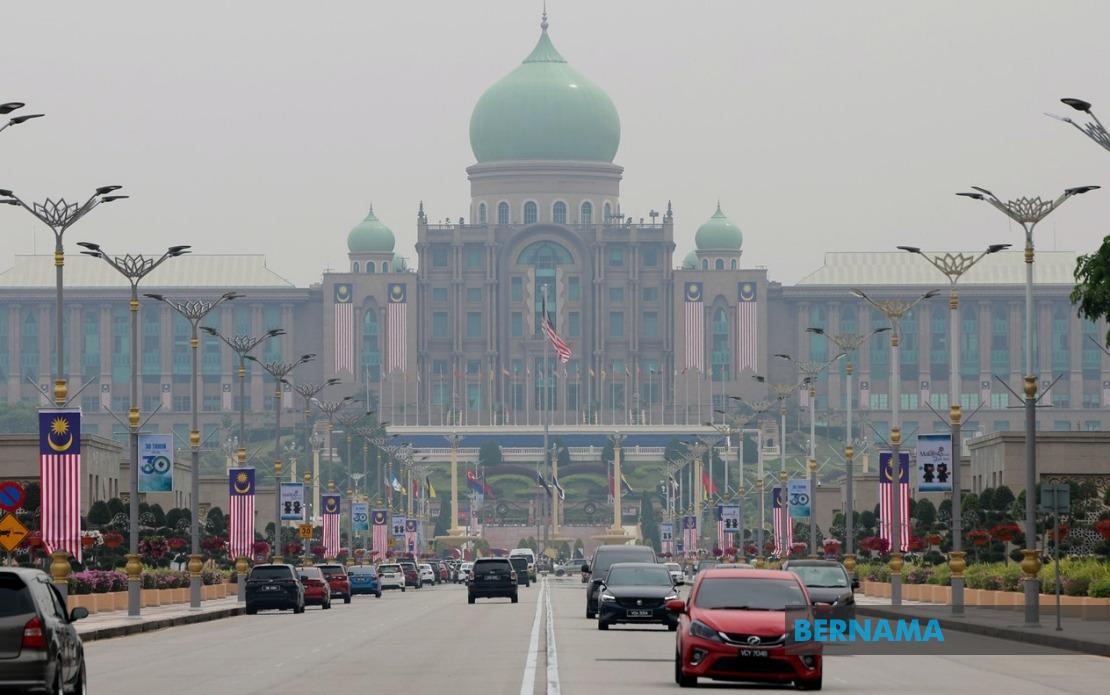
Prime Minister Datuk Seri Anwar Ibrahim will raise the transboundary haze affecting Southeast Asia during his upcoming state visit to Brunei, where he will meet Sultan Hassanal Bolkiah for their 27th annual leaders' consultation. The Malaysian High Commissioner to Brunei, Datuk Mohd Aini Atan, confirmed that environmental degradation resulting from the regional haze represents a pressing bilateral concern warranting discussion at the highest diplomatic levels. The two-day working visit, commencing tomorrow, underscores how air pollution has emerged as a critical issue demanding immediate attention from both governments alongside traditional trade and security matters.
The timing of the consultation is particularly significant given the severity of current air quality conditions across Sarawak, Malaysia's largest state by area. Malaysian High Commissioner Mohd Aini Atan emphasised that the haze problem would naturally feature prominently in discussions, especially with the attendance of Sarawak Premier Tan Sri Abang Johari Tun Openg and Sabah Chief Minister Datuk Seri Hajiji Noor, whose presence ensures that the perspectives of Malaysia's most affected regions receive direct representation at diplomatic negotiations.
Data from Malaysia's Air Pollutant Index Management System reveals the alarming extent of air pollution currently engulfing the region. Serian in Sarawak registered a "very unhealthy" API reading of 204 as of 5 pm on August 20, indicating hazardous conditions that pose genuine health risks to residents and warrant public health interventions. This measurement significantly exceeds the threshold of 200, which triggers the highest alert status on Malaysia's air quality warning system.
Beyond Serian, multiple Sarawak localities have slipped into the "unhealthy" classification, demonstrating the widespread nature of the pollution event. Kuching, the state capital and economic hub, recorded an API of 195, while Samarahan reached 182, Sri Aman climbed to 179, Sarikei hit 158, and Sibu registered 152. This distribution pattern suggests that transboundary smoke sources, likely originating from agricultural fires or industrial burning across the border in Kalimantan, are affecting the entire state rather than isolated areas.
The Malaysia-Brunei Annual Leaders' Consultation mechanism represents the apex of bilateral engagement between the two nations, providing an irreplaceable platform for addressing complex transnational challenges that transcend conventional diplomatic channels. The consultation format permits frank discussion of shared vulnerabilities and mutual interests in a structured setting where both prime ministerial and royal leadership can commit to concrete cooperative measures.
Brunei's position as a downstream nation vulnerable to transboundary haze makes the sultanate a natural partner in regional efforts to combat air pollution. The small oil-rich nation shares maritime boundaries and atmospheric circulation patterns with Malaysian Borneo, meaning that smoke and particulate matter originating from fires in Indonesian territory affects both countries simultaneously. Sultan Hassanal Bolkiah's government has demonstrated consistent interest in environmental cooperation through existing ASEAN mechanisms, suggesting receptiveness to Malaysian initiatives addressing the haze problem.
The inclusion of Sarawak's and Sabah's senior political leadership in the Malaysian delegation signals recognition that policymaking addressing transboundary environmental challenges must incorporate input from directly affected populations. Both Chief Ministers bring on-the-ground knowledge of community health impacts, agricultural consequences, and economic disruption caused by sustained air pollution episodes. Their participation elevates discussion beyond abstract diplomatic courtesy to practical consideration of remedial actions benefiting residents across Malaysian Borneo.
Regional haze episodes have historically catalysed ASEAN-level diplomatic initiatives, most notably the 2002 ASEAN Agreement on Transboundary Haze Pollution, which establishes monitoring, information-sharing, and pollution-reduction obligations. Malaysia and Brunei remain signatories to this accord, though enforcement challenges and limited compliance from certain signatory nations have prompted repeated calls for strengthened implementation mechanisms. Bilateral consultations between Malaysia and Brunei can reinforce commitment to the agreement's objectives and explore enhanced cooperation independent of broader ASEAN frameworks.
The economic implications of prolonged haze extend beyond immediate health costs to encompass tourism disruption, agricultural productivity losses, and increased healthcare expenditures. Sarawak's tourism sector, particularly its longhouse tourism and eco-tourism offerings, faces declining visitor numbers during poor air quality episodes. Agricultural communities experience crop damage from deposited particulates, while respiratory disease admissions surge in state hospitals, straining healthcare resources. Brunei, despite its smaller economy, confronts similar pressures on its limited tourism infrastructure and healthcare system.
Climate considerations add another dimension to haze discussions between Malaysia and Brunei. Both nations are signatories to the Paris Agreement and committed to regional climate action targets. Transboundary smoke events increasingly correlate with broader climate-driven changes in fire frequency and intensity across Southeast Asia. Bilateral consultation provides opportunity to coordinate positions on climate adaptation funding, disaster preparedness standards, and technology transfer for pollution monitoring that could strengthen both nations' climate resilience.
The consultation may also address potential cooperation mechanisms beyond traditional diplomacy. Technical collaboration on air quality monitoring, information-sharing protocols for early warning systems, and coordinated emergency response procedures during severe pollution episodes could yield practical benefits. Both governments might explore collaborative research initiatives examining haze composition, atmospheric transport patterns, and health impacts specific to the Malaysia-Brunei region, generating evidence for stronger policy interventions.
International pressure on Indonesia to strengthen fire management practices represents another dimension potentially discussed during the consultation. Malaysia and Brunei could coordinate messaging to Indonesian counterparts regarding the transnational consequences of inadequately controlled burning, presenting collaborative evidence of economic and health impacts that might persuade Jakarta to expand forest protection initiatives and enforce existing fire prohibitions more rigorously throughout Kalimantan.
The consultation's outcome will likely be scrutinised by environmental advocates and affected communities across Sarawak and Sabah who have endured multiple haze episodes. Stakeholder expectations focus on concrete commitments to enhanced bilateral cooperation rather than rhetorical acknowledgement of the problem's existence. Any joint statements or agreements emerging from the 27th ALC will reflect the seriousness with which both governments regard the environmental challenge confronting their shared region and their willingness to invest diplomatic capital and resources toward mitigation.

