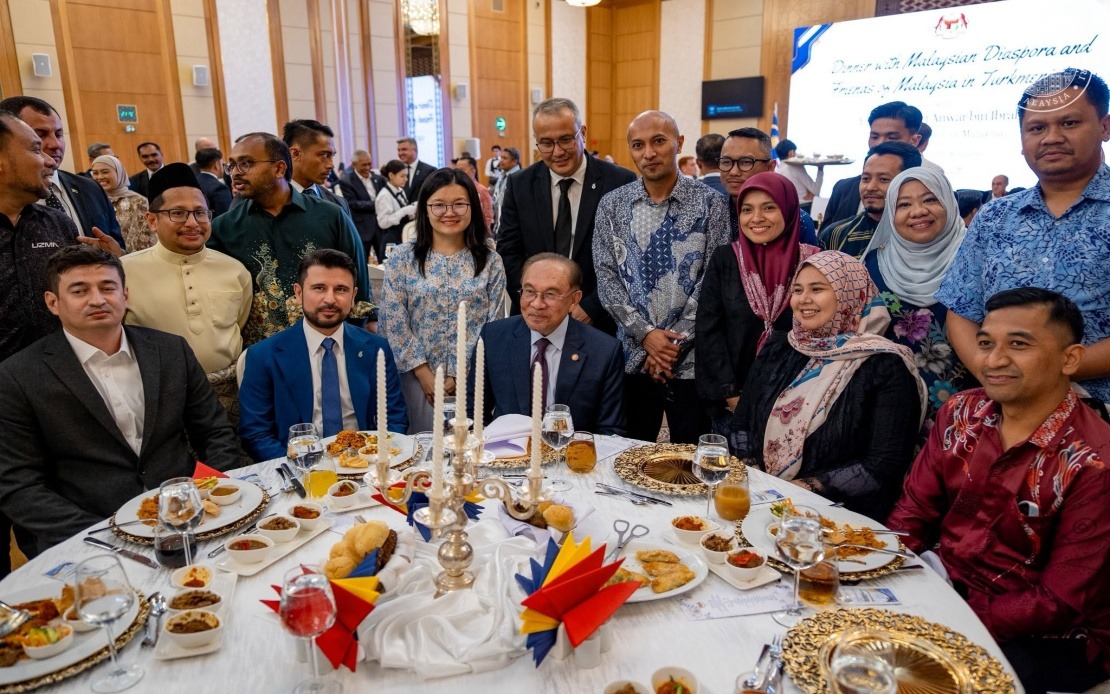
Prime Minister Datuk Seri Anwar Ibrahim has used his official visit to Turkmenistan to connect with the Malaysian diaspora community in Ashgabat, underscoring the government's commitment to maintaining meaningful engagement with citizens living abroad. The encounter reflects a deliberate strategy within the MADANI Government to weave the overseas Malaysian population into the broader narrative of national development and international relations. By carving out time during a state visit to meet with expatriates, Anwar signals that diaspora communities are neither peripheral nor forgotten, but rather integral stakeholders in Malaysia's global standing.
During the meeting, Anwar articulated the central message that Malaysians scattered across the world serve as cultural and economic ambassadors for the nation, consciously building Malaysia's reputation through their professional endeavours and personal interactions. This framing elevates the diaspora beyond the conventional role of remittance senders or tourism promoters, positioning them instead as active architects of Malaysia's international image and diplomatic soft power. The Prime Minister's emphasis on their "spirit and warmth of closeness" suggests that geographical distance does not diminish the emotional and institutional bonds connecting overseas Malaysians to their homeland.
The visit itself forms part of a reciprocal diplomatic engagement between Malaysia and Turkmenistan. Anwar's two-day mission to Ashgabat represents Malaysia's first official visit to the Central Asian nation under his tenure, following Turkmenistan President Serdar Berdimuhamedov's official visit to Malaysia in December 2024. This bilateral momentum reflects both nations' willingness to deepen institutional ties and explore collaborative opportunities beyond traditional trade corridors. Central Asia, long perceived as geographically remote from Southeast Asian concerns, has emerged as an increasingly relevant region for Malaysia's economic and strategic diversification.
The Prime Minister articulated a nuanced vision of the Turkmenistan engagement that transcends narrow economic calculus. While acknowledging the importance of trade, investment, and economic cooperation as foundational elements, Anwar emphasized that the visit aimed fundamentally at expanding bilateral friendship, fostering mutual understanding, and identifying novel areas of collaboration. This broader conception reflects Malaysia's mature diplomatic approach, particularly relevant for a country seeking to strengthen relationships with diverse regions while maintaining focus on core national interests. The engagement with the diaspora fits logically within this expansive framework, as overseas Malaysians often facilitate business networks, cultural exchanges, and people-to-people connections that formal diplomacy alone cannot achieve.
For Malaysian expatriates in Turkmenistan and Central Asia more broadly, the Prime Minister's recognition carries tangible implications. It acknowledges their professional contributions to Malaysian companies operating internationally and validates their role in knowledge transfer and skills development back to the home economy. Many Malaysians abroad work in sectors ranging from energy and petrochemicals to finance and technology, fields where their expertise and networks enhance Malaysia's competitive positioning globally. The government's renewed emphasis on maintaining diaspora connectivity suggests potential initiatives to facilitate their participation in national projects, investment opportunities, and knowledge-based initiatives.
Anwar's appeal for diaspora members to maintain active engagement with Malaysia's developmental trajectory introduces another dimension to the relationship between government and overseas citizens. Rather than viewing expatriation as a one-way exit from national affairs, the government conceptualizes diaspora connection as a continuous dialogue where overseas Malaysians remain informed stakeholders in their country's progress. This perspective has practical ramifications, potentially encouraging diaspora participation in ventures ranging from heritage preservation to technology transfer, even as they pursue careers and lives abroad.
The timing of this engagement coincides with Malaysia's broader effort to position itself as a regional hub and connector nation. Central Asia, home to approximately 60 million people and vast energy resources, has attracted increasing interest from Southeast Asian nations seeking to diversify partnerships beyond traditional Western and Asian corridors. Malaysia's diplomatic presence in Turkmenistan, bolstered by presidential-level visits in both directions, reflects this strategic recalibration. The diaspora, as frontline representatives of Malaysian interests and values, become force multipliers in this regional outreach effort.
For Malaysian observers, the visit illustrates how contemporary diplomacy integrates multiple constituencies into statecraft. The Prime Minister's simultaneous engagement with formal government institutions and diaspora communities demonstrates that effective international relations extend beyond official channels. Diaspora networks often precede, accompany, and outlast formal diplomatic initiatives, providing the human infrastructure that sustains long-term bilateral relationships. By visibly investing in these communities during high-profile visits, the government acknowledges this reality and strengthens the institutional fabric connecting Malaysia to the wider world.
The particular focus on Ashgabat, a city of roughly one million people in a relatively understudied region, also highlights Malaysia's commitment to engagement that extends beyond capital cities and major economic centers. While Turkmenistan's capital remains relatively lesser-known compared to regional hubs like Almaty or Tashkent, its strategic location along energy corridors and historical Silk Road routes confers enduring geopolitical significance. The presence of Malaysian expatriates in such locations, whether as corporate representatives, technical specialists, or diplomats, requires deliberate government nurturing to ensure both their wellbeing and their continued effectiveness as Malaysia's informal representatives.
Moving forward, the engagement with the diaspora during this Central Asian visit may catalyze broader initiatives to systematize Malaysia's relationship with overseas communities. Potential frameworks could include diaspora investment funds, skills-sharing platforms, or structured mentorship programs connecting expatriate professionals with emerging talent in Malaysia. Such initiatives would operationalize the rhetorical recognition extended to diaspora members, translating symbolic validation into concrete mechanisms that harness their potential. The success of Malaysia's diplomatic and economic aspirations in regions like Central Asia may ultimately depend on the strength of these bridges between the homeland and those who represent it from abroad.

