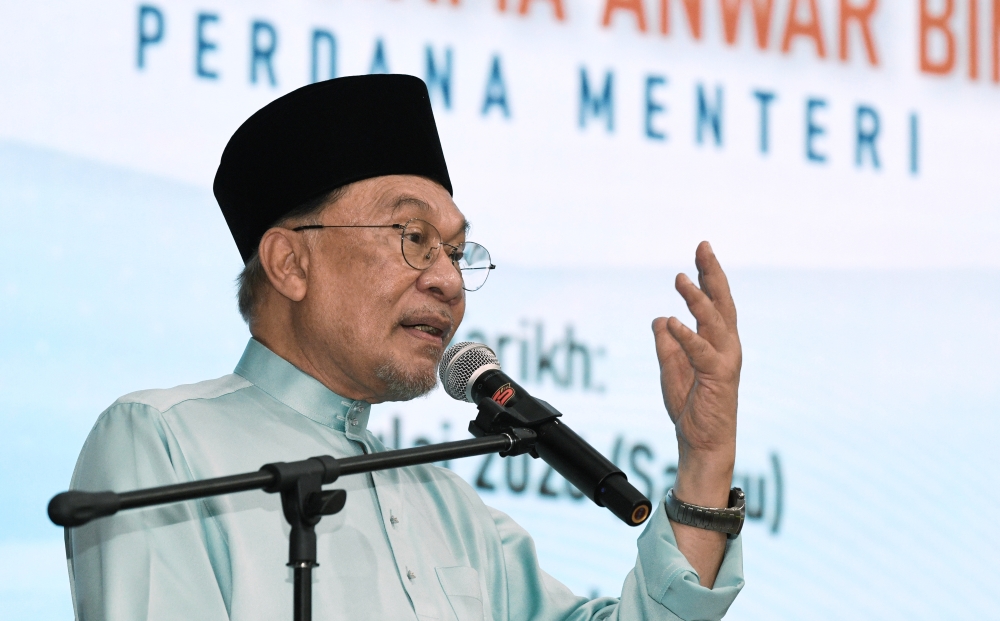
Prime Minister Datuk Seri Anwar Ibrahim has taken a firm stance against what he characterises as inflammatory rhetoric from Kedah's Mentri Besar Muhammad Sanusi Md Nor, warning that such divisive language threatens Malaysia's social cohesion. Speaking in Seberang Perai on July 25, Anwar expressed concern that comments attributed to the Perikatan Nasional-aligned state leader could undermine efforts to build a more unified national narrative, particularly during a period when the country faces significant economic and social challenges.
The Prime Minister's rebuke reflects broader tensions within Malaysia's fractious political landscape, where state-level leaders aligned with opposition coalitions have increasingly deployed inflammatory messaging to mobilise their respective voter bases. Anwar's intervention suggests that the federal government views such conduct as counterproductive to national stability and inconsistent with the responsible governance standards expected of senior public officials. The timing of his criticism—delivered in a strategically important state that has experienced its own political volatility—underscores the administration's determination to maintain the moral high ground on issues of national interest.
Anwar's call for unity represents a consistent theme throughout his tenure as Prime Minister, reflecting his broader political philosophy that emphasises inclusivity and consensus-building across Malaysia's diverse demographic and religious landscape. However, the explicit naming of Sanusi and his party suggests that patience with what the government views as inflammatory rhetoric has worn thin. This public censure carries symbolic weight in Malaysian politics, where direct criticism from the Prime Minister serves as a significant rebuke that can influence how both the political establishment and the broader public perceive the offending leader's conduct.
The conflict between Anwar and Sanusi is not isolated but rather symptomatic of deeper ideological and strategic differences between the ruling coalition and Perikatan Nasional, which has emerged as the primary opposition force following the 2022 general election. Sanusi, as Kedah's chief executive, commands considerable influence within his state and has become an increasingly prominent voice within Perikatan's leadership structure. His willingness to deploy provocative messaging may reflect both his personal political ambitions and the coalition's broader strategy of sharpening contrasts with the federal government.
For Malaysian readers and observers across Southeast Asia, the dynamics of this inter-coalition dispute carry implications for how the nation's political system manages difference and maintains democratic norms. The public nature of Anwar's criticism, rather than behind-the-scenes negotiations, suggests that the government believes public accountability and transparent rebuke serve the national interest more effectively than quiet diplomacy. This approach may embolden other government figures to similarly challenge what they perceive as irresponsible opposition behaviour, potentially intensifying political temperature.
Kedah's political significance in this broader context cannot be overstated. As a state with a substantial Malay-Muslim majority and a history of supporting Islamic-oriented parties and leaders, Kedah often serves as a barometer for sentiment within constituencies that form the traditional base of Malaysia's major political players. Sanusi's ability to maintain relevance and influence within Perikatan Nasional depends partly on his capacity to appeal to these voters, which may explain his willingness to adopt more combative rhetorical positions. Conversely, Anwar's intervention signals that the federal government intends to contest this ground more aggressively.
The question of what specific remarks triggered Anwar's condemnation remains important context for understanding the intensity of his response. Comments that touch on religious sensitivities, ethnic relations, or fundamental national principles typically provoke more forceful reactions from the Prime Minister than those involving routine partisan critique. The characterisation of Sanusi's statements as "divisive" suggests they likely transgressed boundaries that Anwar considers essential to preserve in Malaysian public discourse, particularly given the country's history of religious and communal tensions.
Anwar's emphasis on unity and responsible leadership reflects not merely political calculation but also a genuine ideological commitment to multiethnic and multireligious coexistence that has defined much of his public career. His willingness to publicly confront figures who he believes threaten this vision suggests deep conviction rather than opportunistic positioning. At the same time, his role as Prime Minister requires him to balance principled stands against inflammatory rhetoric with the pragmatic need to govern effectively alongside various stakeholders, including state leaders from different political backgrounds.
Looking forward, the trajectory of this dispute may influence how Malaysian politicians calibrate their public statements and whether they perceive real consequences for what government officials classify as divisive conduct. If Anwar's criticism translates into tangible political or administrative consequences for Sanusi or the Perikatan-controlled state government in Kedah, other opposition figures may become more circumspect. Conversely, if the rebuke remains largely symbolic, it may embolden further provocative statements as opposition leaders test the boundaries of acceptable discourse.
For the international community and regional observers, this domestic political dispute illustrates both the health and the fragility of Malaysia's democratic system. The fact that the Prime Minister can publicly criticise opposition figures without fear of authoritarian reprisal demonstrates institutional resilience. However, the intensity of partisan divisions and the apparent willingness of senior leaders to embrace divisive rhetoric suggests underlying tensions that require sustained attention and management. The degree to which Malaysia's political leadership can maintain commitment to democratic norms whilst vigorously competing for power will significantly shape the nation's trajectory in the coming years.

