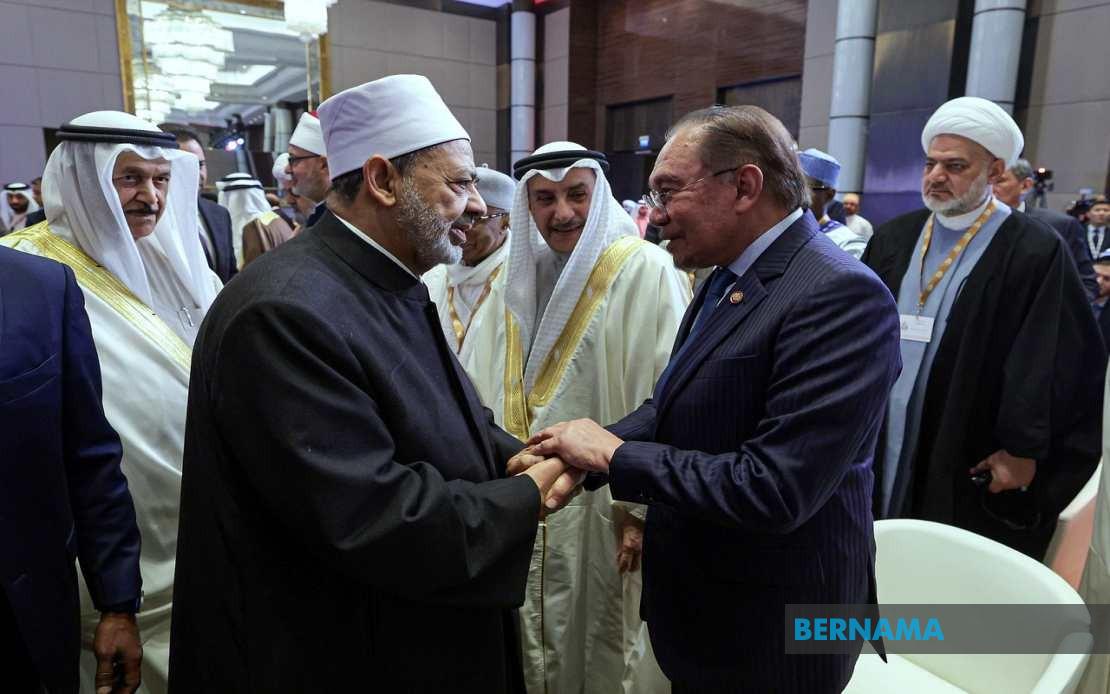
Prime Minister Datuk Seri Anwar Ibrahim has publicly recognised Prof Dr Ahmad Muhammad Ahmad Al-Tayyeb, the Grand Imam of Al-Azhar Al-Sharif, as one of the Islamic world's most influential voices championing the principle of wasatiyyah—the middle path of moderation in responding to contemporary challenges. In a contribution to the biographical work "In the Presence of Al-Tayyeb," Anwar characterised the renowned Egyptian scholar as a towering figure whose intellectual and spiritual leadership extends far beyond institutional confines, shaping how Muslims worldwide understand the intricate connections between faith, governance, and community cohesion in an era of rapid transformation.
The Prime Minister's endorsement underscores Malaysia's alignment with moderate Islamic scholarship at a time when the global Muslim community faces pressures from both extremist interpretations and secularising trends. By elevating Al-Tayyeb's profile, Anwar signals Malaysia's commitment to a centrist Islamic framework—one that balances traditional Islamic principles with the demands of pluralistic, multicultural societies. This positioning is particularly significant for Malaysia, where interfaith harmony and religious moderation remain foundational to national stability and cohesion, making the work of scholars like Al-Tayyeb relevant to domestic policy considerations.
At eighty years old, Al-Tayyeb continues to engage actively with pressing issues spanning religious doctrine, social ethics, and international relations, demonstrating that Islamic scholarship remains vital and evolving rather than static or inward-looking. Anwar's observation that the Grand Imam addresses matters "transcending institutional boundaries and time" reflects recognition that contemporary Islamic thought must grapple with globalisation, technological change, and the complexities of modern pluralism. This approach resonates with Malaysia's own efforts to project Islam as compatible with democratic governance, economic development, and multicultural citizenship.
The biographical collection, published by the Muslim Council of Elders and released earlier this year to commemorate Al-Tayyeb's eightieth birthday, represents a significant intellectual exercise in documenting and celebrating contemporary Islamic leadership. By contributing to this volume, Anwar positioned Malaysia among the international voices affirming Al-Tayyeb's influence, placing the country alongside other religious leaders and global thinkers who have recognised his contributions. This move strengthens Malaysia's standing within moderate Islamic networks and intellectual circles, enhancing its soft power within the Muslim world.
Anwar particularly highlighted Al-Tayyeb's embodiment of moderation not merely through rhetoric but through lived example, scholarship, and consistent practice over decades. This distinction is crucial: the Prime Minister suggests that authentic Islamic leadership derives credibility from alignment between words and actions, between public positions and personal integrity. For Malaysia's own religious and political leadership, this standard carries implicit expectations about consistency and moral authority, reinforcing that calls for moderation must be matched by demonstrated commitment to its principles.
A cornerstone of Al-Tayyeb's international standing has been his pioneering work in interfaith dialogue, most prominently exemplified by the 2019 signing of the Human Fraternity Document alongside Pope Francis in Abu Dhabi. This landmark agreement, which Anwar cited approvingly, represents one of the most significant recent expressions of religious cooperation between Islam's highest institutional authority and the Catholic Church's leader. The document's emphasis on viewing others as "brothers and sisters worthy of love, support, and respect" articulates a vision of religious pluralism grounded in shared humanity rather than relativism, a nuance that moderate Islamic scholars like Al-Tayyeb have carefully cultivated to distinguish their position from both fundamentalist rejection of other faiths and purely secular multiculturalism.
For Malaysia specifically, Al-Tayyeb's interfaith initiatives offer a theological foundation for the country's constitutional commitment to religious freedom and equal citizenship across faith communities. By endorsing Al-Tayyeb's dialogue efforts, Anwar implicitly validates Malaysia's own approach to managing religious diversity, suggesting that Islam can authentically support rather than merely tolerate non-Muslim communities. This theological grounding is increasingly important as Malaysia navigates tensions between Islamist movements seeking stricter religious governance and secular quarters resisting perceived religious encroachment.
The global implications of Anwar's statement extend beyond ceremonial recognition. The promotion of moderate Islamic voices occurs within a competitive landscape where extremist interpretations, geopolitical rivalries, and ideological movements vie for influence within Muslim communities. Al-Tayyeb's prominence as an alternative to more restrictive or politicised forms of Islam provides intellectual resources for Muslims seeking to navigate modernity without abandoning their faith commitments. Similarly, by backing such figures, Malaysia positions itself as aligned with the mainstream of contemporary Islamic thought rather than marginal or defensive positions.
Anwar's specific mention of Al-Tayyeb's work in strengthening "unity and peace in multicultural societies globally" carries direct resonance for Malaysian policymakers grappling with rising communal tensions and polarisation. The implicit argument is that Islamic moderation, properly articulated by respected scholars, serves not as a dilution of faith but as its mature expression suited to plural democracies. This framing helps defuse domestic debates in which religious observance is sometimes positioned as inherently at odds with national harmony, suggesting instead that the strongest Islamic scholarship actively supports coexistence.
The book's publication and Anwar's participation in it exemplify how intellectual networks and biographical commemoration function within Islamic leadership circles. Unlike Western political cultures where such tributes might occasion scepticism as self-serving, within Islamic scholarly traditions, authored collections celebrating a scholar's life and work represent recognised forms of honouring intellectual contribution and consolidating intellectual lineages. Anwar's contribution demonstrates Malaysia's integration into these transnational networks of moderate Islamic thought and its investment in maintaining these connections.
Looking forward, Anwar's public endorsement may influence how Malaysian Islamic institutions, educational frameworks, and religious discourse engage with questions of moderation and pluralism. When the Prime Minister elevates particular scholarly voices, he effectively signals institutional priorities and ideological directions, encouraging religious scholars and educators to align their work with endorsed frameworks. This soft power exercise, though subtle, shapes the intellectual climate in which Malaysian Islam develops, potentially strengthening advocates for wasatiyyah within domestic religious debates.
Ultimately, the Prime Minister's appreciation for Al-Tayyeb articulates a vision of Islamic leadership centred on compassion, intellectual rigour, and genuine engagement with contemporary realities. For Malaysia, a Muslim-majority nation committed constitutionally to religious pluralism and democratic governance, such leadership models offer both validation of the country's own trajectory and intellectual resources for ongoing negotiation of faith and modernity. As global religious polarisation intensifies, figures like Al-Tayyeb and their champions like Anwar represent a deliberate assertion that Islam's future need not be written by its most conservative or most radical voices, but rather by scholars committed to both authentic faith and genuine pluralism.

