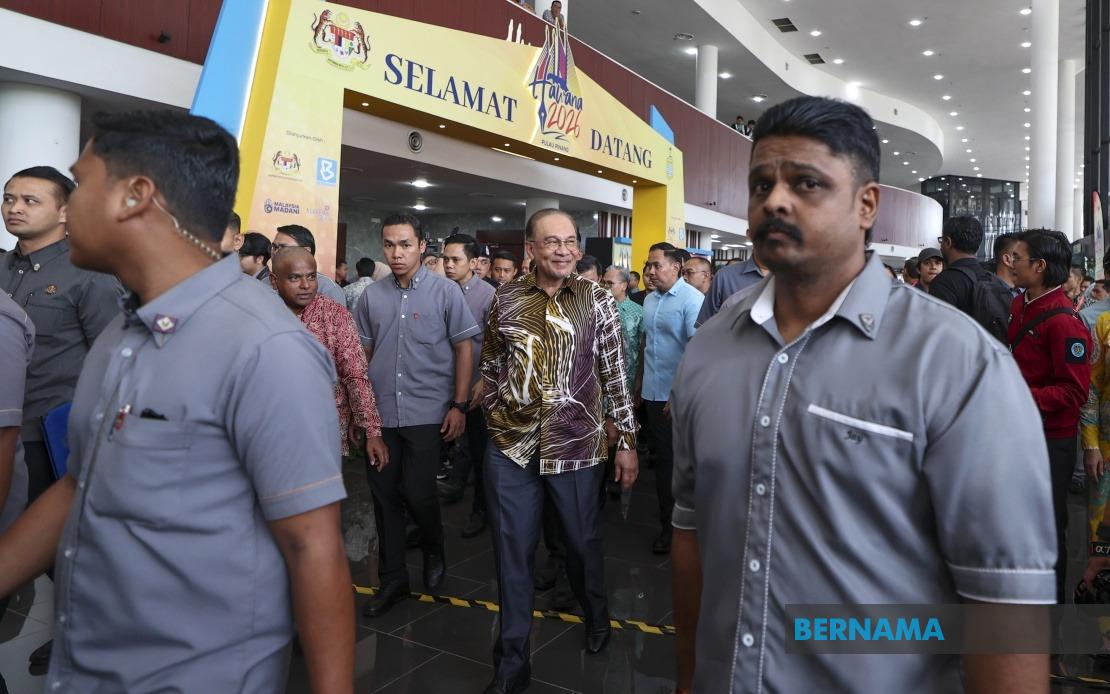
Prime Minister Datuk Seri Anwar Ibrahim inaugurated the National Journalists' Day (HAWANA) 2026 celebration on Thursday afternoon at the PICCA Convention Centre @ Butterworth Arena, marking a significant occasion for Malaysia's media fraternity and underscoring the government's commitment to press freedom and journalistic excellence. Arriving at 2.40 pm, the Premier was welcomed by Penang Chief Minister Chow Kon Yeow, Communications Minister Datuk Fahmi Fadzil and Communications Ministry secretary-general Datuk Abdul Halim Hamzah, setting the tone for an event that would bring together stakeholders from across the region.
The Prime Minister's participation signals the government's recognition of journalism's pivotal role in fostering informed citizenry and strengthening democratic institutions. Before engaging in the formal proceedings, Anwar took time to tour the exhibition booths and the HAWANA 2026 Photo Gallery, offering a hands-on perspective on the contributions and innovations within Malaysia's media landscape. This approach reflects an administration intent on maintaining direct engagement with professional communities beyond ceremonial duties.
The gathering drew an impressive roster of senior officials from Malaysia's information ecosystem, including Malaysian National News Agency (Bernama) chairman Datuk Seri Wong Chun Wai, Bernama chief executive officer and HAWANA 2026 Working Committee chairman Datin Paduka Nur-ul Afida Kamaludin, and Bernama editor-in-chief Arul Rajoo Durar Raj. Their combined presence underscored the national significance accorded to HAWANA 2026, which serves as the premier annual recognition for media practitioners demonstrating excellence and integrity in their reporting.
What distinguished this year's celebration was its pronounced regional dimension. Delegates from multiple ASEAN nations attended, including Timor-Leste Secretary of State for Social Communication Expedito Loro Dias Ximenes and Cambodia's Undersecretary of State at the Ministry of Information Prak Thaveak Amida. The participation of Laos' Permanent Secretary of the Cabinet Office of the Ministry of Technology and Communications Phuangpasert Keosouvanh reflected Southeast Asia's collective interest in elevating journalistic standards and fostering cross-border professional exchanges. Additionally, representatives from Timor-Leste's news agency TATOLI attended, widening the multilateral scope of the engagement.
Beyond government representatives, the event attracted international media organisations fundamental to the region's information infrastructure. Delegations from Indonesia's Antara News Agency, the Vietnam News Agency (VNA), and China's Xinhua News Agency were present, alongside professional bodies such as the Indonesian Journalists Association (PWI) and the bilateral association Ikatan Setiakawan Wartawan Malaysia-Indonesia (ISWAMI). This convergence of state-level media institutions and independent professional bodies highlighted the diverse ecosystem now characterizing Southeast Asian journalism.
The prime ministerial engagement centred on two key ceremonial functions with substantive implications for Malaysia's media sector. Anwar was scheduled to present the HAWANA Award and the Special HAWANA Award to individuals whose professional contributions have materially advanced journalism and shaped public discourse. These accolades carry significance beyond symbolic recognition, as they establish benchmarks for excellence that influence editorial cultures and professional aspirations across newsrooms. Simultaneously, the Premier was to distribute contributions from the Kasih@HAWANA Fund to media veterans in financial need, addressing the humanitarian dimension of supporting careers devoted to public service.
Organised under the thematic umbrella of 'Media Integrity Strengthens Credibility', HAWANA 2026 attracted approximately 1,000 media practitioners representing both Malaysian outlets and international organisations. This scale indicates sustained professional engagement with questions of editorial ethics, factual accuracy, and institutional trustworthiness—concerns that have intensified throughout Southeast Asia amid rapid information technology disruption and evolving political communication landscapes. The sheer attendance figures suggest an industry-wide consensus on the urgency of these issues.
The Communications Ministry's role as organising authority, with Bernama as implementing agency, positioned the event within Malaysia's formal governance structures for information dissemination and media regulation. This institutional arrangement reflects a model wherein state news entities function as custodians of professional standards while facilitating inter-agency dialogue on emerging challenges confronting journalism. The collaboration model offers insights applicable to other Southeast Asian administrations navigating the balance between media freedom and institutional coordination.
MALAYSIA's journalism sector faces distinctive pressures distinct from Western counterparts. Rapid technological disruption, economically weakened business models for legacy media, intense competition from digital-native platforms, and evolving regulatory environments shape the professional landscape. HAWANA 2026 provided a structured forum for practitioners to collectively engage these systemic challenges while reaffirming commitment to core journalistic values that endure regardless of platform or medium. The gathering of international colleagues facilitated knowledge exchange on how neighbouring countries address similar operational obstacles.
The Prime Minister's active participation acknowledged journalism's constitutional importance within Malaysia's democratic framework. His presence conveyed implicit messaging that an administration takes seriously the profession's institutional vitality and remains attentive to conditions enabling quality reporting. For media practitioners often navigating complex regulatory terrain, such high-level endorsement of their sector's integrity carries operational significance in shaping newsroom cultures and editorial decision-making frameworks.
Looking forward, HAWANA 2026 reflects an emerging Southeast Asian consensus that regional media development requires coordinated professional dialogue transcending national borders. The participation of ASEAN representatives and regional news agencies indicates recognition that challenges of media sustainability, digital transformation, and fact verification demand shared solutions and comparative learning. Malaysia's hosting of this expanded gathering positions the nation as a regional contributor to evolving standards for journalistic practice.
The event's emphasis on credibility as journalism's foundational asset carries heightened resonance in an era of information saturation and credibility erosion. By honouring practitioners demonstrating commitment to verification, transparency, and ethical reporting, HAWANA 2026 articulated an industry-wide commitment to distinguishing legitimate journalism from information operations deliberately designed to manipulate public understanding. This distinction becomes increasingly vital as technological capabilities for content manipulation expand and audiences struggle to assess source reliability.
Ultimately, the gathering represented more than ceremonial recognition of professional achievement. It constituted a collective reaffirmation by Malaysia's government, media institutions, and international partners that journalism grounded in integrity and committed to accurate information delivery remains essential infrastructure for functioning democracies and informed societies. The cross-regional participation amplified this message throughout Southeast Asia, suggesting that media excellence represents a shared regional priority transcending individual national interests.

