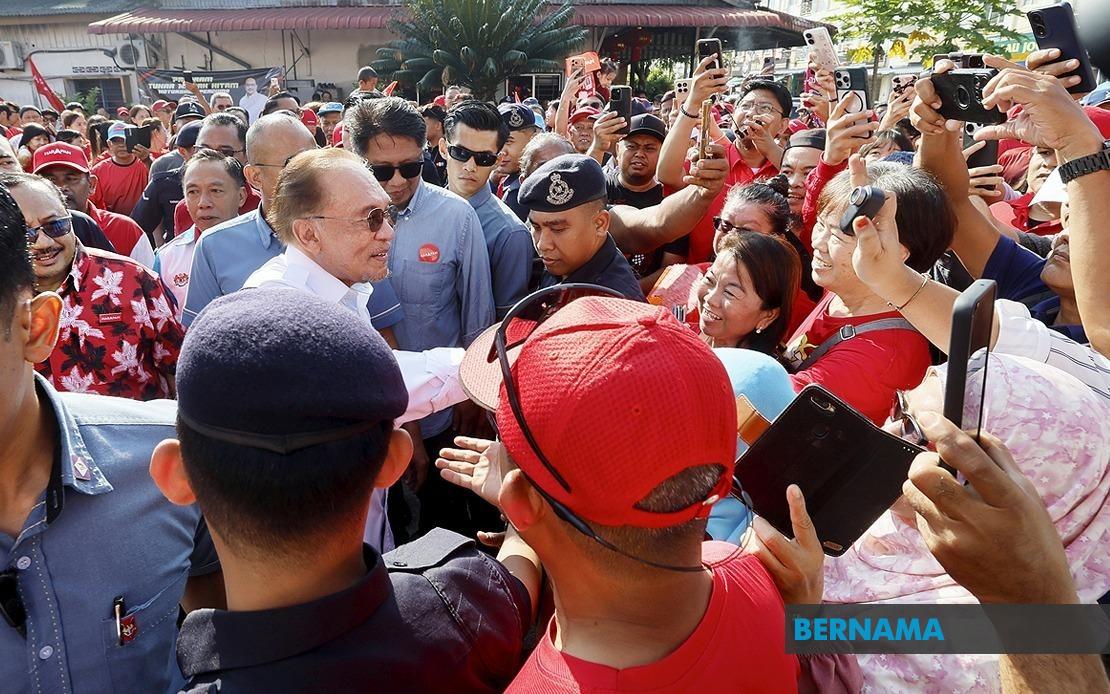
Prime Minister Datuk Seri Anwar Ibrahim made a personal reunion with an elderly couple who captured public affection after their determined trishaw ride to meet him during a campaign visit in Batu Pahat. The encounter took place on July 9 as the Prime Minister attended the "Yok! Meriahkan Johor! Undi Harapan" programme in Senggarang, providing a heartwarming moment during the state's election campaign season.
The couple at the centre of this story are Abdul Razak Pelangga, 86 years old, and his wife Jamilah Samsudin, 64. Their initial meeting with Anwar had occurred just days earlier when the Prime Minister made a breakfast stop at a local eatery in Senggarang. That spontaneous gathering drew widespread attention across social media platforms, with footage and images of the elderly man pedalling his trishaw circulating rapidly online. The moment resonated with Malaysians who appreciated the couple's commitment to make the journey despite their age and the physical effort required.
During their formal meeting at the campaign event, Anwar engaged the couple in warm conversation, even sharing humorous remarks about Abdul Razak's stamina and ability to power the three-wheeled vehicle. The Prime Minister's lightness of tone demonstrated genuine rapport with the visitors, moving beyond typical political pleasantries. He took the opportunity to express his gratitude for their unwavering support and the gesture they had made to meet him in person, underscoring the importance of such grassroots connections in Malaysian politics.
The reunion occurred within the broader context of active campaigning ahead of the Johor state election scheduled for the following Saturday. The timing of this engagement was strategic, as it reinforced the ruling coalition's accessibility and appreciation for ordinary citizens. Several prominent figures joined the Prime Minister at the Senggarang event, including Datuk Fahmi Fadzil, the Minister of Communications and Pakatan Harapan Communications director, whose presence emphasized the national significance attributed to the state election.
The programme also featured three Pakatan Harapan candidates contesting in the Johor state seats: Onn Abu Bakar representing Senggarang, Mohd Khuzzan Abu Bakar for the Semerah constituency, and Felicia Poh Rui Ling standing in Penggaram. This gathering of political leadership and candidates showcased the coalition's mobilization efforts in the state, with each individual bringing their own campaign momentum to the event. The mixture of national leadership and local representation demonstrated the integrated approach being employed to secure support across different voter demographics.
What made Abdul Razak and Jamilah's initial journey particularly compelling was the determination underlying their actions. The elderly man had pedalled his trishaw for nearly one kilometre to fulfill his wife's cherished wish of meeting the Prime Minister in person. Such dedication from voters, particularly those in their twilight years, carries significant symbolic weight in electoral politics. It speaks to the emotional investment citizens feel in political leadership and the lengths some are willing to travel for a moment of direct connection.
The original encounter during the breakfast stop had generated substantial public interest precisely because it humanized the political process. In an era often characterized by formal state functions and scripted appearances, the unplanned meeting between a serving Prime Minister and an elderly trishaw rider offered authentic texture to campaign narratives. The couple's story transcended typical political messaging, appealing to values of respect for elders and genuine democratic engagement that resonate across Malaysian society.
Johor, as Malaysia's second-largest state by population and a politically significant territory, commands considerable attention during state elections. The campaign activities undertaken by national leadership reflect the importance placed on securing electoral success in this jurisdiction. Pakatan Harapan's efforts to maintain momentum and build voter confidence in the days preceding the election involved multiple engagement strategies, of which the Senggarang programme formed one component.
The Johor state election represented a key electoral test for the ruling coalition during this period of political consolidation. By centering campaign activities on human-interest moments and genuine interactions with constituents, political leaders attempted to foster emotional connections that might translate into electoral support. The reunion with Abdul Razak and Jamilah exemplified this approach, transforming a spontaneous encounter into a strategic campaign asset while maintaining its authentic character.
Early voting in the election cycle had already occurred on the Tuesday preceding the Prime Minister's appearance in Senggarang, indicating that the campaign was entering its final intensive phase. With the main polling day scheduled for the following Saturday, the final week represented a critical window for consolidating support and maintaining campaign visibility. Campaign events across constituencies, particularly those featuring national leadership, aimed to energize party workers and create media momentum supporting the coalition's candidates.

