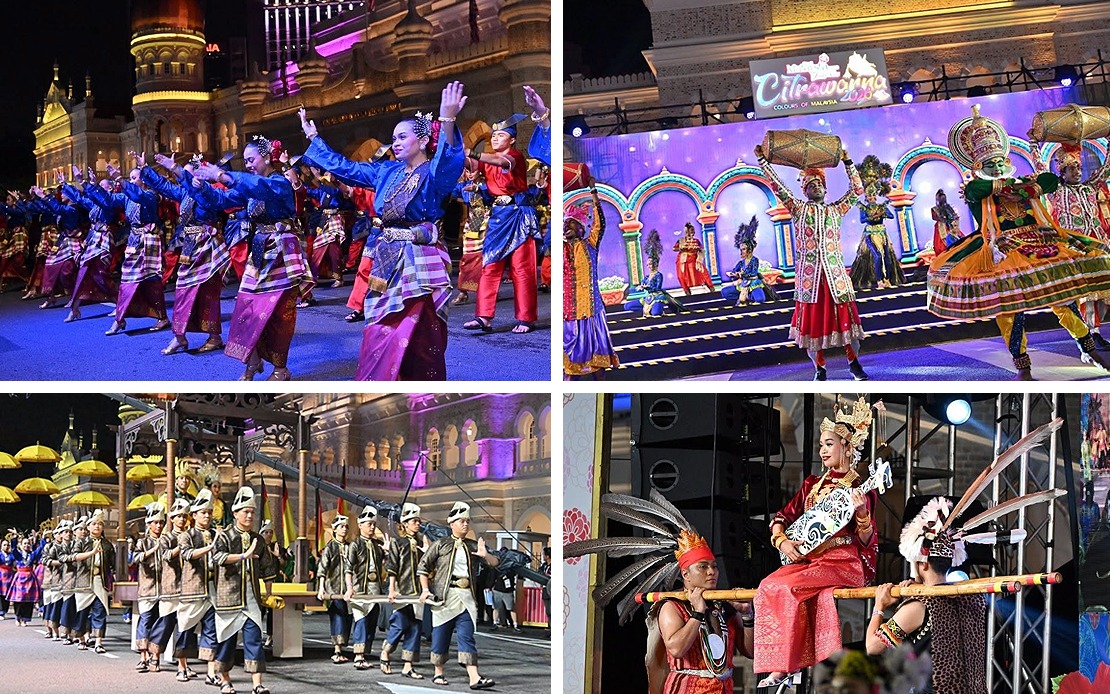
Prime Minister Datuk Seri Anwar Ibrahim inaugurated Citrawarna 2026 at Dataran Merdeka on July 25, marking the launch of Malaysia's marquee cultural tourism initiative under the Visit Malaysia 2026 campaign. The event brings together government agencies, cultural institutions and heritage organizations to present the country's diverse artistic and traditional landscape to visitors from both within the region and beyond. Accompanying the Prime Minister were Tourism, Arts and Culture Minister Datuk Seri Tiong King Sing, Deputy Minister Chiew Choon Man, Chief Secretary to the Government Tan Sri Shamsul Azri Abu Bakar and Tourism Malaysia director-general Mohd Amirul Rizal Abdul Rahim, underlining the government's commitment to positioning cultural tourism as a strategic pillar of Malaysia's international brand.
The three-day festival represents a coordinated effort among multiple stakeholders, including Kuala Lumpur City Hall (DBKL), Warisan Kuala Lumpur, the National Department for Culture and Arts (JKKN), Istana Budaya and the National Textile Museum. This institutional alignment reflects a deliberate strategy to weave together disparate threads of Malaysia's cultural ecosystem into a cohesive visitor experience. By mobilizing such a broad coalition, the organizers aim to demonstrate the depth and complexity of Malaysian heritage, moving beyond superficial cultural commodification to present substantive engagement with traditions rooted in the country's multicultural fabric.
The centrepiece of the celebration is the Colours of Parade, which mobilizes 3,500 dancers drawn from all thirteen states and three Federal Territories. This massive choreographic undertaking serves not merely as entertainment but as a symbolic affirmation of national unity. By bringing together performers representing Malaysia's ethnic diversity—Malays, Chinese, Indians, indigenous peoples and others—the parade communicates a deliberate message about shared national identity while simultaneously celebrating the distinct cultural contributions of each community. The scale of participation and geographic reach underscores the government's aspiration to position cultural tourism as an inclusive national project rather than an urban or regional phenomenon.
Beyond the parade itself, Citrawarna 2026 unfolds across four thematic pillars designed to engage visitors through multiple sensory and experiential dimensions. The Colours of Flavour component draws on Malaysia's renowned culinary heritage, with over 70 food and beverage stalls offering traditional and contemporary interpretations of regional cuisines. This gastronomic dimension recognizes that food tourism has become increasingly significant in global travel, particularly among affluent Asian and European visitors who view authentic culinary experiences as central to cultural understanding. The integration of food alongside visual and performing arts demonstrates sophisticated event design that appeals to contemporary tourist preferences.
The Colours of Culture and Colours of Arts segments provide deeper engagement opportunities, featuring 20 dedicated activity booths where visitors can participate in hands-on cultural practices, alongside 10 dedicated arts and crafts stalls. This participatory approach moves beyond passive observation, allowing tourists to develop embodied understanding of Malaysian traditions. Heritage demonstrations, traditional games and interactive workshops create touchpoints where international visitors can move beyond the role of spectators to become temporary participants in cultural practice. Such experiential engagement typically generates stronger emotional connections and more positive word-of-mouth promotion than purely observational tourism.
The international response to Citrawarna 2026 has exceeded initial expectations, with Tourism Malaysia reporting that specially curated tourism packages attracted over 700 overseas visitors. The geographic diversity of participants—spanning China, India, Mauritius, Japan, Vietnam, Indonesia, Singapore, Kazakhstan, Italy, the Netherlands, Switzerland and France—indicates successful market penetration across both Asian and Western source markets. The presence of substantial contingents from regional neighbors like Indonesia, Singapore and Vietnam is particularly noteworthy, as these proximate markets represent both competitive threats and collaborative opportunities within Southeast Asia's tourism ecosystem. European representation from Switzerland, the Netherlands, France and Italy suggests that marketing efforts have effectively positioned Malaysia as a culturally sophisticated destination within the global tourism market.
This international engagement carries particular significance for Malaysia's tourism economy, which has struggled to regain momentum following pandemic-related disruptions. Cultural tourism, as distinct from beach or nature-based tourism, typically generates higher per-capita spending and extends visitor length of stay. Overseas tourists participating in cultural events tend to book accommodation, dining and transportation services across multiple days, creating ripple effects throughout the hospitality and service sectors. By successfully attracting international cultural tourists through Citrawarna 2026, Malaysia's tourism industry gains access to a demographic segment that exhibits strong resilience against economic fluctuations and seasonal variations.
The Visit Malaysia 2026 campaign of which Citrawarna 2026 forms a crucial component represents an ambitious national tourism strategy. Rather than relying primarily on established beach destinations or shopping tourism, the campaign emphasizes cultural authenticity and heritage value. This repositioning suggests recognition that Malaysia faces intense regional competition from Thailand, Indonesia and Vietnam in beach tourism, but possesses differentiated advantages in multicultural urban cultural experiences. By leveraging Kuala Lumpur's position as a cosmopolitan center where multiple traditions coexist and intermingle, Malaysia can develop a distinctive tourism niche.
For Malaysian domestic audiences, Citrawarna 2026 carries significance beyond tourism metrics. Public participation in large-scale cultural celebrations reinforces social cohesion by providing shared experiences that transcend ethnic and religious boundaries. The involvement of participants from all states and territories emphasizes national integration and mutual respect for diverse traditions. Such events function as soft power mechanisms through which the government communicates messages about national identity, inclusion and pride in Malaysia's multicultural heritage. The visual spectacle of thousands of dancers representing different communities performing together creates powerful symbolism that resonates through media coverage and social discourse.
The involvement of heritage institutions like Istana Budaya and the National Textile Museum signals an effort to connect contemporary cultural celebration with historical preservation and scholarly understanding. These institutions bring curatorial expertise and archival knowledge to what might otherwise remain surface-level cultural display. By creating bridges between tourism, education and preservation, Citrawarna 2026 positions cultural tourism not as extractive entertainment but as a vehicle for deepening national understanding of heritage's significance. This institutional integration suggests a more sophisticated approach to cultural tourism than purely commercial models.
The three-day duration of Citrawarna 2026 reflects practical constraints of event management while representing a deliberate choice to create concentrated cultural intensity rather than extended diffusion. This compressed timeline encourages sustained media attention, facilitates visitor convenience and concentrates the economic impact on hospitality providers. The decision to anchor the event at Dataran Merdeka, Malaysia's historic independence square, carries symbolic weight by physically linking contemporary cultural celebration with the nation's foundational political moment. The choice of venue reminds participants that cultural identity and national identity remain intimately connected in Malaysia's post-colonial context.
Looking forward, the success of Citrawarna 2026 in attracting both domestic and international participation provides valuable data for refining the broader Visit Malaysia 2026 campaign. Tourism operators will analyze which international markets responded most enthusiastically, which cultural elements generated strongest visitor engagement, and which experiential components warrant expansion in subsequent iterations. This feedback loop between event execution and campaign strategy development enables progressive refinement of Malaysia's cultural tourism positioning. As regional tourism competition intensifies, such data-driven optimization becomes increasingly critical for maintaining competitive advantage.

