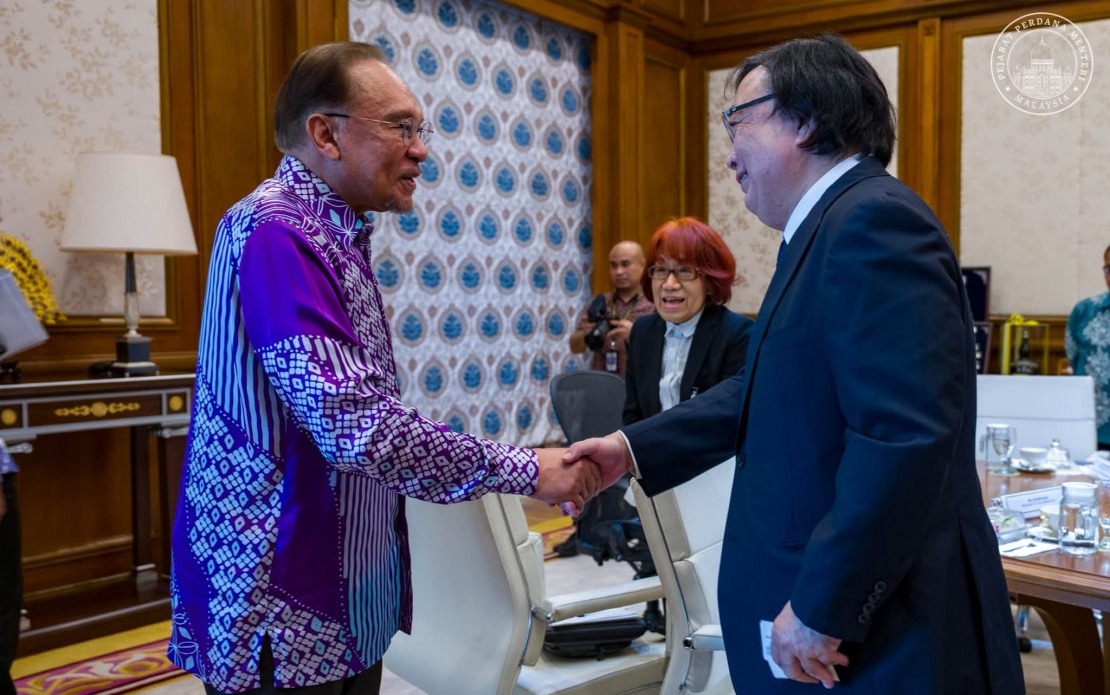
Prime Minister Datuk Seri Anwar Ibrahim held discussions with The Genron NPO President Yasushi Kudo in Kuala Lumpur on July 23, focusing on expanding the Asia Leaders Roundtable as a mechanism for addressing pressing regional and global challenges through strategic dialogue. The meeting underscored Malaysia's commitment to deepening institutional partnerships with Japan and leveraging independent think tanks in shaping regional policy discourse.
The Genron NPO, based in Japan, functions as an independent non-profit research institution that brings together influential leaders across Asia-Pacific to examine critical policy issues. Its platform has become increasingly relevant as countries in the region grapple with geopolitical tensions, economic integration challenges, and transnational security concerns that require coordinated responses. The organization's role in facilitating candid conversations between senior figures, away from formal diplomatic constraints, makes it a valuable counterpart for Malaysia's engagement strategy.
Anwar expressed gratitude for Japan's reception during his official visit in June, signalling the government's satisfaction with the state of bilateral relations and the quality of engagement at leadership level. This appreciation for Japan's hospitality reflects the importance Malaysia assigns to maintaining warm interpersonal ties with its strategic partners, a dimension often overlooked in discussions focused purely on economic or security metrics. The courtesy call itself embodies a diplomatic tradition that sustains goodwill and demonstrates respect for institutional channels of dialogue.
Malaysia's Comprehensive Strategic Partnership with Japan remains one of the nation's cornerstone external relationships. This framework encompasses defence cooperation, economic ties, technological collaboration, and people-to-people exchanges. For Malaysia, Japan represents not only a major source of foreign direct investment and technology transfer but also a regional anchor for stability and a partner in navigating the complex dynamics of great power competition in Southeast Asia. The partnership reflects shared interests in maintaining open sea lanes, promoting rules-based multilateralism, and fostering inclusive economic growth.
Yasushi Kudo extended an invitation to Anwar to address the Tokyo Conference 2027, a platform where Asian leaders and policy experts convene to debate regional futures. This invitation signals confidence in Anwar's intellectual contributions to regional discourse and recognition of Malaysia's role in Asia-Pacific affairs. The Prime Minister's earlier participation with a video message at the 2026 conference indicates an ongoing dialogue, with these successive conferences offering opportunities to articulate Malaysia's policy positions and concerns to a broad audience of influential figures.
The Asia Leaders Roundtable operates as a mechanism distinct from formal government-to-government channels, allowing frank discussions unconstrained by diplomatic protocol. For Malaysian policymakers, such platforms provide valuable insights into how counterparts in other nations approach shared challenges and opportunities. They also offer space to build personal relationships and understanding that can later translate into more effective cooperation when governments face policy decisions. Genron NPO's independence from the Japanese government gives it credibility as a neutral convening space.
Malaysia faces several regional challenges that benefit from the kind of strategic dialogue the Asia Leaders Roundtable facilitates. These include managing great power dynamics, particularly the competition between the United States and China; navigating economic interdependencies; addressing climate change and energy security; tackling transnational crimes and terrorism; and responding to shifts in technology and digital governance. A platform where leaders can discuss these issues with peers from across Asia allows for the exchange of perspectives and the identification of areas for collective action.
Japan's approach to regional engagement increasingly emphasizes dialogue platforms and networks as complements to traditional diplomacy. Prime Minister Fumio Kishida has promoted the concept of a free and open Indo-Pacific, a framework that aligns closely with Malaysian interests in maintaining regional stability and economic openness. Japanese support for enhanced institutional linkages through bodies like Genron NPO reflects a strategy of deepening engagement with Southeast Asian partners and embedding regional cooperation in multiple layers of dialogue.
The meeting also illustrates how Malaysia leverages relationships with independent think tanks and civil society organizations to advance national interests. Rather than relegating such engagement to lower levels of government, the Prime Minister's direct involvement signals institutional importance and suggests that ideas emerging from these forums receive serious consideration in policymaking. This approach recognizes that in an increasingly complex world, knowledge generated outside government structures often proves invaluable for informed decision-making.
For Malaysian observers, the expansion and strengthening of the Asia Leaders Roundtable carries implications for how regional consensus around key issues develops. When leaders meet in such forums, they help shape the intellectual framework within which governments later operate. If Malaysia and Japan can successfully work through Genron NPO to promote dialogue emphasizing rules-based order, economic openness, and inclusive development, these ideas gain traction among influential constituencies across Asia. Over time, such consensus-building efforts can influence the trajectory of regional cooperation and competition.
The expressed hope that Malaysia-Japan cooperation will continue to deepen reflects realistic optimism grounded in shared interests and demonstrated commitment. Both nations have benefited from their partnership and face similar challenges in the region. Japan's economic strength and technological capacity complement Malaysia's geographic position and growing role in regional affairs. As regional geopolitics becomes more contested, the value of institutionalized dialogue mechanisms like the Asia Leaders Roundtable will only increase, making partnerships that support such engagement platforms strategically significant.

