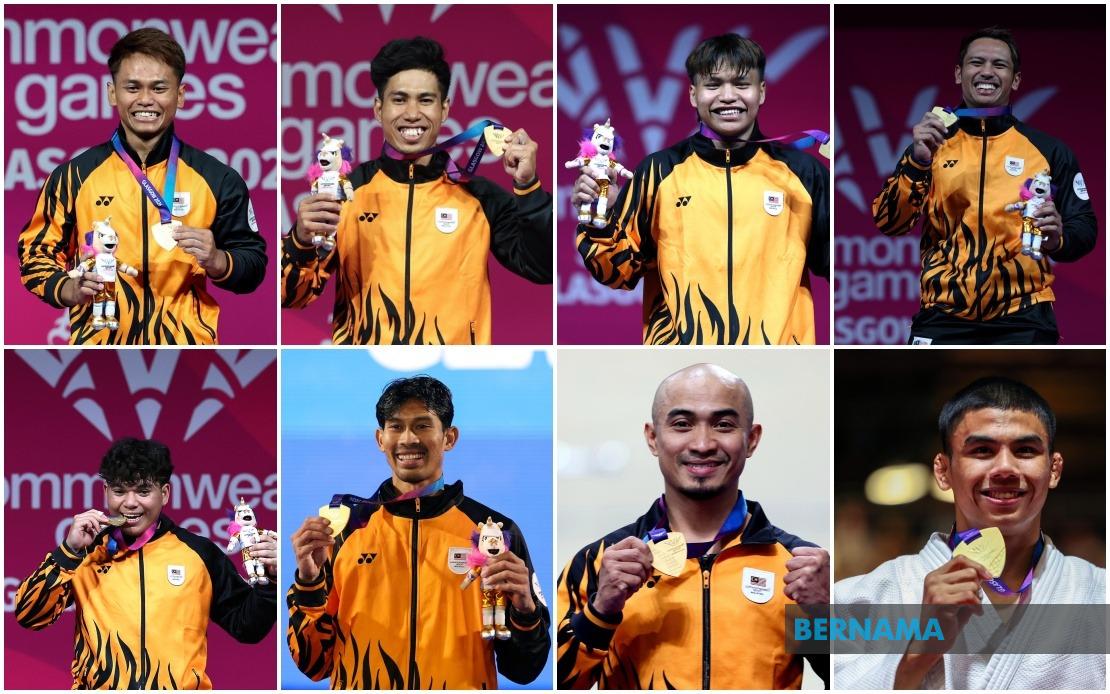
Prime Minister Datuk Seri Anwar Ibrahim has extended his congratulations to the Malaysian contingent for demonstrating remarkable competitive spirit and delivering creditable performances at the 2026 Glasgow Commonwealth Games. Through a statement posted on social media on August 3, he recognised the collective effort that Malaysia's athletes brought to the international sporting arena in Scotland.
The Prime Minister's acknowledgement extended beyond the athletes themselves to encompass the broader ecosystem supporting national sports. He specifically thanked the coaching staff, administrative officials, and various support personnel whose contributions were instrumental in enabling the contingent to compete effectively. This recognition underscores an understanding that elite sporting achievement depends not merely on individual talent but on comprehensive systems of preparation, guidance, and logistical support.
Anwar's message also highlighted the role of prayer and public support in sustaining the national team throughout their campaign. By invoking Alhamdulillah, an expression of gratitude common in Malaysian public discourse, the Prime Minister acknowledged both spiritual dimensions and the broader national sentiment invested in the Games. His reference to Malaysians who continuously prayed for the contingent's success reflected the interconnectedness between public sentiment and athletic performance, a dimension often overlooked in discussions of sporting achievement.
Malaysia's final tally at the 2026 Glasgow Commonwealth Games consisted of 16 medals, positioning the nation in 10th place within the overall medal standings. This placement represents a significant performance benchmark that warrants contextual analysis within Southeast Asia's sporting landscape. The Commonwealth Games, held every four years, serve as a crucial indicator of a nation's sporting development and investment in athlete welfare and training infrastructure.
The 10th-place finish carries implications for Malaysia's regional standing in the Commonwealth sporting community. This position reflects the nation's competitive capacity relative to larger and more developed sporting nations within the Commonwealth, while also highlighting areas where Malaysia's sports system can potentially expand its reach and effectiveness. The medal count, while not record-breaking, demonstrates consistent competitive engagement across multiple sporting disciplines.
For Malaysian readers, this performance carries relevance beyond mere patriotic satisfaction. Commonwealth Games results frequently influence government funding allocations for sports development, athlete remuneration schemes, and infrastructure investment decisions in subsequent cycles. The 2026 Glasgow result thus becomes a baseline for evaluating future sporting policy effectiveness and resource deployment. When policymakers assess whether increased investment in particular sports codes yields improved international outcomes, they reference results like those achieved in Glasgow.
The Prime Minister's public commendation also served a diplomatic function within Commonwealth relations. Malaysia, as a participating member of the Commonwealth, maintains sporting relationships with numerous nations across Africa, Asia, and the Pacific. Recognition of the contingent's efforts reinforces Malaysia's commitment to Commonwealth values and engagement, particularly at a time when various member states navigate complex geopolitical and economic circumstances.
From a domestic perspective, the Prime Minister's public recognition of the sporting contingent reflects broader government positioning on national pride and achievement. In Malaysia's political and social context, celebrating sporting accomplishments provides a unifying narrative that transcends ethnic, religious, and regional divisions. International sporting success stories resonate across diverse Malaysian communities as shared national moments, making them politically significant beyond their purely athletic dimensions.
The statement also implicitly addresses resource and morale concerns within Malaysia's sporting ecosystem. Athletic programmes often operate with constrained budgets and competing demands for government funding. Public recognition from the highest political office signals that sporting development remains a government priority, potentially boosting athlete recruitment and retention, particularly among younger prospects who see their field as valued by national leadership. This psychological dimension of political support often influences talent pipeline effectiveness.
The 2026 Glasgow Games performance metrics will likely inform Malaysia's preparation strategies for subsequent Commonwealth Games and other major international competitions. Officials and sports scientists will analyse which sporting disciplines contributed medals, which underperformed relative to expectations, and where targeted investment might yield improvements. The 10th-place finish, while respectable, leaves room for advancement that ambitious planning could potentially address in upcoming competition cycles.
Looking forward, Malaysia's sporting ambitions intersect with broader regional dynamics in Southeast Asia. Competitors including Indonesia, Thailand, and Vietnam continue developing their sporting infrastructure and athlete development systems. Malaysia's performance at major international competitions influences perception of its sporting prowess within ASEAN and shapes bilateral sports exchanges, talent recruitment patterns, and sponsorship decisions by commercial entities.
The Prime Minister's acknowledgement of the contingent also reflects evolving attitudes toward sports as a legitimate domain of national achievement and investment. In previous decades, sporting success received less explicit high-level political attention. Contemporary recognition of athletic accomplishment as worthy of prime ministerial commentary indicates shifting cultural valuations of sports within Malaysian national discourse, potentially creating more favourable conditions for young people pursuing athletic careers.
As Malaysia contemplates its sporting trajectory toward future Games, the Glasgow 2026 result represents both a platform for continued development and a prompt for strategic reassessment. The balance between celebrating current achievements and identifying improvement opportunities will define whether Malaysia's sporting standing strengthens or plateaus in subsequent international competitions.

