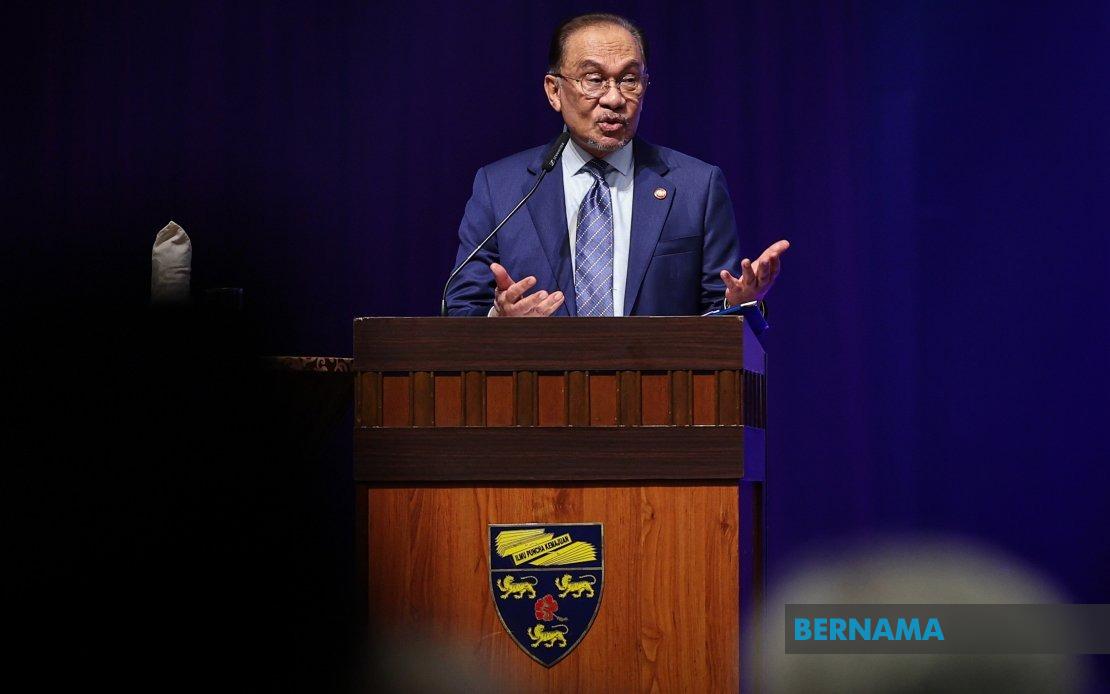
Prime Minister Datuk Seri Anwar Ibrahim has reached out to a gravedigger in Kuala Terengganu who is struggling with a severe medical condition, providing financial aid to ease the burden of his treatment. The RM2,000 contribution was delivered to Rosli Abdullah, a 52-year-old who has endured mouth cancer for three years, through the Implementation Coordination Unit of the Prime Minister's Department. The donation was handed over at the Flat Batas Baru surau in Kuala Terengganu on July 9, with the presentation made by Azhar Abd Hamid, deputy director of the Terengganu Federal Development Department.
The gesture addresses both the immediate financial strain and longer-term welfare concerns facing Rosli. According to Azhar, the contribution was intended to lighten his financial load and help cover the costs of the surgical intervention he urgently requires. Beyond the immediate donation, the Prime Minister's office identified a significant gap in the existing support system—Rosli had not yet been registered as a recipient of e-Kasih, the government's primary social safety net programme for low-income Malaysians. Officials conducting a review determined that he meets all the eligibility criteria for this assistance, and steps have been taken to register him immediately. This dual approach suggests a more comprehensive strategy to ensure that Rosli can access ongoing government support once the immediate crisis passes.
Rosli's health situation has deteriorated markedly in recent months, painting a picture of escalating medical distress. For the past month, he has been unable to speak due to severe swelling in his mouth and right cheek—a consequence of the advancing cancer. More alarmingly, his condition has prevented him from eating solid food for two weeks, forcing him to rely entirely on fluids administered through a tube. These physical limitations have rendered him unable to perform the work that sustained him, compounding both his medical and financial difficulties. The Flat Batas Baru surau, where Rosli has lived for over three decades, has become his primary home and support network in the absence of family ties.
The surau's deputy chairman, Mohd Radzali Mohamad, provided additional context on Rosli's circumstances and medical history. Beyond his primary occupation as a gravedigger, Rosli had occasionally taken on cleaning work around the surau to supplement his meagre income. However, his declining health has made even these supplementary tasks impossible. He lives alone as an unmarried man with no family to fall back on, making him entirely dependent on the compassion of the surau's management and the goodwill of the community. This isolation and economic vulnerability typify the plight of many elderly workers in Malaysia who lack formal social safety nets beyond government assistance.
Rosli's medical journey reflects the gruelling reality of battling a terminal illness within a resource-constrained healthcare environment. He has already undergone two surgical interventions, but the cancer has returned with renewed aggression. The Sultanah Nur Zahirah Hospital in Kuala Terengganu has since referred his case to the Universiti Sains Malaysia Hospital in Kubang Kerian, Kelantan, for more advanced surgical management. This referral to a teaching hospital suggests that specialists believe additional intervention is warranted, even as the prognosis remains uncertain. The repeated rounds of surgery and the necessity for increasingly specialized care underscore the mounting costs associated with treating advanced malignancies in Malaysia.
The surau's management has attempted to mobilize community support through a dedicated donation fund to cover medical and surgical expenses. Despite their efforts, the collected contributions remain insufficient to meet the full scope of anticipated costs. This shortfall is emblematic of a broader challenge facing Malaysia's healthcare system: while public hospitals provide treatment at subsidized rates, families and individuals often struggle to cover ancillary expenses, medication, transportation, and other out-of-pocket costs. For someone in Rosli's position—without employment income, family support, or substantial savings—these gaps can prove insurmountable without external intervention.
The case highlights the intersection of occupational vulnerability, health crises, and social safety nets in contemporary Malaysia. Gravediggers, often among the lowest-paid workers in the formal and informal sectors, typically lack comprehensive employment benefits or health insurance. When catastrophic illness strikes, such workers face a triple jeopardy: loss of income, mounting medical expenses, and limited access to social assistance if they fall outside bureaucratic registration systems. Rosli's initial exclusion from e-Kasih, despite clearly meeting the criteria for support, suggests that application and registration processes may not adequately reach those most in need—a systemic inefficiency that the Prime Minister's office has now moved to correct.
The intervention also reflects a broader political attention to welfare cases within local communities. Prime ministerial offices in Malaysia increasingly receive and respond to individual hardship cases brought to their attention through various channels—surau management, local leaders, community advocates, and media coverage. While such direct assistance is valuable for individuals like Rosli, it raises questions about the comprehensiveness and proactivity of existing welfare frameworks. A truly robust social safety net would identify and support such vulnerable individuals through systematic mechanisms rather than relying on ad hoc intervention and the attention of senior politicians.
Looking forward, Rosli's registration with e-Kasih opens the pathway to sustained government support beyond the initial RM2,000 donation. The e-Kasih programme, administered by the Ministry of Women, Family and Community Development, provides monthly cash assistance to registered low-income households, with additional benefits for specific categories such as the elderly, disabled persons, and those with serious illnesses. For someone in his position, this registration could translate to monthly stipends that help cover basic living expenses and contribute toward medical costs. However, the efficacy of this support depends on timely registration and the consistency of payments—administrative elements that sometimes falter in practice.
The broader context also involves Malaysia's ongoing efforts to strengthen its social protection infrastructure. The government has set targets for expanding e-Kasih coverage and has introduced complementary programmes such as the Bantuan Keluarga Malaysia, designed to provide cash assistance during periods of economic stress. Cases like Rosli's underscore both the importance of these safety nets and the gaps that persist. His three-year illness and the recent deterioration of his condition suggest that earlier, more proactive identification could have forestalled some of the crisis he now faces. Strengthening early warning systems and community-based monitoring could help ensure that vulnerable individuals receive support before situations become desperate.
The gravedigger's situation also resonates with the experiences of many Malaysian workers in precarious employment. The informal economy and low-wage sectors that employ millions of Malaysians often provide minimal job security or benefits. When workers age or face health crises, the absence of employer-provided safety nets leaves them vulnerable. This structural vulnerability affects not only gravediggers but also cleaners, farm labourers, domestic workers, and countless others who form the backbone of Malaysia's economy yet lack adequate protection. Addressing such systemic gaps requires both targeted assistance like that extended to Rosli and broader reforms to employment standards and social insurance coverage.

