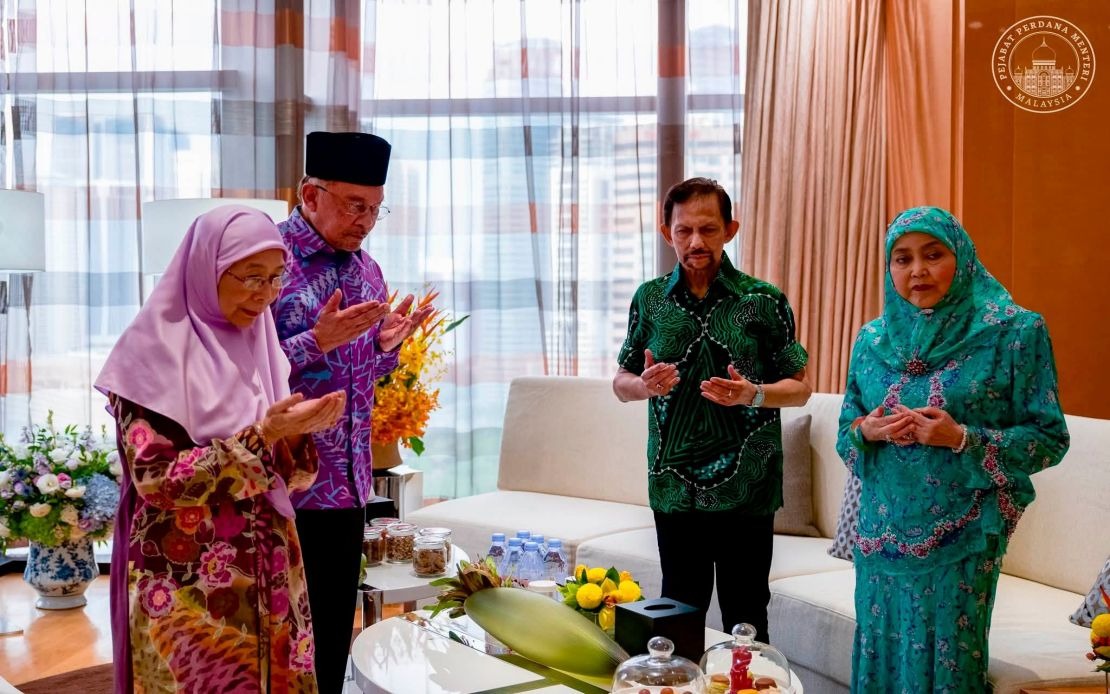
Prime Minister Datuk Seri Anwar Ibrahim has sent warm congratulations to the Sultan of Brunei, Sultan Hassanal Bolkiah, marking the sovereign's 80th birthday on July 15. Speaking on behalf of the Malaysian Government and its citizens, Anwar used the occasion to highlight the enduring importance of bilateral relations between the two neighbouring nations in a Facebook message released today.
The prime minister's gesture underscores the diplomatic significance Malaysia places on its relationship with Brunei, a fellow member of the Association of Southeast Asian Nations and a key regional partner. By publicly recognising this milestone through official channels, Anwar reinforced the personal bonds and institutional ties that connect the two governments at the highest levels. The timing and medium of the announcement reflect contemporary diplomatic practice, where social media platforms serve alongside traditional channels for state-to-state communication.
In his message, Anwar expressed hope that Sultan Hassanal Bolkiah would continue to govern Brunei Darussalam with the wisdom and prudence that have characterised his lengthy reign. This phrasing carries particular weight given the sultan's distinction as the world's longest-reigning monarch currently on the throne, a position he assumed following the death of Queen Elizabeth II in September 2022. The acknowledgement of his leadership qualities serves both as a compliment and a subtle affirmation of regional stability under his stewardship.
Sultan Hassanal Bolkiah was born on July 15, 1946, in Bandar Brunei, the capital now known as Bandar Seri Begawan. He ascended to the throne as the 29th Sultan of Brunei in 1967, meaning he has ruled the oil-rich sultanate for more than five decades. This longevity in office is relatively uncommon in contemporary global politics, where leadership transitions occur with greater frequency in most nations. His continued reign has provided Brunei with institutional continuity during periods of significant regional transformation.
The Malaysian prime minister's remarks specifically emphasised the mutual benefits of strengthened cooperation between the two nations. This framing suggests an aspirational dimension to bilateral relations—rather than merely acknowledging existing ties, Anwar indicated a desire to deepen and expand them. For Malaysia and Brunei, such cooperation encompasses trade, security, cultural exchange, and shared responses to regional challenges including maritime issues in the South China Sea and broader ASEAN agenda priorities.
The diplomatic protocol of acknowledging significant national celebrations among ASEAN members reflects the bloc's emphasis on consensus-building and relationship management. By publicly honouring Sultan Hassanal Bolkiah's milestone birthday, Anwar demonstrated respect for Brunei's sovereignty and leadership while simultaneously reinforcing Malaysia's commitment to the principles of regional solidarity that underpin ASEAN's founding doctrine. Such gestures, though seemingly ceremonial, contribute to the subtle maintenance of good relations that support substantive cooperation across multiple domains.
Brunei's importance to Malaysia extends beyond symbolic ties. The two nations share maritime boundaries and have worked together on numerous regional initiatives through ASEAN frameworks. Their relationship encompasses economic interactions, though Brunei's oil and gas wealth gives it considerable financial independence. Cultural and historical connections between the Malaysian and Bruneian peoples further bind the two societies, with shared Islamic heritage and linguistic similarities providing foundations for mutual understanding.
Sultan Hassanal Bolkiah's distinction as the world's longest-reigning living monarch places him in an exclusive category of world leaders. His achievement is particularly noteworthy given the political complexities and economic challenges that Brunei has navigated over his tenure. The sultan's personal stability and sustained leadership have become defining characteristics of contemporary Brunei, contributing to the nation's reputation for predictability and institutional strength in regional affairs.
As Anwar's congratulatory message indicates, Malaysia's leadership views sustained engagement with Brunei as integral to broader Southeast Asian stability and prosperity. The emphasis on continued cooperation and strengthened ties reflects recognition that bilateral relations form the building blocks of effective regional architecture. In a period of geopolitical flux and great power competition in the Indo-Pacific, the reaffirmation of ASEAN solidarity through such diplomatic courtesies carries practical significance beyond ceremonial value.

