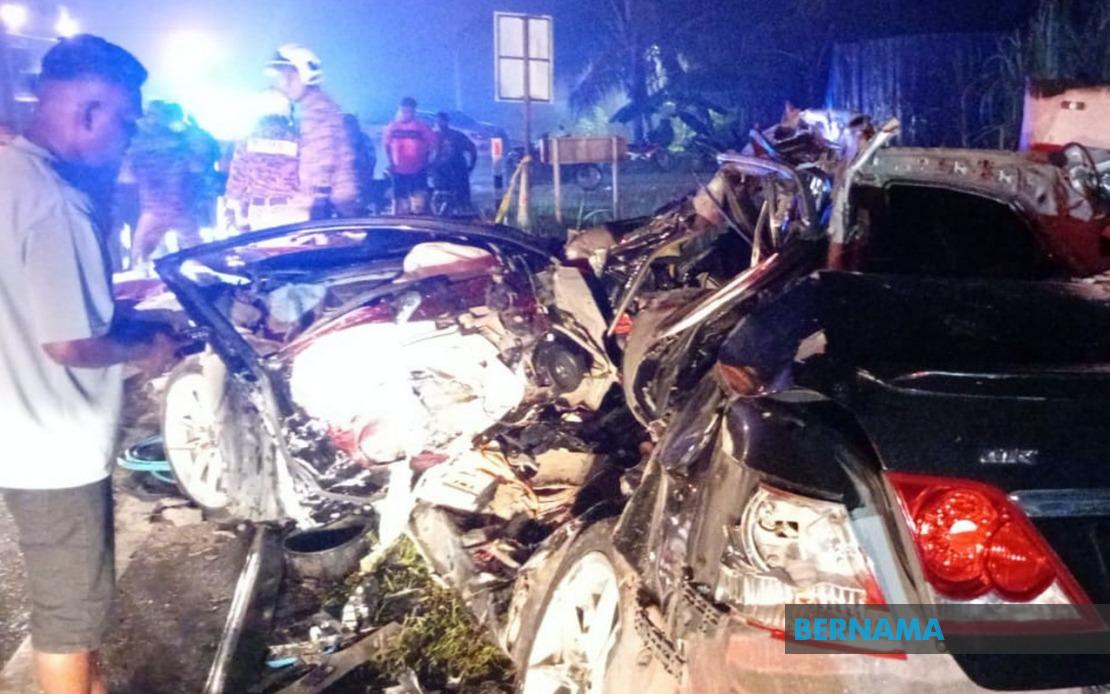
Prime Minister Datuk Seri Anwar Ibrahim has expressed profound sadness over a fatal road accident that claimed six lives in Bentong, Pahang, reiterating the critical importance of road safety in Malaysia. The tragedy unfolded in the early hours along Jalan Karak Lama, one of the country's key inter-city routes, highlighting once again the persistent dangers that travellers face on Malaysian highways despite ongoing safety campaigns and enforcement efforts.
In a statement shared via his social media platform X, Anwar conveyed heartfelt sympathies to the bereaved families alongside his wife, Datuk Seri Dr Wan Azizah Wan Ismail. The Prime Minister's message emphasised the need for fortitude and resilience during this devastating period, whilst extending hopes for the swift recovery of those injured in the incident. His words reflected the gravity with which the government views road safety as a public health and security concern that demands immediate attention from all stakeholders.
The collision occurred at approximately 4 am on the stretch of Jalan Karak Lama near Klink Desa Jambu Rias, when a Toyota Vios travelling from Kuantan towards Kuala Lumpur struck a one-tonne lorry whilst descending a hillside section of the road. All six occupants of the passenger vehicle—the driver and five passengers—were pronounced dead at the scene, with their identities later confirmed as V. Mugilan (25), K. Dineshvaran (22), K. Alaganathan (21), A. Kanabati Raja (19), S. Kiisven (17), and M. Paranthaman (16). The lorry operator, a 31-year-old man, sustained severe injuries and was transported to hospital for treatment.
Early findings from police investigations suggest that the Vios had drifted across the centre line while negotiating the downhill gradient, placing it directly into the path of the oncoming lorry. This sequence of events underscores a recurring pattern in Malaysian highway fatalities, where loss of vehicle control on inclined stretches, often compounded by excessive speed or driver fatigue, creates catastrophic collision scenarios. The Jalan Karak Lama corridor has historically recorded elevated accident rates, making this incident part of a troubling continuum on this particular route.
The loss of life—particularly the presence of three victims aged 16, 17, and 19—adds a poignant dimension to this tragedy, raising questions about passenger safety, vehicle occupancy practices, and whether appropriate supervision and risk awareness were in place. Young people often feature disproportionately in road accident statistics, a concern that extends across Malaysia and Southeast Asia more broadly. The incident serves as a stark reminder of how instantaneous and irreversible the consequences of road mishaps can be.
Road safety remains a persistent challenge for Malaysia, with fatality and injury statistics continuing to reflect systemic vulnerabilities. Contributing factors typically include speeding, inadequate rest periods for drivers engaged in long-distance travel, vehicle maintenance standards, road conditions during adverse weather or visibility, and driver behaviour. The Jalan Karak Lama, connecting Kuantan to Kuala Lumpur, experiences heavy commercial and passenger traffic, intensifying the risks associated with human error or mechanical failure.
PM Anwar's emphasis that "road safety must never be taken lightly" carries significance beyond ceremonial acknowledgement. It signals the government's stance on treating highway safety as a policy priority requiring multi-faceted intervention—from infrastructure improvements and enforcement intensity to public education campaigns and vehicle safety standards. Such incidents typically prompt reviews of specific accident blackspots and can catalyse temporary or sustained increases in police presence and speed enforcement on affected routes.
The immediate aftermath of such tragedies often witnesses heightened road safety advocacy, though sustained behavioural change among drivers and passengers requires more than periodic reminders. Studies consistently demonstrate that cultural shifts toward road safety take time and must engage communities, vehicle operators, enforcement agencies, and healthcare providers in coordinated efforts. For Malaysia's transport sector, the challenge remains translating political acknowledgement into concrete, measurable improvements in safety outcomes.
The incident also raises broader questions about vehicle safety features, emergency response times, and medical trauma care capacity in regions outside the capital. Bentong, though relatively accessible, sits in a district where response infrastructure may differ from urban centres. Improving survival rates and recovery outcomes following major accidents requires investment in emergency medical services, trauma centres, and trained personnel across all highway corridors.
Beyond the immediate grief of affected families, this tragedy will likely prompt discussions among transport authorities, the Road Transport Department, and relevant stakeholders regarding targeted interventions on Jalan Karak Lama and similar high-risk corridors. Whether through enhanced lighting, improved road markings, speed reduction measures at critical points, or increased patrols, authorities have multiple levers to deploy in addressing recurring accident patterns.
As investigations continue, the lorry driver's condition and subsequent findings may yield additional insights into causative factors. However, regardless of specific circumstances, the collective toll of road accidents across Malaysia demands urgent, sustained action. PM Anwar's condolences represent official acknowledgement, yet the true measure of response will be reflected in policy decisions and enforcement outcomes in the months and years ahead.

