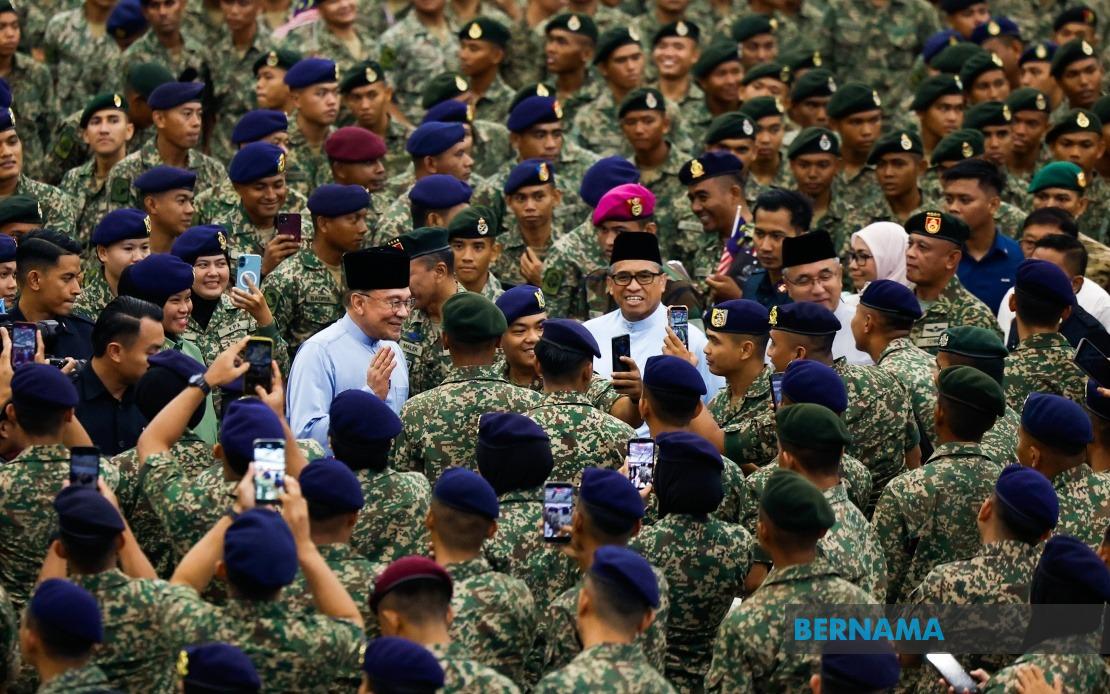
Prime Minister Datuk Seri Anwar Ibrahim has defended the government's three-year delay in publishing the Royal Commission of Inquiry report on Lembaga Tabung Haji, arguing that premature disclosure would have triggered depositor panic and potentially crippled the institution responsible for managing the savings of millions of Malaysian Muslims preparing for the hajj pilgrimage. Speaking at an event in Port Dickson on July 24, the Premier explained that withholding the sensitive document was a deliberate strategic decision aimed at preserving confidence in one of the nation's most important financial institutions.
The timing of the RCI report's release has become increasingly contentious within government circles, reflecting broader tensions over transparency and institutional stability. Anwar acknowledged that releasing the inquiry findings immediately after its completion could have catastrophically undermined depositor trust, leading to a bank-run scenario where nervous account holders rushed to withdraw their funds en masse. Such a scenario would have threatened TH's operational viability and left vulnerable Muslim communities at risk of losing retirement and pilgrimage savings accumulated over decades. The Prime Minister framed the decision as a necessary exercise in institutional crisis management, prioritising the financial security of ordinary Malaysians over immediate public disclosure.
Crucially, Anwar stressed that the delay was not permanent but contingent on TH's recovery. Over the past three years, the pilgrims' fund board has undergone significant structural reform under the leadership of chairman Tan Sri Abdul Rashid Hussain, whose appointment marked a turning point in the institution's troubled trajectory. Under this new stewardship, TH has stabilised its operations, restored credibility among depositors, and even earned international recognition—the institution recently received the Best Haj Management award for the current haj season. These measurable improvements have created what Anwar characterised as the appropriate conditions for transparency, allowing the government to disclose the RCI findings without triggering the financial panic that would have occurred had the report been released in 2021.
The Prime Minister's explanation reflects a calculated balancing act between competing imperatives of good governance. While acknowledging that the public deserves access to the truth about TH's past troubles, particularly regarding alleged improper sales of strategic assets, Anwar defended the government's determination that institutional stability must take temporary precedence. This hierarchy of values—putting the financial security of depositors ahead of immediate transparency—will resonate with many Malaysians who depend on TH's continued viability, though it may disappoint transparency advocates who argue that accountability cannot be deferred indefinitely without erosion of public trust.
The government's position on the RCI report has exposed ideological fractures within the ruling Pakatan Harapan coalition. Opposition figures from within the government's own alliance, including representatives from Amanah, DAP, and PKR, issued a joint statement arguing forcefully that the Cabinet should deliberate and decide on immediate publication. These coalition partners contended that the principles of transparency and accountability that the MADANI Government claims to champion demand that the public be given access to the inquiry's findings without further delay. They argued that Malaysian citizens have an inherent right to know the facts uncovered by the RCI, enabling them to evaluate both TH's historical failings and the adequacy of remedial measures undertaken to prevent recurrence.
Anwar indicated that the government intends to proceed with releasing the RCI report imminently, though he indicated a procedural step remains pending. The Prime Minister stated he would consult with the Chief Secretary to the Government regarding whether the Cabinet should formally review the report prior to public disclosure. This suggests the government is preparing the groundwork for publication while ensuring all senior government figures are aligned on the timing and messaging. The presence of high-ranking officials including Chief Secretary Tan Sri Shamsul Azri Abu Bakar, Defence Ministry representatives, and military leadership at the Port Dickson event underscores the gravity with which the government regards both TH's recovery narrative and the imminent disclosure decision.
For Malaysian depositors, particularly the estimated 3.7 million account holders at TH, the timing of the RCI report's release carries profound implications. These individuals represent a substantial portion of the Muslim population nationwide, encompassing professionals, civil servants, blue-collar workers, and retired persons who have entrusted their savings to the board. Many made contributions specifically for hajj purposes, viewing these accounts as both financial vehicles and religious obligations. The government's argument that stabilising TH was a prerequisite to transparency reflects a paternalistic calculus—the assumption that ordinary Malaysians required protection from information about their own fund's governance, even as they bore the consequences of past mismanagement.
The controversy surrounding the RCI report must be understood against TH's troubled recent history. The pilgrims' fund board faced numerous allegations of questionable asset sales, poor investment decisions, and governance failures that eroded billions of ringgit in accumulated savings. An RCI was established to investigate these matters comprehensively, but the resulting report has been locked away from public scrutiny for three years. This extended concealment has fuelled speculation among critics who question whether the true scope of institutional failures remains hidden from the public. Some observers have suggested the withholding served purposes beyond financial stability—potentially protecting senior officials who authorised controversial decisions during the previous administration.
The government's handling of the TH RCI report illustrates broader questions about institutional accountability in Malaysia's political economy. When public institutions fail or suffer mismanagement, should disclosure be subordinated to stability concerns? Who decides when information is too sensitive for public consumption, and on what criteria? These questions have particular resonance in Malaysia, where concerns about institutional integrity remain high following decades of allegations regarding embezzlement, cronyism, and governance lapses. The Pakatan Harapan coalition's 2018 campaign centred on promises of transparency and accountability, making the continued withholding of the RCI report a test of whether the government's rhetorical commitments translate into practical commitments to institutional reform.
Moving forward, the publication of the RCI report will constitute a significant moment in Malaysia's governance narrative. If the report documents serious mismanagement or improper decision-making, it may prompt calls for prosecutions, disciplinary action, or systemic reforms within TH's governance structure. Conversely, if the report's findings are relatively benign or blame external market conditions rather than institutional failure, the government's three-year delay will appear particularly difficult to justify. Either way, Malaysian citizens will finally be able to evaluate independently what went wrong at their pilgrims' fund and whether the reforms undertaken actually address root causes or merely cosmetic symptoms.
The resolution of the TH RCI question will also carry implications for broader governance standards. If the government successfully releases the report following a period of deliberate concealment, it may embolden similar withholding of other sensitive official documents in future crises, establishing a precedent that institutional stability can justify transparency delays. Conversely, if civil society and opposition figures successfully pressure for more aggressive disclosure practices, Malaysia's transparency culture may advance incrementally. For now, with Anwar indicating imminent publication and Cabinet consultation pending, the three-year saga of concealment appears nearing conclusion, though the full consequences of the delay remain uncertain.

