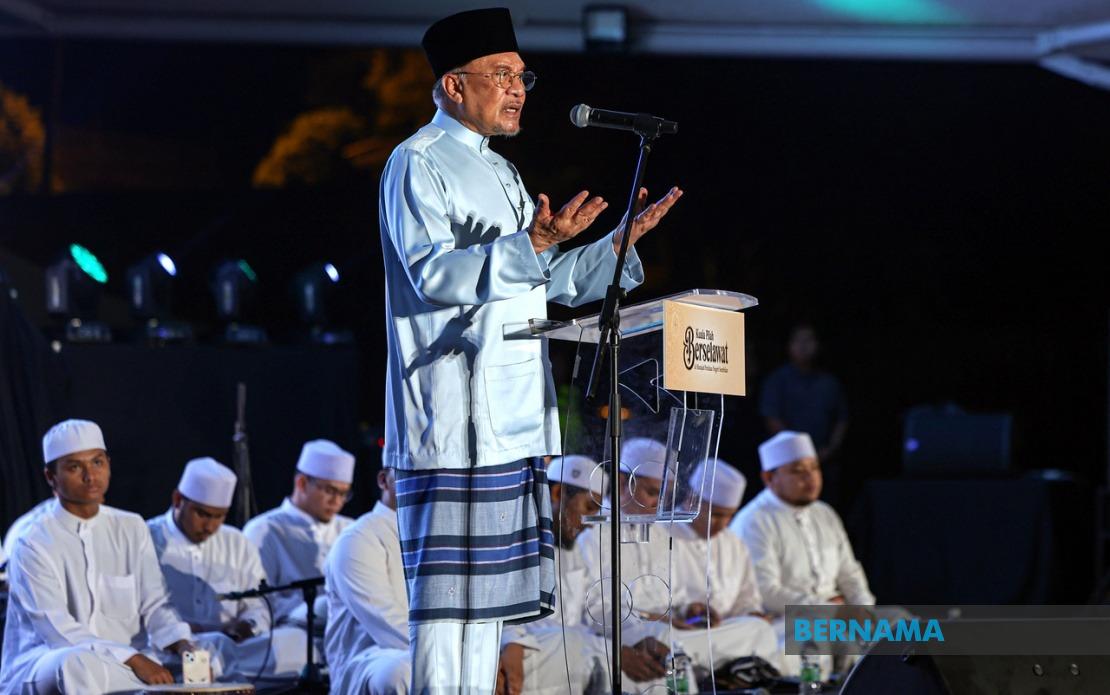
Prime Minister Datuk Seri Anwar Ibrahim has declared that all investigations arising from the Royal Commission of Inquiry into Lembaga Tabung Haji must be conducted with full transparency and without any shield for individuals implicated in wrongdoing. Speaking at a gathering in Kuala Pilah on July 30, the premier emphasized that the moment for delays and concealment has passed, signalling a firm commitment to accountability in relation to the findings.
The RCI report, which identified specific parties responsible for misconduct within the hajj management body, will now serve as the foundation for investigative action. By positioning the commission's determinations as the evidentiary basis for identifying culprits, Anwar has effectively removed any discretion from investigators and made the RCI's conclusions non-negotiable. This approach represents a departure from historical patterns where high-level inquiries sometimes yielded limited consequences.
Anwar's insistence on transparency carries particular weight given Malaysia's long history of controversial corporate and institutional scandals. The Tabung Haji situation has attracted significant public and political scrutiny, especially among the Muslim community who entrust their savings with the organization for pilgrimage purposes. Any perception of cover-up or preferential treatment would undermine public confidence not only in Tabung Haji but in government institutions more broadly.
The timing of this pronouncement reflects mounting pressure to demonstrate tangible reform. The RCI process itself consumed considerable time and resources, raising public expectations that findings would translate into meaningful action rather than bureaucratic shelving. By publicly committing to transparent investigation, Anwar appears to be attempting to pre-empt accusations that the inquiry would become a dead letter.
The presence of several senior cabinet members at the Kuala Pilah event—including Minister in the Prime Minister's Department (Religious Affairs) Datuk Dr Zulkifli Hasan, his deputy Marhamah Rosli, Education Minister Fadhlina Sidek, and Selangor Menteri Besar Datuk Seri Amirudin Shari—underscored the political significance attached to the matter. Their attendance signalled unified government backing for the investigation and suggested that this was not merely the Prime Minister's individual position but official policy.
For Malaysian citizens and observers in the region, the Tabung Haji situation illustrates broader governance challenges facing developing economies. Pilgrim welfare organizations handle substantial public funds and occupy positions of trust, yet institutional safeguards sometimes prove insufficient. The RCI process represents an acknowledgment that something went materially wrong, whether through incompetence, mismanagement, or deliberate malfeasance. How thoroughly and fairly the resulting investigation unfolds will serve as a test of whether Malaysia's institutions can genuinely hold powerful figures accountable.
The Prime Minister's explicit rejection of cover-ups carries implicit recognition that such practices have damaged public trust in the past. His forceful language—stating emphatically that "there must be no more cover-ups"—functions partly as damage control and partly as a reform statement. Whether this translates into prosecutions, dismissals, recoveries of misappropriated funds, or structural reforms depends on investigation outcomes and political will.
From a Southeast Asian perspective, Malaysia's handling of the Tabung Haji matter may influence how other nations in the region approach similar institutional failures. Several ASEAN countries face comparable challenges with pilgrimage funds and religious institutions managing public money. The credibility of Malaysia's response could either encourage regional standards for accountability or demonstrate the limits of institutional reform when powerful figures are implicated.
The RCI's identification of responsibility creates a political imperative for the government to act decisively. Failure to prosecute or discipline those named in the findings would invite accusations of hypocrisy and selective justice. Conversely, comprehensive investigation and appropriate consequences would strengthen arguments that Malaysia's institutional and judicial systems retain capacity for independent operation despite political pressures.
The investigation phase now enters uncharted territory. The RCI has completed its factual work; the challenge lies in converting findings into prosecutable cases and administrative actions. This requires coordination between law enforcement, the Attorney General's Chambers, and relevant regulatory bodies—a complex undertaking that could reveal whether institutional silos and political considerations still obstruct accountability.

