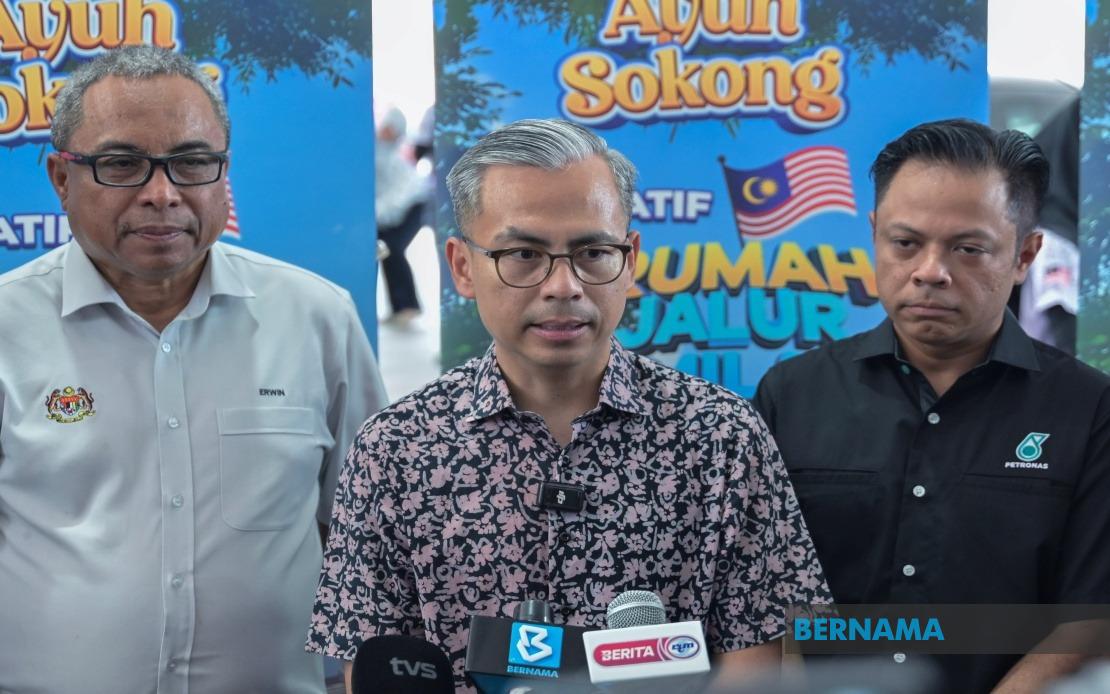
Prime Minister Datuk Seri Anwar Ibrahim has reaffirmed the federal government's commitment to expanding the number of seats in the Sarawak State Legislative Assembly, instructing the Election Commission to furnish a detailed status report on the proposed constituency redelineation exercise. Government spokesman Datuk Seri Fahmi Fadzil disclosed that the matter was discussed during a recent Cabinet session, where the Prime Minister underscored his administration's resolve to move forward with the initiative.
The redelineation proposal aims to increase the Sarawak State Legislative Assembly from its current size by adding 17 new parliamentary seats, bringing the total membership to 99. This expansion was outlined in the Sarawak State Legislative Assembly (Composition of Membership) Bill 2025, which represents a significant structural change to the state's legislative framework. The move reflects efforts to better represent Sarawak's growing population and evolving demographic distribution across its diverse regions.
Fahmi explained that while the Prime Minister has clearly signalled political commitment to implementation, the practical timeline remains uncertain pending clarification from the Election Commission. "The implementation period has not been informed to the Cabinet because there are several things that we are waiting for from the EC," the Communications Minister stated, indicating that procedural requirements and electoral readiness assessments must be completed before concrete timelines can be announced. This cautious approach reflects the technical complexity involved in redesigning electoral boundaries while ensuring fairness and representativeness.
Two federal cabinet ministers, Women, Family and Community Development Minister Datuk Seri Nancy Shukri and Works Minister Datuk Seri Alexander Nanta Linggi, had previously raised the Sarawak delineation question in Cabinet discussions, highlighting the issue's priority among government decision-makers. Their advocacy suggests cross-ministerial support for the expansion, potentially smoothing its passage through necessary approval processes. The involvement of these ministers indicates the issue transcends routine administrative matters and carries political significance at the highest levels of government.
For Malaysian observers, the Sarawak seat expansion holds implications beyond the state's boundaries. Sarawak, as Malaysia's largest state by area and home to diverse indigenous communities, has long advocated for greater parliamentary representation proportionate to its population. The proposed increase from roughly 82 current seats to 99 seats acknowledges demographic shifts and strengthens the voice of Sarawak constituencies in state legislative debates. This development may also set precedent for similar representation reviews in other Malaysian states facing population growth and redistribution.
The redelineation exercise carries particular significance given Malaysia's constitutional framework, which grants states considerable autonomy over their internal electoral arrangements. Any major expansion requires coordination between federal and state authorities, as well as approval from the Election Commission, whose independence in managing boundary delimitations is constitutionally protected. The Election Commission's role in this process ensures that technical and procedural standards are maintained, though this also explains why definitive implementation dates cannot yet be specified.
Parallel to the Sarawak matter, Fahmi outlined preparations for the upcoming Melaka state election, revealing that the MADANI government is implementing lessons learned from recent electoral contests in Johor and Negeri Sembilan. The government is working with the Malaysian Communications and Multimedia Commission to ensure robust internet infrastructure at all polling centres throughout Melaka, a practical consideration that increasingly influences election administration. Such attention to digital connectivity reflects modern electoral realities, where information dissemination and voter communication occur through multiple channels.
The coordination between the Election Commission and the Communications and Multimedia Commission on infrastructure matters demonstrates the interconnected nature of contemporary election management. Government spokesman Fahmi's emphasis on identifying media room locations and internet access requirements underscores how state elections now demand sophisticated logistical planning beyond traditional ballot-counting operations. These preparations also serve transparency objectives, enabling media coverage and observer monitoring of the electoral process.
From a regional perspective, Sarawak's legislative expansion contributes to ongoing discussions across Southeast Asia regarding representative governance and constituent representation in federal systems. As Malaysia navigates these structural adjustments, neighbouring countries with federal arrangements observe how Kuala Lumpur balances central authority with state autonomy and local representation. Sarawak's distinct political culture and the presence of strong indigenous representation make this particular redelineation exercise notable within Malaysian politics.
The government's decision to request comprehensive Election Commission reports before finalising implementation timelines reflects administrative prudence, though it also suggests the process may extend beyond immediate expectations. Those invested in the outcome—including Sarawak state politicians, constituency associations, and voter advocacy groups—should anticipate a methodical approach prioritising electoral integrity over rapid execution. The Election Commission's technical requirements will ultimately determine the practical feasibility and timeline for introducing these additional parliamentary seats.
Looking forward, the successful implementation of Sarawak's assembly expansion could influence broader conversations about Malaysia's electoral architecture. Should this redelineation proceed smoothly, it may embolden similar requests from other states seeking to adjust their legislative composition. Conversely, any complications in this exercise could signal to other jurisdictions the technical and political challenges involved in restructuring established electoral frameworks. The outcome therefore carries implications extending well beyond Sarawak's state boundaries, potentially shaping how Malaysia approaches representation questions in the coming years.

