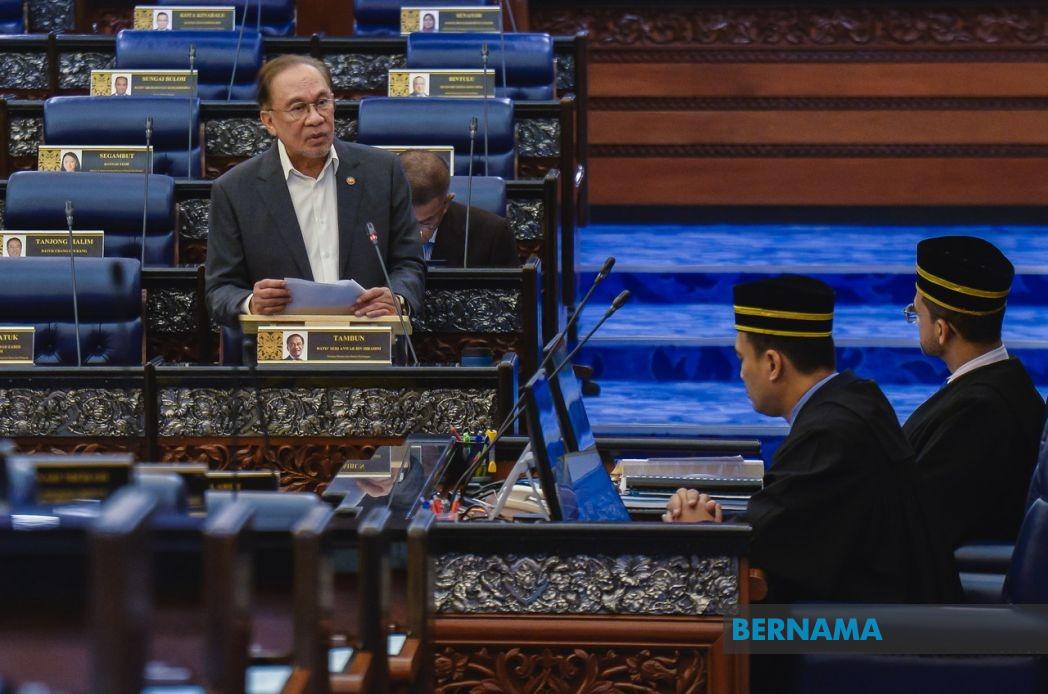
Prime Minister Datuk Seri Anwar Ibrahim moved on June 30 to dispel misconceptions surrounding programme restrictions in Federal Land Development Authority settlements, making clear during parliamentary proceedings that no blanket ban exists on activities held within FELDA communities. The clarification came in response to concerns raised in the Dewan Rakyat and follows confusion surrounding the postponement of the FELDA Settlers' Day gathering previously scheduled for Kluang, Johor, on June 20 and 21.
The crux of Anwar's position centres on a critical distinction between prohibiting events entirely and restricting how government resources may be deployed during campaign periods. While state governments retain full authority to organise their own activities within FELDA areas, including those aimed at land distribution and community engagement, the electoral framework explicitly forbids the utilisation of federal government machinery—including FELDA administrative apparatus and resources—for partisan political purposes. This legalistic boundary reflects Malaysia's constitutional requirements governing the conduct of elections and the neutral deployment of state institutions.
In his parliamentary response to Datuk Seri Hamzah Zainudin of Perikatan Nasional representing Larut, the Prime Minister emphasised that individual state leaders, including menteri besars, face no impediment to entering FELDA settlements and initiating programmes under their own auspices. Similarly, should a state government choose to undertake land titling exercises or other administrative functions within these communities, such actions remain permissible provided they adhere to electoral legislation governing the conduct of officials and deployment of resources during sensitive political periods.
Anwar explicitly denied issuing any directive ordering cancellation of the Kluang event, attributing any postponement to standard administrative processes rather than executive prohibition. This denial carries significance for rural constituencies where FELDA communities represent substantial voting blocs and where land distribution and settlement development remain politically sensitive issues. The clarification suggests that operational decisions regarding specific events may reflect logistical or scheduling considerations distinct from categorical policy bans.
The Prime Minister's intervention reflects broader tensions within Malaysia's federal system regarding the allocation of authority over land and settlement matters. FELDA, as a federal entity, operates under national oversight, yet state governments possess concurrent powers over local development and community engagement. Navigating this dual jurisdiction during election cycles requires careful calibration to prevent accusations of either federal overreach or state-level misuse of governmental advantage. Anwar's statements attempt to establish that the MADANI Government respects legitimate state prerogatives while maintaining electoral integrity safeguards.
Beyond defensive clarifications, Anwar used the parliamentary platform to articulate the administration's affirmative development agenda for FELDA communities. He characterised prior decades of FELDA management as marked by institutional neglect, with settlements falling behind in rural infrastructure provision and social service delivery. This narrative frames the current government's interventions—including establishment of dialysis centres and expansion of development infrastructure—as corrective measures addressing accumulated deficits rather than new spending initiatives. The emphasis on welfare improvements seeks to reposition FELDA engagement as a development priority transcending electoral cycles.
Deputy Prime Minister Datuk Seri Dr Ahmad Zahid Hamidi features prominently in Anwar's account of enhanced facility provision, suggesting high-level commitment to FELDA revitalisation. This institutional pairing signals that addressing settler welfare constitutes a government-wide priority rather than a peripheral concern relegated to lower administrative echelons. For FELDA residents whose economic circumstances often remain precarious—dependent on commodity prices, land productivity, and market access—such ministerial visibility carries practical and symbolic weight.
The controversy surrounding FELDA programming reflects deeper anxieties within Malaysia's political ecosystem regarding the potential instrumentalisation of rural development for electoral advantage. Given FELDA settlements' historical role in nation-building narratives and their concentration in constituencies competitive between major political coalitions, any perception that federal authority restricts opposition-aligned state governments' ability to engage with settlers generates considerable political friction. Conversely, concerns persist that incumbent governments might leverage control over settlement administration and resource allocation to consolidate electoral support.
Anwar's distinction between programme restriction and resource-use limitation represents an attempt to navigate this minefield through careful legal parsing. In theory, such demarcation permits robust political competition within FELDA areas whilst preventing governmental apparatus from becoming direct campaign tools. In practice, definitional boundaries between what constitutes legitimate programme activity and what constitutes impermissible resource deployment often blur, particularly when development initiatives carry implicit political messaging or benefit particular constituencies disproportionately.
The timing of these parliamentary exchanges, occurring in mid-2024, suggests they may relate to electoral positioning rather than abstract constitutional principle. Malaysia's national election scheduled for late 2024 or early 2025 means that questions about programme access and resource deployment in FELDA areas carry immediate electoral implications. States governed by opposition coalitions may perceive federal restrictions as disadvantageous, whilst federal authorities must demonstrate even-handedness to maintain democratic legitimacy and avoid accusations of electoral manipulation.
For Malaysian observers and particularly FELDA settlers themselves, Anwar's reassurances about programme access require translation into tangible operational outcomes. Whether state governments can indeed freely organise substantive engagement with settlers, and whether federal agencies will accommodate such activities without administrative friction, will ultimately determine whether the Prime Minister's parliamentary clarifications reflect genuine policy or rhetorical positioning. The distinction between stated policy and implementation practice often proves decisive in rural Malaysian politics, where settler communities possess long institutional memory and scepticism regarding governmental promises.

