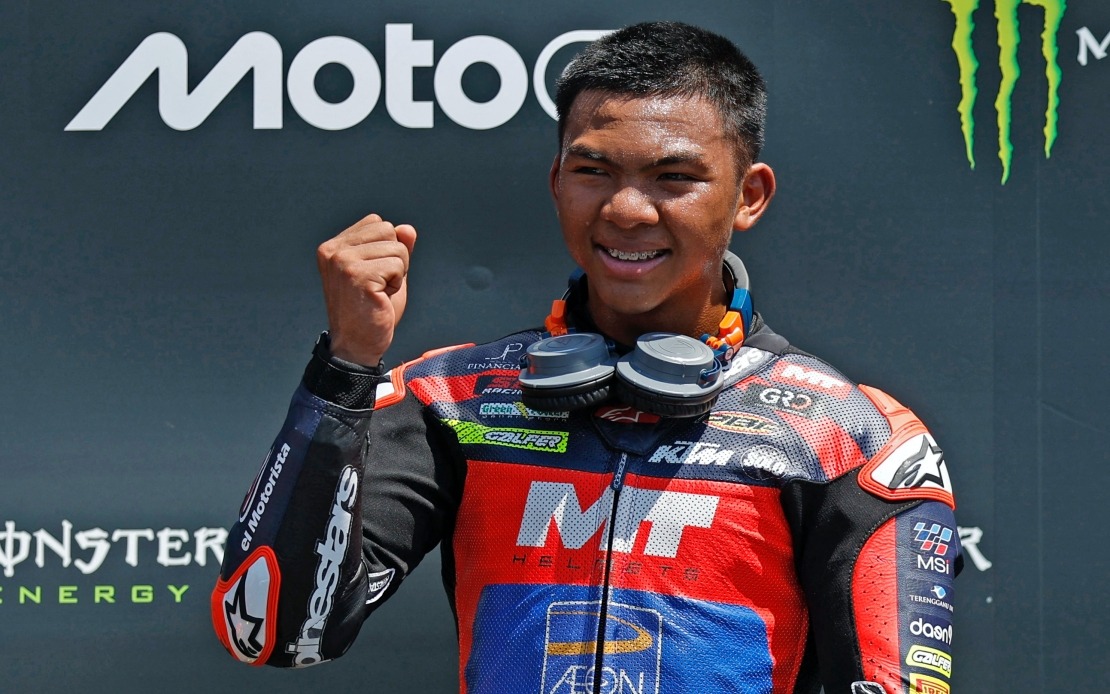
Prime Minister Datuk Seri Anwar Ibrahim has publicly commended Moto3 rider Hakim Danish Ramli after the 18-year-old claimed a landmark victory at the Czech Grand Prix held at Brno Circuit. The congratulatory message, shared via X (formerly Twitter), underscored the national significance of the achievement. Anwar's acknowledgement reflects growing recognition within Malaysia's political establishment of the country's emerging talent in international motorsport.
Hakim Danish's triumph at Brno represents a watershed moment for Malaysian motorcycle racing. The AEON Credit-MT Helmets-MSi rider's success terminates a protracted 10-year championship drought in the Moto3 category, during which no Malaysian has stood atop the podium in this competitive feeder class. The last Malaysian to achieve victory in Moto3 competition was Khairul Idham Pawi, who secured consecutive wins at the Argentine and German grands prix during the 2016 season, making Hakim Danish's Brno triumph only the third Moto3 victory by a Malaysian rider in the modern era of the championship.
This Czech victory arrives as Hakim Danish's second significant result of the 2024 Moto3 season, elevating his profile considerably within the sport's developmental ladder. The teenager's podium finish in third place at the Italian Grand Prix at Mugello mere weeks earlier had already signalled competitive potential, but the outright win demonstrates consistent progress rather than fortune. Such consistency is paramount in motorcycle racing, where consistency often determines which riders progress to the intermediate Moto2 category and eventually MotoGP.
The significance of Hakim Danish's achievement extends beyond personal accomplishment or national pride. Malaysia has historically produced several world-class motorcycle racers, and the pathway from Moto3 success frequently leads to international stardom. The dominance of Asian riders in motorcycle racing has intensified markedly over the past two decades, with Malaysian, Thai, and Indonesian competitors now integral to the sport's competitive landscape at all levels. Hakim Danish's breakthrough places him within a growing cadre of Southeast Asian talents who compete at the highest levels of international motorsport.
At merely 18 years of age, Hakim Danish occupies the prime developmental window for a Grand Prix motorcycle racer. The Moto3 championship serves as the official entry point to Grand Prix racing, hosting riders typically aged between 16 and 20. Success at this age in international competition carries exponential significance for future progression, as demonstrated by numerous contemporary MotoGP stars who were similarly precocious in their junior categories.
The Prime Minister's public endorsement carries implications beyond ceremonial recognition. In Malaysia, where motorsport enjoys considerable but cyclical public interest, political acknowledgement of sporting achievements can substantially amplify domestic visibility and corporate sponsorship interest. Hakim Danish's victory now enters the national narrative, potentially attracting Malaysian-based sponsors seeking association with rising sporting talent, thereby providing financial stability crucial for progression through increasingly expensive categories.
Brno Circuit, where this victory materialised, represents one of motorcycle racing's most technically demanding venues. The Czech track's high-speed characteristics and demanding corner configurations require precise bike control and courage, attributes that Hakim Danish evidently demonstrated to overcome his competitors. Racing at foreign circuits against internationally assembled competitor fields represents the crucible within which genuine talent becomes identifiable from merely promising junior competitors.
The competitive context within Moto3 currently emphasizes the championship's role as a genuine meritocratic pathway. Unlike some junior series characterised by substantial funding advantages, Moto3 competition remains sufficiently balanced that talented riders from developing motorcycle racing nations can compete effectively against competitors from traditional racing powerhouses. This competitive democracy makes Hakim Danish's achievement genuinely earned through skill rather than circumstantial advantage.
Looking forward, Hakim Danish faces the substantial challenge of converting single victories into sustained championship competitiveness. Many riders achieve isolated wins without progressing further, making consolidation of his Brno success crucial. The remainder of the 2024 Moto3 season will prove instructive regarding whether his victory represents a genuine turning point in his development or a single highlight within an otherwise middling campaign.
Malaysia's motorsport infrastructure has expanded considerably in recent years, with improved training facilities and junior racing programmes now producing internationally competitive riders. Hakim Danish's emergence represents validation that these investments in grassroots development generate tangible international results. His success should encourage continued institutional support for junior motorcycle racing in Malaysia, recognising that the sport's upper echelons depend fundamentally upon consistent supply of well-developed young talent from lower categories.

