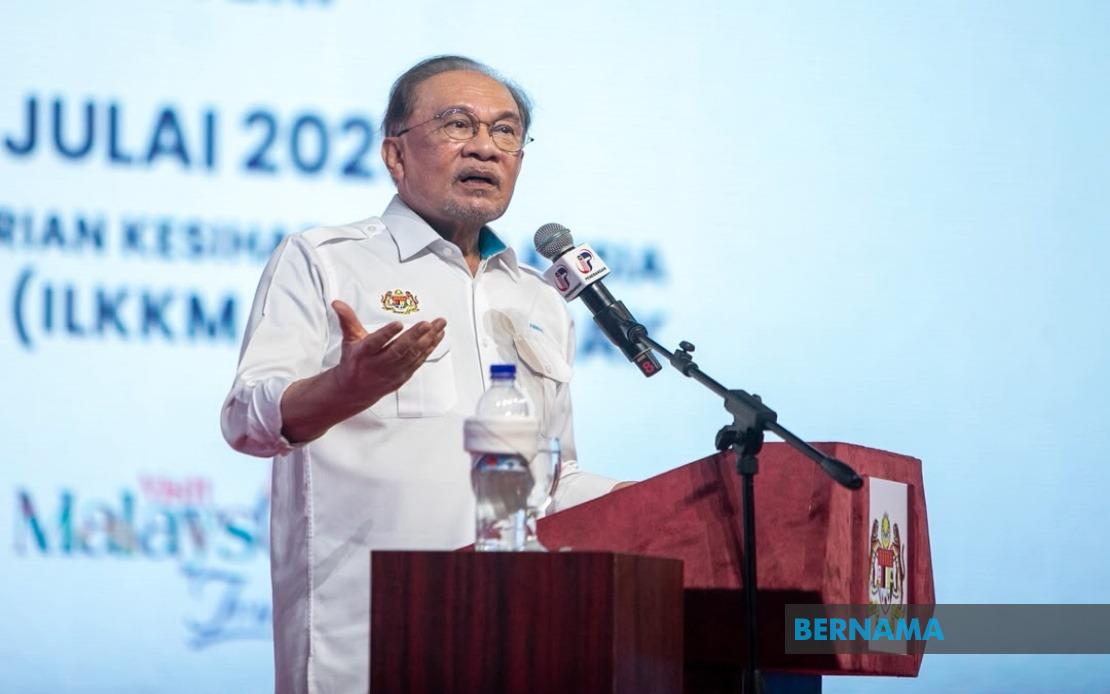
Prime Minister Datuk Seri Anwar Ibrahim has used the launch of the 2026 National Month and Fly the Jalur Gemilang Campaign to deliver a pointed message to Malaysia's younger generation: the freedoms and prosperity they experience today rest upon foundations laid in blood and struggle by those who came before them. Speaking in Ipoh on July 19, Anwar stressed that understanding the true meaning of independence demands more than surface-level patriotism—it requires a genuine engagement with the difficult chapters of Malaysia's history and a recognition of the immense personal costs borne by independence fighters.
The Prime Minister framed this year's national campaign not merely as an exercise in flag-waving or institutional pride, but as an opportunity for introspection and historical awareness. He articulated a three-stage approach: first, citizens must revisit and study the historical record; second, they must actively demonstrate unity through symbolic gestures like displaying the national flag; and third, they must channel this understanding into building a stronger, more prosperous nation. This progression reflects Anwar's view that patriotism disconnected from historical knowledge risks becoming hollow and performative rather than substantive.
Anwar's language throughout his remarks emphasised the physicality and totality of the independence struggle. By repeatedly invoking the phrase "blood, sweat and tears," he underscored that the transition from colonial rule to self-governance was neither inevitable nor costless. The independence fighters who shaped modern Malaysia faced imprisonment, violence, separation from their families, and in many cases, death. This rhetorical emphasis serves to counterbalance what the Prime Minister appears to view as a troubling tendency among younger Malaysians to take their circumstances for granted without understanding the historical exigencies that produced them.
For Malaysian readers, particularly those under 35 who have never known colonial rule or the tumultuous years of post-independence consolidation, Anwar's message carries particular weight. This demographic cohort has inherited a nation with established institutions, a developed economy, and a place in global affairs—circumstances radically different from those facing the Merdeka generation of the 1950s. The Prime Minister's insistence that this generation must "not forget" the sacrifices reflects a growing concern among Malaysia's political leadership that historical amnesia poses genuine risks to national cohesion and purpose.
The campaign's framing around national unity through flag-flying holds specific resonance in contemporary Malaysia, where questions of inclusive national identity remain contested. By positioning the Jalur Gemilang not merely as a decoration but as a statement of shared belonging rooted in collective historical struggle, Anwar advances an integrative vision. This approach suggests that understanding the genuine hardships faced by all communities during the independence struggle—encompassing Malays, Chinese, Indians, indigenous groups, and others—can foster deeper bonds across Malaysia's diverse population than celebrations focused solely on ethnic or religious dimensions.
The presence of senior government figures including Communications Minister Datuk Seri Fahmi Fadzil, National Unity Minister Datuk Aaron Ago Dagang, and Perak Menteri Besar Datuk Seri Saarani Mohamad reflected the campaign's elevation within the government's priorities. The inclusion of a minister specifically tasked with national unity suggests that Putrajaya views the 2026 campaign as a potential vehicle for addressing divisive issues through historical and patriotic framing. Whether such an approach can meaningfully impact inter-communal relations or represents merely symbolic gestures remains an open question.
Anwar's exhortation to young Malaysians to study and appreciate their nation's history occurs against a backdrop of significant challenges to social cohesion. Religious polarisation, economic inequality, educational divides, and generational tensions have all strained Malaysia's social fabric in recent years. The Prime Minister appears to believe that reconnecting Malaysians—particularly the young—with their shared independence narrative offers a potential antidote. This strategy assumes that historical consciousness can motivate contemporary civic behaviour and national commitment in ways that abstract appeals to patriotism cannot.
The timing of this campaign launch in mid-July provides several months before the actual National Month celebrations in August 2026, suggesting that the government intends a sustained push rather than a brief flourish of flag-waving. The extended timeline may allow for deeper educational initiatives, community engagement programmes, and commemorative activities designed to achieve the substantive historical awareness Anwar has outlined. Schools, universities, civic organisations, and media outlets will likely receive renewed direction to emphasise independence-era narratives and the contributions of various communities to the liberation struggle.
For Southeast Asian observers, Anwar's emphasis on historical reckoning and national memory carries broader implications. As the region contends with questions about how to balance rapid modernisation and global integration with preservation of national identity and values, Malaysia's approach offers one model. The assertion that younger generations must understand and internalise historical struggles reflects a common concern across ASEAN nations that economic development and digital disruption risk severing connections to foundational national narratives. Whether Malaysia's 2026 campaign succeeds in bridging this generational divide will offer insights into the effectiveness of state-directed historical consciousness initiatives in contemporary Southeast Asia.

