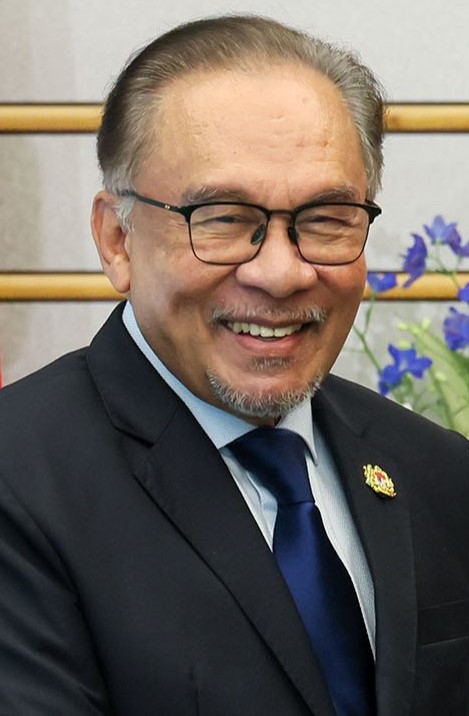
Prime Minister Datuk Seri Anwar Ibrahim has stressed that achieving meaningful reform rooted in the Hijrah tradition demands collective action built on unity and consensus rather than individual ambition or rhetorical flourishes. In remarks marking Maal Hijrah 1448H, Anwar framed the Prophet Muhammad SAW's migration to Madinah as a foundational lesson in collaborative nation-building, arguing that contemporary policymakers must draw inspiration from this historical precedent when crafting strategies for national development and institutional change.
The Prime Minister's emphasis on consensus-based governance reflects a deliberate pivot toward inclusive decision-making frameworks within Malaysia's political establishment. By invoking the Hijrah narrative, Anwar positioned his government's reform agenda within a broader Islamic historical context that resonates deeply with Malaysia's Muslim-majority population. This rhetorical strategy serves to legitimise proposed changes while grounding them in religious and cultural values that transcend partisan political divisions, thereby potentially broadening support across diverse constituencies.
Anwar's message carried implicit warnings against siloed policymaking or attempts by individual ministries or political actors to monopolise reform initiatives. The insistence that "success will not come merely through rhetoric, slogans and individual effort" signals a recognition that Malaysia's complex challenges—spanning economic restructuring, institutional accountability, and social cohesion—cannot be resolved through top-down directives alone. Instead, the Prime Minister advocated for patient, methodical implementation grounded in genuine cross-community buy-in.
Central to Anwar's framing was the historical role of diverse participants in the Hijrah event. By highlighting contributions from youth figures such as Saidina Ali Abi Talib and women including Asma Abu Bakar alongside unnamed companions, the Prime Minister underscored that transformative change requires drawing on talents and perspectives across generational and gender lines. This inclusive historical narrative carries contemporary relevance for Malaysia, where youth unemployment, women's economic participation, and intergenerational policy dialogue remain pressing national concerns.
The theological underpinning Anwar provided through reference to verse 100 of Surah An-Nisa reinforced the spiritual dimension of his reform message. By characterising Hijrah as embodying sacrifice, struggle, brotherhood and unity-building, the Prime Minister transformed what could have been routine administrative messaging into a moral and spiritual imperative. This framing positions those resisting reform or prioritising narrow institutional interests as operating counter to Islamic principles, thereby applying subtle but substantial pressure on potential obstacles to his policy agenda.
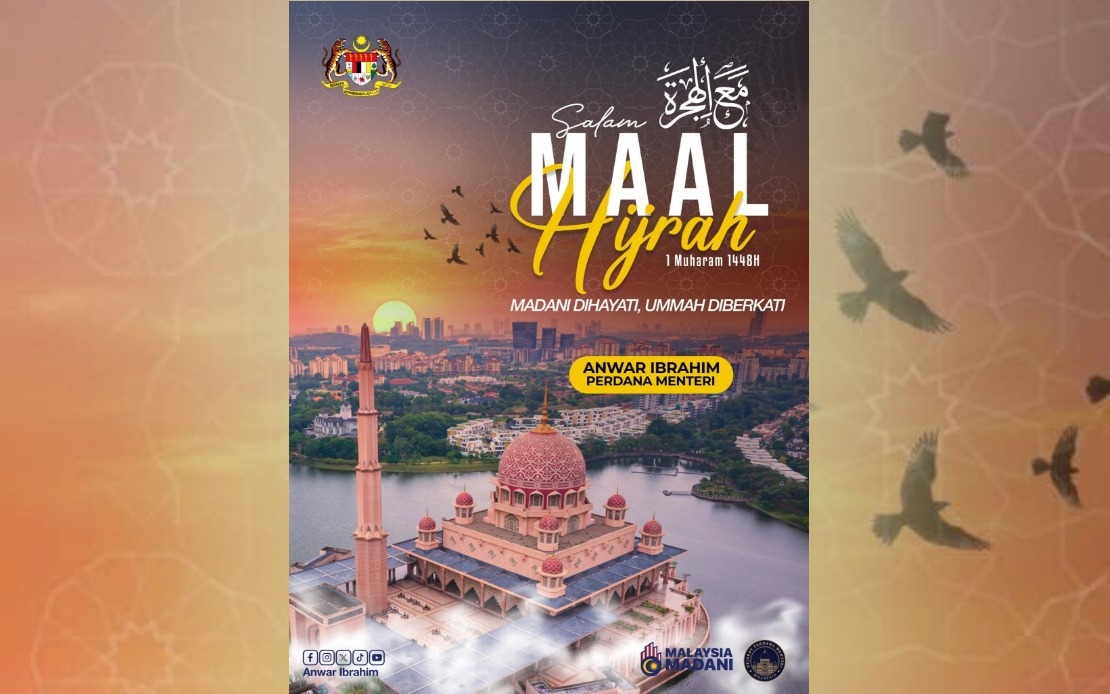
The Department of Islamic Development Malaysia (Jakim) amplified this messaging through its selection of the theme "MADANI Dihayati, Ummah Diberkati" (MADANI Embraced, The Ummah Blessed) for this year's National Maal Hijrah Celebration 1448H/2026M. The deliberate incorporation of the government's flagship MADANI framework—centred on prosperity, justice, security and sustainability—into the religious observance demonstrates coordinated messaging designed to align national development goals with Islamic values. This integration strengthens the narrative that Malaysia's policy direction flows naturally from religious and historical principles rather than imported ideological models.
For Malaysian readers, Anwar's emphasis on consensus carries particular significance given the country's history of contentious political divisions and institutional rivalries. The repeated invocation of unity and cooperation appears calibrated to address scepticism about whether the current administration can deliver on ambitious reform commitments. By framing consensus-building as a religious obligation rooted in Islamic tradition rather than merely pragmatic politics, Anwar attempted to elevate the discourse beyond conventional partisan calculation and appeal to deeper shared values.
The Prime Minister's implicit critique of sloganeering and rhetorical excess also reflects broader governance challenges facing Malaysia. Previous administrations have launched multiple reform initiatives with limited tangible results, creating public cynicism about announced policy changes. Anwar's insistence on patience, methodical implementation and collective effort acknowledges this history while positioning his government as fundamentally different in approach—emphasising substance over presentation and collective responsibility over individual credit-claiming.
From a Southeast Asian perspective, Malaysia's ongoing governance reforms carry regional implications. Anwar's emphasis on Islamic principles as a foundation for modern state capacity and institutional integrity offers a counternarrative to external perceptions of Islam and governance as inherently contradictory. By demonstrating how religious tradition can inform effective, inclusive institutional design, Malaysia potentially influences how neighbouring countries with Muslim-majority populations approach similar reform challenges.
The practical implications of Anwar's message remain to be tested through concrete ministerial coordination and policy implementation. Whether various government agencies and political actors genuinely embrace the consensus-building approach he advocated, or whether traditional bureaucratic and partisan rivalries continue dominating policymaking, will determine whether Maal Hijrah messaging translates into substantive institutional change. The test lies not in words but in whether Malaysia's government demonstrates the genuine unity and cooperation that Anwar prescribed as essential to meaningful reform.