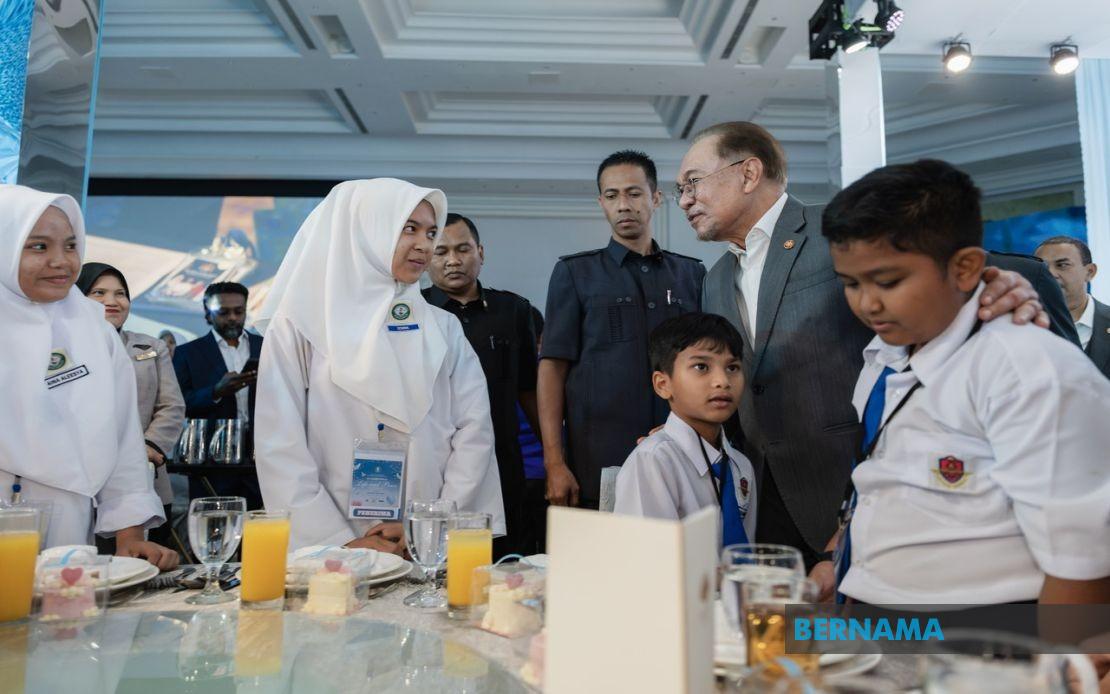
Prime Minister Datuk Seri Anwar Ibrahim has delivered a pointed message to Malaysia's young people: scholastic accomplishment without moral integrity is hollow and dangerous. Speaking at an event celebrating the birthdays of 700 pupils from 47 schools across Kuala Lumpur and Putrajaya, the Prime Minister reminded the nation's children that the true purpose of education extends far beyond examination results and academic accolades. His remarks strike at a persistent tension in Malaysia's education system, where competitive pressure for grades often overshadows the cultivation of character, empathy, and social responsibility among young learners.
Anwar's intervention comes at a time when bullying remains a significant concern in Malaysian schools, with reports of physical and psychological harassment continuing to affect student wellbeing. The Prime Minister framed the issue as a threat not merely to individual victims but to the nation's future social fabric. He appealed directly to the attending schoolchildren, asking them to pledge their commitment to studying diligently while simultaneously respecting their educators and honouring their parents. The message underscores an understanding that academic prowess divorced from ethical behaviour produces individuals who, regardless of their intellectual capacity, become liabilities rather than assets to society.
The event, organised by the ERM Foundation, provided an unusual platform for the Prime Minister to engage with young Malaysians on matters of character formation. Rather than adopting a formal or preachy tone, Anwar adopted a grandfatherly approach, directly asking the children for their promise to uphold these values. This approach reflects a broader recognition within government circles that messaging around moral development resonates more effectively when delivered with genuine warmth rather than bureaucratic distance. The foundation itself, established by founder Xin'er, focuses on celebrating and supporting vulnerable children, making it a particularly apt venue for discussions about empathy and inclusion.
Xin'er's remarks during the occasion revealed the philosophical underpinning of the celebration. She highlighted that many children face barriers to ordinary celebrations due to illness, poverty, or difficult circumstances. By bringing together schoolchildren from across the nation's capital region for a unified birthday commemoration, the foundation seeks to normalise happiness and belonging for all young people regardless of socioeconomic status. This charitable dimension provides important context for understanding why Anwar chose this particular platform to reiterate his vision of education's proper aims. The event embodied, in practical terms, the very values he was advocating: compassion, inclusion, and recognition of shared human dignity.
The provision of cash assistance of RM500 to each attending child, combined with performances, activities, and a special feast, created a memorable experience designed to leave lasting impressions about what society values. Such initiatives, while resource-intensive, serve an important psychological function in demonstrating to Malaysian children that kindness is not merely an abstract virtue but something the state actively celebrates and supports. For many young people, particularly those from less privileged backgrounds, such occasions affirm their place in the national community and reinforce the message that their character and choices matter.
Anwar's emphasis on respect for teachers warrants particular attention in the Malaysian context. Concerns about declining respect for educators, alongside reports of occasional physical confrontations between students and staff, have prompted serious discussion among education policymakers. By elevating teacher-student relationships to the same level of importance as academic achievement, the Prime Minister signals that efforts to rebuild educational professionalism and authority must become a shared responsibility involving parents, students, and administrators alike. This framing transforms what might otherwise be viewed as a disciplinary matter into a question of national values and social cohesion.
The involvement of Anwar's wife, Datuk Seri Dr Wan Azizah Wan Ismail, and his political secretary, Datuk Azman Abidin, indicates that this engagement with young people has been carefully elevated within the Prime Minister's office. The public visibility of these occasions, while appearing informal and celebratory, carries significant symbolic weight in conveying to Malaysians of all ages that character education ranks among the government's policy priorities. In an era when education debates often revolve around curriculum content, examination structures, and resource allocation, Anwar's public foregrounding of behavioural and ethical dimensions addresses a frequently neglected dimension of the education mission.
The challenge facing Malaysian schools in implementing these principles remains substantial. Institutional factors, including class overcrowding, inadequate counselling services, and teacher workload pressures, create environments where bullying can flourish despite best intentions. Anwar's appeal to individual children to make personal commitments toward kindness and respect must ultimately be supported by systemic changes that provide schools with resources, training, and institutional frameworks necessary to prevent harm and foster positive peer relationships. The gap between rhetorical commitment and practical capacity remains a persistent issue throughout Malaysia's education sector.
Moreover, the Prime Minister's message implicitly acknowledges that character formation cannot be the exclusive responsibility of schools or families acting independently. The government's own role in modelling integrity, justice, and respect for human dignity sends powerful signals to young people about what society genuinely values. When political leadership demonstrates commitment to these principles through both words and actions, the resonance of appeals to children becomes exponentially greater. Conversely, public perception of institutional corruption or moral failure among leaders undermines efforts to instil ethical behaviour in the young.
Looking forward, translating such occasions and messaging into sustained behavioural change requires coordination across multiple domains. Teacher training programmes should emphasise conflict resolution, recognition of bullying signs, and creation of psychologically safe classroom environments. Parent education initiatives must help families understand how to reinforce messages about kindness and respect at home. Peer-support mechanisms within schools, involving older students mentoring younger ones around prosocial behaviour, have demonstrated effectiveness in other contexts. Most critically, bullying must be treated not as an inevitable feature of school life but as a serious breach of community standards warranting consistent intervention.
The celebration of life and peace theme underlying the event carries philosophical weight extending beyond birthday festivities. In a region where divisions along religious, ethnic, and political lines periodically surface, the emphasis on peace and shared humanity resonates beyond the immediate school setting. Teaching young Malaysians that peace is something to be actively constructed through respect, kindness, and rejection of bullying provides them with a framework for engaging across differences as they mature into adults and citizens navigating an increasingly complex society. Anwar's intervention thus addresses not merely a disciplinary challenge within schools but a foundational challenge of nation-building itself.

