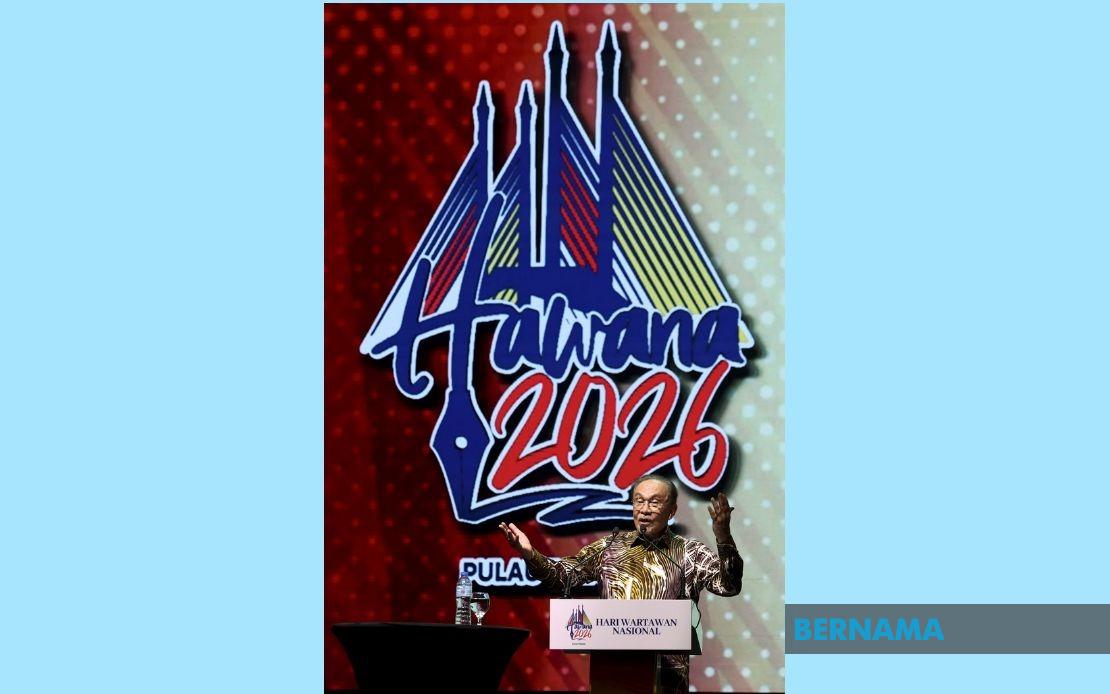
Prime Minister Datuk Seri Anwar Ibrahim has pledged an extra RM1 million to strengthen the Tabung Kasih@HAWANA, a dedicated welfare initiative supporting journalists and media workers across Malaysia. The announcement, made during the opening ceremony of the National Journalists' Day celebrations at the PICCA Convention Centre@Butterworth Arena, underscores the government's sustained commitment to safeguarding the livelihoods of media professionals who play a critical role in the nation's information ecosystem.
The commitment reflects recognition within the highest levels of government that journalists and media practitioners face genuine financial hardship, whether through illness, unemployment, or family emergencies. Since its establishment during the HAWANA 2023 celebrations, the fund has demonstrated tangible impact, disbursing RM2.26 million to 773 individuals nationwide. This track record of distribution justifies confidence in the fund's operational effectiveness and its responsiveness to genuine need within the media community.
Tabung Kasih@HAWANA operates across multiple support categories, offering financial aid, medical expense reimbursement, family welfare assistance, and other targeted support mechanisms tailored to individual circumstances. The breadth of these provisions acknowledges that media workers' vulnerabilities extend beyond simple income replacement, encompassing health crises and family obligations that can destabilize even stable careers. By expanding the fund, the government signals recognition that these pressures remain widespread within a profession that often operates on precarious employment terms, particularly in smaller outlets and freelance arrangements.
The fund's expansion arrives amid broader conversations about media sustainability and professional precarity in Southeast Asia. Malaysian media practitioners, like their counterparts in Singapore, Thailand, and Indonesia, navigate economic pressures that intensify during economic slowdowns. The timing of the RM1 million allocation demonstrates proactive policy rather than reactive crisis management, establishing a precedent that welfare support for information workers merits consistent budgetary attention.
Penang Chief Minister Chow Kon Yeow and Communications Minister Datuk Fahmi Fadzil joined Anwar at the ceremony, signalling whole-of-government endorsement for media welfare initiatives. This multi-level political support carries particular significance in Malaysia's federal structure, where coordinated messaging between federal and state leadership strengthens policy legitimacy and suggests sustained implementation beyond symbolic gestures.
The HAWANA 2026 event itself conveyed broader messages about media's institutional standing. Gathering over 1,000 media practitioners alongside delegations from Timor-Leste, Cambodia, and Laos, the celebration positioned the Malaysian media industry within a regional context, facilitating cross-border professional networking and knowledge exchange. This regional dimension underscores that media integrity challenges transcend national boundaries, requiring comparable institutional and financial support mechanisms across Southeast Asia.
The theme, 'Media Integrity Strengthens Credibility', directly addresses persistent anxieties about journalism's trustworthiness and independence. By coupling welfare support with explicitly framed commitments to editorial integrity, the government articulates an understanding that professional security enables principled journalism. Journalists freed from acute financial distress demonstrate greater capacity to pursue stories based on merit rather than desperation, suggesting that welfare investment yields returns measured in credibility and public trust.
The fund's existence and expansion also serve symbolic functions within Malaysia's media landscape. Journalists working for outlets marginalized from government advertising revenue face particular economic stress. By establishing parallel support mechanisms, the government acknowledges vulnerabilities that market forces alone cannot remedy while potentially reducing pressure on journalists to compromise editorial standards for commercial survival.
Yet the announcement also invites scrutiny regarding sustainability and adequacy. An additional RM1 million annually, distributed across a growing number of practitioners, averages modest individual allocations. As Malaysia's media ecosystem continues evolving, with traditional outlets contracting and digital platforms multiplying employment precarity, stakeholders must question whether incremental fund expansion tracks inflation and expanding need. Long-term viability requires anchoring allocations to population-wide benchmarks rather than year-to-year political announcements.
The involvement of senior Communications Ministry officials and Malaysian National News Agency leadership indicates institutional embedding of the welfare initiative, suggesting bureaucratic persistence beyond individual political tenure. This structural integration differentiates ad-hoc charity from permanent social provision, though periodic reauthorization remains necessary given Malaysia's parliamentary budget cycles.
For Malaysian media practitioners, the announcement provides immediate relief and validation of professional status. Journalism remains cognitively demanding, frequently underpaid work, particularly in regional and digital contexts. Governmental recognition through welfare funding, however modest, affirms societal valuation of information work even when market compensation proves inadequate.
The regional representation at HAWANA 2026 creates opportunities for peer learning about welfare mechanisms. If Cambodia, Laos, and Timor-Leste officials observed Malaysia's formalized support system, such exposure might catalyze comparable initiatives regionally, lifting baseline professional protections across Southeast Asia. Conversely, Malaysia's media might benefit from studying how regional neighbors structure sustainability support, identifying best practices for fund distribution and eligibility determination.
Moving forward, Malaysian policymakers should integrate media welfare planning with broader digital transition strategy. As artificial intelligence and automation reshape newsrooms and employment patterns, welfare funds require proactive adaptation to support journalists transitioning between platforms and skill categories. The RM1 million allocation addresses current needs adequately, but strategic expansion linked to industry transformation would position Malaysia as a regional model for sustainable media professionalism.

