%22%2F%3E%3C%2Fpattern%3E%3C%2Fdefs%3E%3Crect%20width%3D%22100%25%22%20height%3D%22100%25%22%20fill%3D%22url(%23ph23cchg)%22%2F%3E%3Crect%20width%3D%22100%25%22%20height%3D%22100%25%22%20fill%3D%22url(%23ph23cchp)%22%2F%3E%3Ctext%20x%3D%2250%25%22%20y%3D%2250%25%22%20text-anchor%3D%22middle%22%20dominant-baseline%3D%22central%22%20fill%3D%22rgba(255%2C255%2C255%2C0.95)%22%20font-family%3D%22Georgia%2C%20'Times%20New%20Roman'%2C%20serif%22%20font-weight%3D%22700%22%20font-size%3D%22320%22%20letter-spacing%3D%22-0.02em%22%3EPM%3C%2Ftext%3E%3C%2Fsvg%3E)
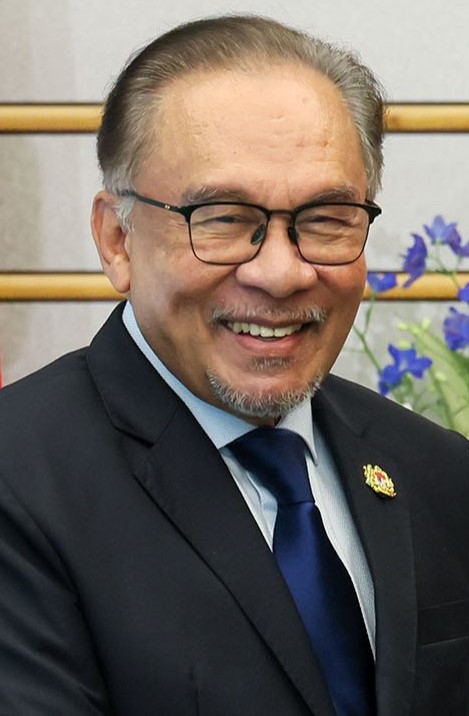
Prime Minister Datuk Seri Anwar Ibrahim is set to take the stage at the ASEAN-Russia Business Forum in Kazan, where he will speak directly to business leaders and government officials from across Southeast Asia and Russia. The address represents Malaysia's commitment to deepening economic ties within the broader framework of regional diplomacy, occurring during a pivotal moment for ASEAN-Russia relations. Anwar, who holds the dual portfolio of Prime Minister and Finance Minister, brings particular weight to Malaysia's contribution to these discussions, signalling the importance his government places on the bilateral and multilateral economic dimensions of the partnership.
The forum takes place at Kazan IT Park, a venue chosen to reflect the technological and modernisation agenda driving contemporary Russian-Southeast Asian collaboration. Anwar will be formally received by Ilya Nachvin, Minister of Digitalisation of Public Administration, Information Technologies and Communications of the Republic of Tatarstan, underscoring the digital economy's centrality to ongoing negotiations. Following his keynote remarks to assembled business communities, the Prime Minister will participate in an evening gala dinner at the Tatar State Academic Theater, creating an informal setting for further diplomatic engagement. Among the notable events scheduled is a courtesy call on Russian President Vladimir Putin, an opportunity for Malaysia to articulate its strategic interests directly to Moscow's leadership.
This year's summit holds particular significance as it commemorates 35 years since ASEAN and Russia established dialogue relations, a partnership that has matured considerably since its inception in 1991. Russia's elevation to full Dialogue Partner status in 1996 represented a milestone in formalising the relationship, while the 2018 designation of Strategic Partnership crystallised mutual commitments across political-security, economic, and socio-cultural dimensions. The passage of over three decades reflects how both sides have navigated geopolitical shifts, from the Cold War's aftermath through contemporary great power tensions, maintaining engagement channels that benefit Southeast Asian nations seeking stable, diversified foreign relations.
Kazan itself carries symbolic weight as the venue for these discussions. Situated approximately 800 kilometres east of Moscow at the confluence of the Volga and Kazanka rivers, the city functions as Russia's cultural and economic bridge to Asia and the Muslim world. With a population of roughly 1.3 million, Kazan has earned recognition as Russia's informal 'third capital' after Moscow and St Petersburg. The city's Islamic heritage spanning over 1,000 years makes it a natural meeting point for ASEAN engagement, given the bloc's substantial Muslim-majority populations. This geographic and cultural positioning transforms Kazan from a mere administrative location into a substantive statement about the nature of ASEAN-Russia cooperation.
From an economic standpoint, the relationship demonstrates steady but modest growth requiring acceleration. Total ASEAN-Russia bilateral trade in 2024 reached USD18.1 billion, reflecting the scale of commercial activity between the blocs. However, Russian foreign direct investment in ASEAN economies remains limited at USD92.97 million annually, suggesting substantial untapped potential given the region's attractiveness as an investment destination. These figures indicate that despite strong political commitment, business communities have yet to fully capitalise on the partnership's possibilities, making forums such as this essential for identifying barriers and opportunities.
Malaysia's individual economic relationship with Russia underscores the country's strategic position within ASEAN. Russia ranks as Malaysia's ninth-largest trading partner among European nations, with bilateral commerce valued at RM8.72 billion in 2025, translating to approximately USD2.04 billion. This positioning reflects both the opportunities and constraints characterising Malaysia-Russia economic ties. The composition of trade reveals a complementary relationship: Malaysia exports electrical and electronic products, machinery, equipment and components alongside processed food items, while importing petroleum products, minerals, and chemical-based goods from Russia. This pattern reflects comparative advantages and resource endowments, though diversification potential remains.
The significance of Malaysia's participation extends beyond commercial metrics. As ASEAN chair at various points in the annual rotation, Malaysia has consistently championed the principle of maintaining constructive relations with major powers regardless of broader geopolitical alignments. This approach reflects Southeast Asian pragmatism and the region's determination to avoid being forced into opposing blocs. By sending its Prime Minister to address a major regional forum, Malaysia signals that economic engagement with Russia remains viable and valuable, even as Western sanctions and geopolitical pressures create complications. For Malaysian policymakers, the balance between maintaining Western partnerships and preserving non-aligned foreign policy requires careful calibration.
The business forum format itself carries strategic implications. Rather than confining discussions to government-to-government channels, the inclusion of corporate representatives opens possibilities for direct business relationship-building. Malaysian companies in electronics, semiconductors, palm oil processing, and petrochemicals could explore supply chain partnerships with Russian enterprises. Similarly, Russian technology and energy companies might identify opportunities in Southeast Asian markets. The IT Park venue specifically highlights digitalisation and technology cooperation, areas where ASEAN economies seek technological advancement and Russian capabilities in cybersecurity, telecommunications infrastructure, and software development could offer mutual benefit.
Beyond immediate trade considerations, the ASEAN-Russia engagement serves broader strategic purposes. For Russia, maintaining active dialogue with Southeast Asia provides counterbalance to Western pressure and opens economic alternatives as sanctions persist. For ASEAN members including Malaysia, the relationship preserves options for diversified partnerships and demonstrates commitment to inclusive regional architectures that do not exclude major powers. This positioning becomes particularly important as the Indo-Pacific region experiences intensifying strategic competition between the United States and China, with Russia also asserting interests through Arctic and regional initiatives. ASEAN's collective strategy of maintaining multiple partnerships rather than making exclusive choices aligns with Malaysia's historical non-aligned stance.
The summit's timing also reflects evolving global circumstances. As geopolitical tensions reshape international trade patterns and supply chains, both ASEAN and Russia recognise opportunities for cooperation that bypasses Western-dominated structures. Energy security concerns in Southeast Asia could align with Russian energy exports, while technology transfer and industrial partnerships offer mutual benefit. However, these opportunities remain constrained by Western sanctions regimes affecting Russian financial transactions and technology access, requiring creative solutions and careful navigation of regulatory frameworks.
Moving forward, Malaysia's role in deepening ASEAN-Russia ties carries implications for regional stability and economic development. The country's consistent engagement demonstrates that Southeast Asian nations can maintain pragmatic relationships with all major powers without compromising core interests. Anwar's address will likely emphasise Malaysia's commitment to rules-based international order while simultaneously advocating for non-discriminatory trade practices and the principle that regional nations should determine their own partnerships. This balanced approach reflects Malaysia's historic foreign policy orientation and its recognition that Southeast Asia's prosperity depends on stable, predictable relations across the international system.