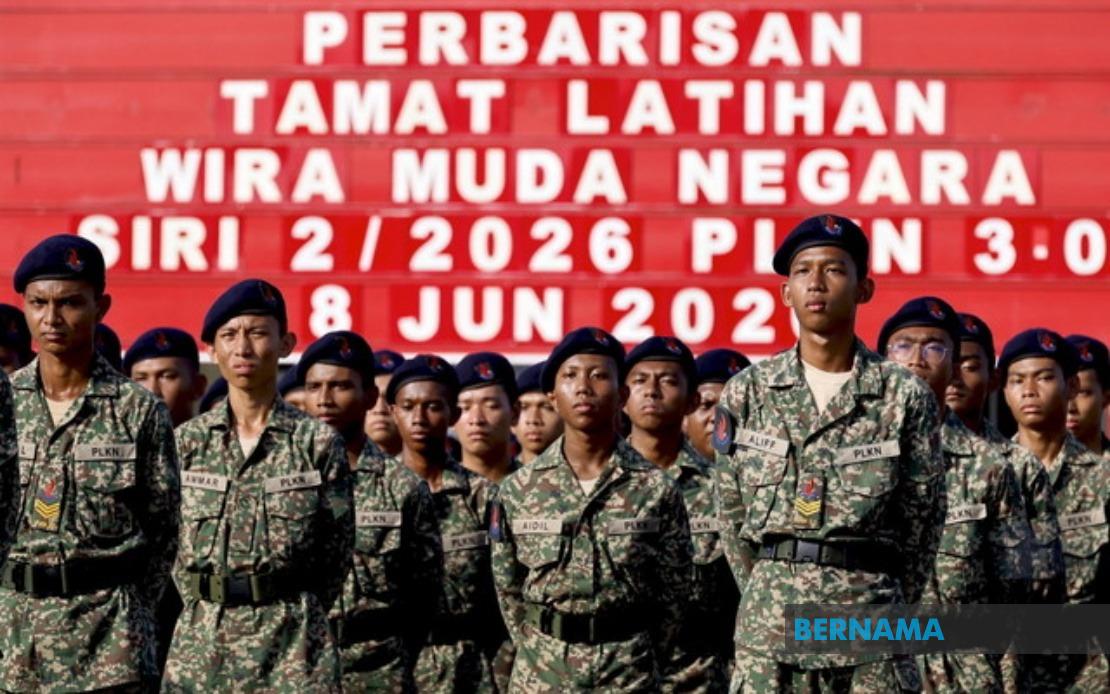
Malaysia's restructured National Service Training Programme, known as PLKN 3.0, has successfully achieved every key performance indicator it set out to meet, according to findings presented in Parliament this week. Deputy Defence Minister Adly Zahari revealed that independent impact studies conducted in partnership with Universiti Malaysia Sabah and the National Defence University of Malaysia have documented consistent improvements across all six pillars of the human development framework that underpins the initiative. The results, drawn from assessment data collected before and after the second training series this year, paint an encouraging picture of a scheme designed to build citizenship competencies among Malaysia's youth.
The programme establishes measurable targets for six interconnected domains of personal and national development. Trainees are expected to achieve at least 80 per cent proficiency in patriotism, national unity, discipline and self-transformation, mental resilience and preparedness, military knowledge, and volunteerism. These benchmarks reflect a deliberate pivot toward outcome-based evaluation, moving away from input-focused assessments that characterised earlier iterations of national service. The rigorous methodology, involving surveys administered to cohorts before their training commences and again upon completion, provides quantifiable evidence rather than anecdotal observations about the scheme's effectiveness.
Military knowledge demonstrated the most dramatic transformation, surging from a baseline of 56 per cent to 84 per cent among participants who completed training. This 28-percentage-point jump underscores how the intensive residential format enables structured knowledge transfer in defence and security fundamentals that would be difficult to achieve through conventional classroom instruction. Volunteerism also improved substantially, climbing from 75 per cent to 83 per cent, suggesting that exposure to structured service environments cultivates dispositions toward civic engagement and community contribution. These gains carry particular significance for policymakers invested in developing human capital that extends beyond academic credentials.
The programme registered notable gains across the patriotism and unity dimensions as well. Patriotism levels increased from 82 per cent to 88.98 per cent, while unity scores rose by nine percentage points overall. The discipline and self-transformation metric recorded the most substantial absolute improvement, escalating from 77.36 per cent to 92.6 per cent—the only indicator to reach the low 90s following training. Mental resilience, a competency increasingly recognised as vital for psychological wellbeing and social stability, improved from 71 per cent to 83 per cent. These interconnected improvements suggest that the training architecture operates as an integrated system rather than a collection of discrete components.
Adly clarified that while PLKN 3.0 remains fundamentally a character-building and social cohesion initiative rather than an employment programme, the government has secured tangible career benefits for graduates. Five public sector appointing authorities have committed to awarding additional merit points to eligible trainees during recruitment and interview processes, creating a modest but meaningful incentive for participation and successful completion. This mechanism addresses a recurrent criticism that national service programmes, however worthy their developmental objectives, have delivered limited economic returns to participants.
Access and inclusion remain central concerns in a nation marked by significant regional and socioeconomic disparities. The programme explicitly targets young people from all backgrounds, with particular attention to B40 households and youths from rural areas. Integration of Technical and Vocational Education and Training elements into the curriculum represents a deliberate effort to make the experience relevant across educational pathways, not merely for those pursuing traditional academic trajectories. This design choice reflects growing recognition that citizenship development and practical skills acquisition need not be mutually exclusive.
Participation metrics reveal steady expansion, though still modest relative to Malaysia's youth population. The scheme enrolled 1,202 trainees in its inaugural year and attracted 2,202 participants in the second series this year, bringing the cumulative total to 3,404. The Defence Ministry is targeting 4,200 completions by year-end utilising its three operational camps—a target that appears achievable given the recent acceleration in intake rates. More ambitiously, preparations are underway for nine additional training centres that would boost annual capacity to 9,200 participants from 2025 onwards.
Expanding infrastructure will be essential if the programme is to achieve its broader social objectives. A scheme limited to a few thousand annual participants, while valuable, reaches only a fraction of Malaysia's youth cohort. Nine additional camps would represent a substantial capital and operational commitment, necessitating careful workforce planning and facility development. The government's demonstrated willingness to invest in expansion suggests confidence in the model's viability and effectiveness based on current outcomes.
Not all selected individuals proceed to training, and the ministry identified specific barriers to completion. Health issues and ongoing studies represent the primary reasons cited by those who decline participation after selection. This attrition pattern is instructive: it suggests that health considerations and educational continuity are legitimate competing priorities for many young Malaysians. Policymakers may need to develop pathways permitting deferred participation, particularly for students in critical examination phases, to reduce lost recruitment capacity while maintaining sensitivity to genuine constraints families face.
The empirical validation of PLKN 3.0's effectiveness arrives at a pivotal moment for national service programming in Southeast Asia. As regional peers grapple with youth engagement, social cohesion, and skills development, Malaysia's experience offers a case study in structured outcome measurement. The rigorous collaboration with academic institutions lends credibility to findings and distinguishes this evaluation from more routine programme reporting. However, the true test will emerge over subsequent years as the scheme expands geographically and in scale, whether consistency of impact can be maintained as the programme matures and serves increasingly diverse cohorts across multiple sites.
The strategic implications extend beyond human development metrics. Strong citizenship competencies, genuine national unity, and disciplined civic engagement represent foundational assets for a plural society navigating accelerating technological change and evolving geopolitical pressures. If PLKN 3.0 succeeds in cultivating these attributes, the investment merits expansion despite associated costs. Conversely, as the scheme grows, maintaining fidelity to its evidence-based model and continuing rigorous impact assessment will be essential to ensure that scale does not erode the positive results documented in current cohorts.

