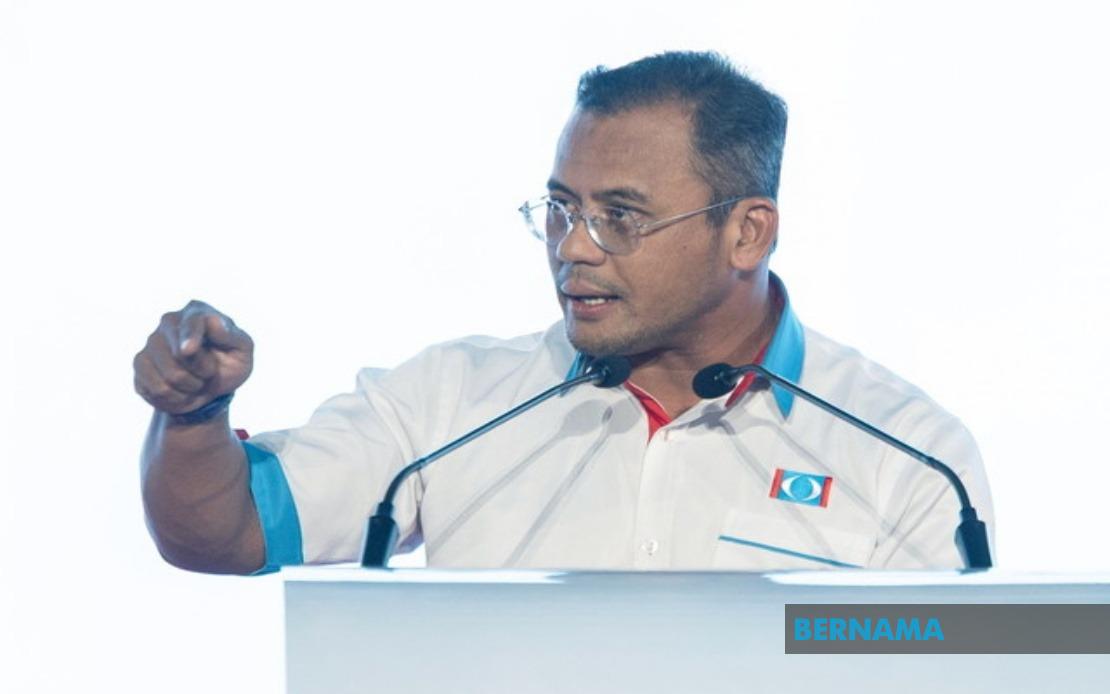
The leadership of Parti Keadilan Rakyat has reiterated its foundational commitment to equitable governance across Malaysia's diverse communities, even as it emphasises respect for the constitutional primacy accorded to Islam and the Malay-Bumiputera position. Speaking during the closing session of the PKR National Congress in Melaka, senior party officials outlined a vision of political engagement that seeks to navigate between constitutional recognition of Islam's status and the monarchy's position, and the party's broader commitment to equal representation and fairness for citizens of all backgrounds.
Datak Seri Amirudin Shari, the party's vice president and Selangor Menteri Besar, articulated this dual commitment as central to PKR's identity within Malaysia's constitutional framework. He emphasised that the constitutional position of Islam and the Malay-Bumiputera community represents a foundational element that all political organisations must acknowledge and respect. Simultaneously, he stressed that this recognition need not preclude fair treatment of the country's Chinese, Indian, Christian, Buddhist, and Hindu populations. This balancing act reflects the ongoing challenge faced by multiethnic coalitions in Malaysia: how to honour historical constitutional bargains while advancing principles of equal citizenship and non-discrimination.
Amirudin traced PKR's reform agenda to its origins under the leadership of Datuk Seri Anwar Ibrahim in 1998, when the party began advocating for institutional and systemic changes that have since gained mainstream traction. The party's evolution, he suggested, demonstrates the success of pushing for democratic enrichment, the expansion of fundamental rights protections, fairer mechanisms for economic distribution, and more transparent and accountable government administration. This historical framing positions PKR not as a marginal or fringe force, but as a catalyst for substantive political transformation that has reshaped how Malaysians discuss governance and public accountability.
Parallel concerns about the misuse of racial and religious rhetoric in electoral politics were raised by another vice president, Datuk Seri R. Ramanan, who also serves as Minister of Human Resources. Ramanan identified a troubling pattern in contemporary Malaysian politics whereby certain political operators have deliberately weaponised racial grievances and identity-based anxieties to accumulate electoral support and fragment national unity. He cautioned that such tactics, driven by narrow factional interests rather than genuine policy concerns, pose a direct threat to the social cohesion that Malaysia depends upon to function effectively as a plural nation.
Ramanan's intervention underscores a growing concern among centrist and reform-oriented politicians that identity-based mobilisation has become increasingly prevalent across the political spectrum. By explicitly naming this phenomenon and calling for PKR to reject such strategies, he sought to position the party as committed to a different mode of political engagement—one premised on substantive governance issues rather than the amplification of communal anxieties. For Malaysian voters, particularly those in ethnically mixed constituencies, this distinction carries real weight in determining which parties and leaders they choose to support.
The Human Resources Minister further appealed to the party machinery to subordinate personal ambitions and ego-driven rivalries to the broader goal of strengthening PKR's organisational capacity across federal, state, and local levels. His warning that internal conflict at the apex of the party necessarily weakens the grassroots structures and confuses ordinary members carries the force of observable political reality. When senior leaders contest for dominance, resources become diverted to internal power struggles, branch-level organisers become demoralised, and opposition parties harvest the benefits of PKR's divided attention and fractured messaging.
A third vice president, Datuk Chang Lih Kang, offered empirical evidence for the proposition that multiethnic political collaboration and cross-communal voting patterns are achievable without resorting to identity-based appeals. Chang pointed to the Chennah constituency result from the recent Negeri Sembilan state election as a case study demonstrating voter willingness to support competent representatives across ethnic lines. In that contest, Malay voters demonstrated measurable support for DAP secretary-general Anthony Loke, the party's senior Chinese politician, despite what Chang characterised as aggressive identity-politics messaging from rival campaigns. The Chennah outcome suggests that when voters perceive genuine competence and effective service delivery, they are capable of transcending the ethnic and religious categorisations that opposition propagandists seek to exploit.
The emphasis on Chang's Chennah example reflects a strategic calculation within PKR and the wider Pakatan Harapan coalition: that the future of Malaysian politics depends on demonstrating that multiethnic governance and cross-communal representation can deliver tangible benefits to ordinary citizens. Rather than compete with ethno-nationalist and religious-conservative parties on their preferred terrain of identity mobilisation, this argument suggests that reformist coalitions should highlight their capacity to manage the economy, provide public services, and maintain institutional integrity more effectively than alternatives.
These interventions at the PKR congress occur within a broader context of Malaysian politics marked by increasing polarisation and the growing assertiveness of identity-based political movements. For the coalition government that currently holds federal power, the challenge of maintaining party discipline while pursuing inclusive governance remains acute. The repeated emphasis on rejecting racial divisiveness suggests that PKR and its allies perceive genuine pressure from both hardline competitors seeking to outbid them for Malay and Muslim support, and from critics who question whether reform-oriented coalitions can truly represent all communities fairly.
The congress statements also reflect internal PKR dynamics, where questions of leadership succession and the party's strategic direction remain contested. By framing unity and organisational coherence as essential to countering external political threats, the senior leaders sought to mute factional tensions and direct party cadres' energies toward strengthening the party's electoral appeal. Whether these calls prove persuasive to the broader membership, and whether PKR can sustain its commitment to inclusive politics in the face of competitive pressure to abandon such principles, remains a question that will shape Malaysian politics in coming years.
For Malaysian voters and observers, the PKR congress debates highlight an enduring tension in the country's political system: the coexistence of constitutionally entrenched communal arrangements and the aspiration toward merit-based, non-discriminatory governance. How successfully parties navigate this tension—and whether they resist or succumb to the temptation of weaponising identity for electoral gain—will significantly influence whether Malaysia's experiment in multiethnic democracy continues to function effectively.

