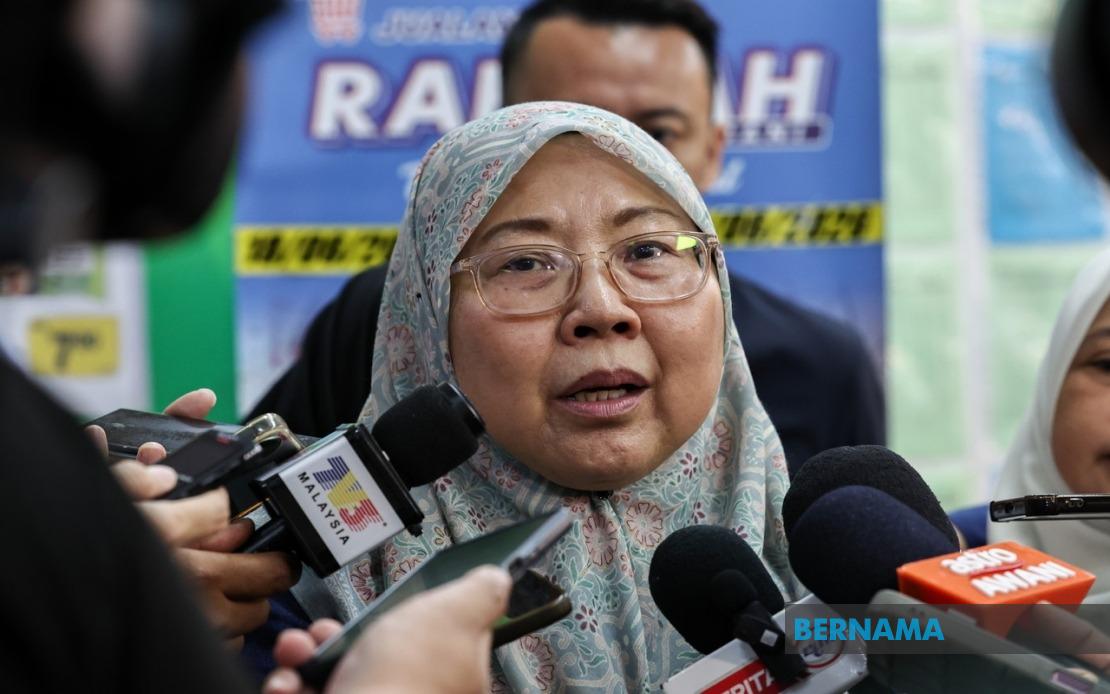
The People's Justice Party has moved closer to the starting line for two critical state elections, with party secretary-general Datuk Dr Fuziah Salleh announcing that its candidate rosters for Johor and Negeri Sembilan are now 99 per cent finalised. The formal unveiling of names is expected within days, clearing the path for the coalition's campaign machinery to shift into high gear across both states.
PKR will contest 20 seats in Johor's 56-member assembly and 16 seats in Negeri Sembilan's 36-member chamber, positioning itself as a significant challenger to the incumbent Barisan Nasional administrations in both territories. The strategic allocation reflects the party's assessment of competitive ground and its capacity to mount credible campaigns in specific constituencies, though the overall seat count underscores the complexity of multi-party politics in the broader Pakatan Harapan coalition.
The party leadership has signalled an intentional shift in its electoral presentation, promising a blend of seasoned politicians and fresh candidates that consciously incorporates women and younger aspirants. This generational and gender balancing act responds to grassroots demands for renewal while retaining institutional knowledge and electoral machinery. Fuziah declined to specify the exact proportion of new faces, preferring to preserve the surprise element for the official launch—a calculated approach that keeps media and rival parties guessing about PKR's true competitive positioning.
However, complications persist within the broader coalition framework, particularly regarding the Puteri Wangsa seat in Johor. The dispute between PKR and Amanah illustrates the persistent friction in power-sharing arrangements between coalition partners. Amanah claims the seat belongs to them, while PKR argues it was merely loaned to MUDA in the 2022 election and should revert to their control. Johor Amanah's vice chairman Dr Zuhan Zain has publicly resisted PKR's claim, refusing to cede the constituency without a fight. Fuziah sidestepped detailed engagement with the controversy, instead deferring resolution to the highest levels of both parties, a diplomatic manoeuvre that acknowledges the dispute's sensitivity without committing to a specific outcome.
Separately, PKR is managing internal disciplinary challenges that could undermine party unity messaging. Subang MP Wong Chen has provocatively challenged the party to expel him following a disciplinary investigation, creating an embarrassing public standoff. The matter has been forwarded to PKR's Disciplinary Board, where it will presumably be resolved away from the election spotlight. Such internal friction, if mishandled, could provide ammunition to opponents questioning the party's cohesion and governance standards.
In Johor, the electoral stakes are substantial. Before the State Legislative Assembly's dissolution on June 1, Barisan Nasional dominated with 40 seats, while Pakatan Harapan controlled just 12, Perikatan Nasional held three, and MUDA claimed one. The mathematics suggest PKR's 20-seat target represents an ambitious but not impossible mountain to climb, depending on coalition performance across the broader Pakatan slate. Nomination day is set for June 27, with polling scheduled for July 11, leaving a compressed two-week campaign window that will test the efficiency of ground operations.
Negeri Sembilan presents a different competitive landscape. Before dissolution on June 5, Pakatan Harapan held a 17-seat plurality in the 36-member chamber, ahead of Barisan Nasional's 14 and Perikatan Nasional's five. PKR's commitment to 16 seats here suggests the party views this state as winnable, though retaining coalition control will require near-perfect conversion of marginal constituencies. The state election timeline differs markedly, with nomination on July 18, early voting on July 28, and polling day fixed for August 1—providing candidates approximately three weeks for campaigning.
The broader political context shapes these state contests significantly. Both elections occur as Malaysia navigates frictional tensions between federal coalition partners and changing voter sentiment in key states. Johor, traditionally a Barisan stronghold, has shown flickering signs of openness to opposition inroads, though demographic and organisational advantages still favour the establishment. Negeri Sembilan, meanwhile, has demonstrated greater volatility in recent electoral cycles, making it genuinely competitive territory where coalition performance will hinge on local issues and ground-level execution rather than national trends alone.
For Malaysian voters and political observers, these elections function as important mid-term indicators of coalitional stability and public mood. The candidate selections reflect each party's calculation about which faces can resonate in their respective constituencies, and the broader Pakatan slate will reveal whether the coalition has genuinely learnt coalition management lessons from previous disappointments. PKR's emphasis on balanced representation—combining experience with fresh energy, established figures with youth—suggests a strategic belief that the electorate wants both continuity and change, though whether this formulation translates into seats remains the essential unresolved question that only voters can answer.

