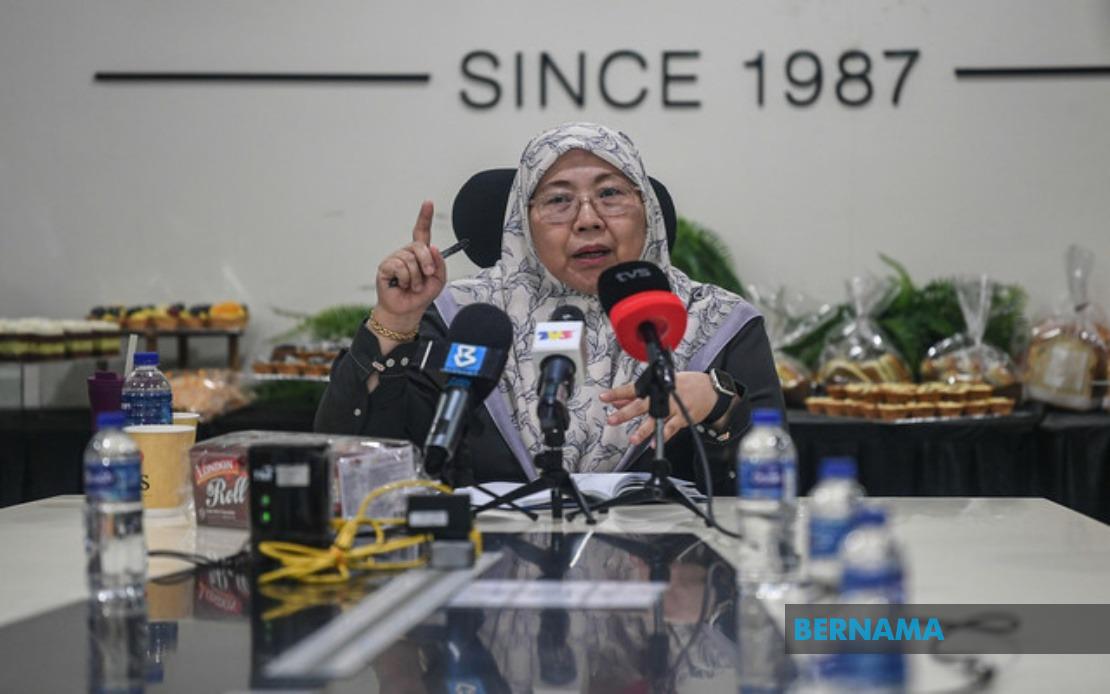
The decision by a faction of PKR members and leaders to depart the party and join MIC this month has drawn dismissal from party leadership, with PKR secretary-general Datuk Dr Fuziah Salleh characterising the move as peculiar. Speaking after a working visit to an industrial facility in Skudai on June 30, Fuziah indicated that internal party investigations had identified the primary motivation behind the departures: frustration among members who had hoped to secure specific roles within PKR's organisational structure. The development underscores persistent tensions around political appointment and advancement within Malaysia's coalition landscape, particularly as the Johor state election campaign intensifies.
The defection gained prominence when M. Murugan, who previously held the position of vice-chairman in the Johor PKR State Leadership Council, publicly announced on June 28 that he and approximately 200 party members had opted to join MIC's Iskandar Puteri division. Murugan's statement, together with the relatively substantial cohort of supporters accompanying him, signalled meaningful discontent within PKR's Johor base. Such departures, though framed by party officials as driven by individual ambitions, reveal potential vulnerabilities in PKR's internal structure and reward mechanisms, particularly in states where the party holds significant responsibility within coalition governance.
Fuziah's comments, made during a press conference, suggested that PKR leadership viewed these defections with a measure of philosophical detachment. Rather than characterising the move as a serious organisational setback, she effectively dismissed the departing members' concerns by wishing them success in locating the coveted positions elsewhere. This rhetorical approach—while maintaining organisational dignity—also implicitly acknowledged PKR's capacity constraints in meeting all internal aspirations for political office. The episode illustrates a common challenge within multi-party coalitions: managing expectations across a membership base that extends far beyond available formal positions.
The timing of these defections coincides with heightened political activity surrounding the Johor state election, scheduled for July 11, with early voting set for July 7. The contest encompasses 56 state assembly seats, with 172 candidates across various coalitions vying for representation. Johor's electoral significance as Malaysia's second-largest state by population, combined with its historical importance to BN, makes intra-coalition dynamics particularly consequential. Defections immediately before a major election can damage momentum and signal internal confidence issues, potentially impacting voter perception of coalition cohesion.
Beyond the immediate defection issue, Fuziah addressed broader strategic developments affecting Johor's electoral landscape. She responded to statements from PAS president Tan Sri Abdul Hadi Awang calling on voters to withdraw support from Pakatan Harapan, an announcement Fuziah interpreted as signalling renewed overtures between BN and PAS. This realignment would represent a significant shift from the post-2018 electoral dynamics that initially shaped PH's ascendancy. Should BN and PAS move toward formal or informal cooperation, it would substantially alter Johor's three-way competitive framework and potentially fragment the anti-BN vote.
Fuziah counselled Johor voters to exercise careful judgment before casting ballots, acknowledging that the evolving coalition landscape presented genuine complexity. Her guidance implicitly recognised that voters faced an unusually fluid political environment, where traditional alignments appeared to be shifting. This fluidity creates both risk and opportunity: while some voters may be confused by changing partnerships, others may view realignment as evidence of adaptive politics. The secretary-general's call for discernment suggested PKR's confidence in the substantive appeal of PH's governance record and policy platform, beyond mere coalition positioning.
On Perikatan Nasional's apparent strategy, Fuziah advanced an intriguing analysis suggesting that PN's approach of courting BN supporters might ultimately prove counterproductive. She argued that the coalition's internal contradictions—particularly evident in PAS's public statements seemingly disadvantageous to allied PN partners—could generate sufficient friction to destabilise the grouping. This assessment reflects a reading of PN's inherent vulnerabilities: the coalition binds together ideologically and operationally divergent components that maintain separate organisational interests. When PAS signals alignment toward BN, it potentially signals reduced commitment to PN's cohesion.
Fuziah's contention that PN's difficulties would ultimately benefit PH rests on a specific logic: if the anti-PH vote becomes sufficiently fragmented between competing coalitions, voters genuinely preferring alternatives to PH may ultimately deliver results that favour PH through vote-splitting. This dynamic depends significantly on voting patterns, seat distribution, and whether swing voters consolidate behind a single alternative or distribute preferences across multiple opposition groupings. In Malaysian electoral mathematics, where single-member constituencies and first-past-the-post voting systems prevail, such coalition fragmentation can indeed produce counterintuitive outcomes.
The defection episode and surrounding strategic commentary reveal the intricate ecosystem of Malaysian coalition politics. PKR, as a major PH component, operates within constraints imposed by partnership commitments, resource limitations, and the need to maintain internal cohesion across a geographically and demographically diverse membership. The departure of approximately 200 members, while not catastrophic, nonetheless represents a measurable loss, particularly in a state election where margins often prove decisive. Whether such losses reflect broader organisational weaknesses or constitute typical attrition in volatile electoral periods remains to be determined through the Johor election results.
The weeks preceding the July 11 polling day will likely see continued repositioning as coalitions and candidates refine messaging and resource allocation. Johor's outcome carries implications extending well beyond the state, potentially affecting PH's trajectory heading into federal-level politics. The defection to MIC, while characterised by PKR leadership as motivated purely by individual ambition, hints at broader questions about PH's capacity to accommodate diverse interests and expectations within a coalition framework. As Malaysian politics continues evolving, such internal dynamics deserve as much analytical attention as headline-grabbing announcements from major party figures.

