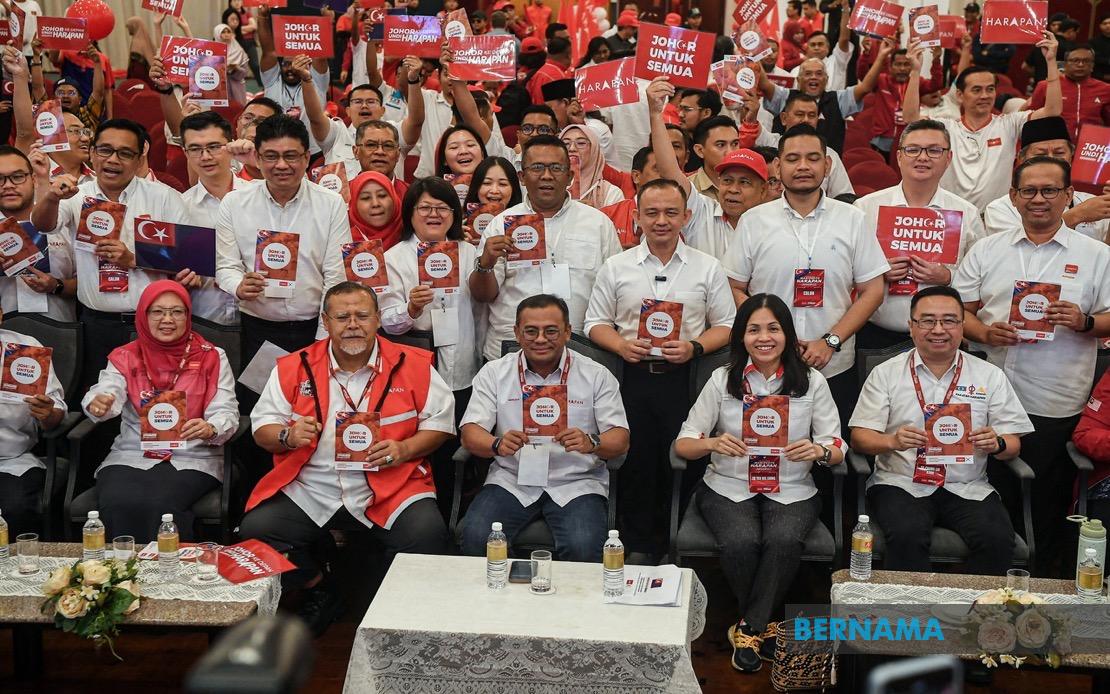
Pakatan Harapan unveiled its election manifesto 'Johor Untuk Semua' in Johor Bahru on July 3, positioning the platform as a substantive response to the state's pressing challenges rather than mere campaign rhetoric. Johor DAP chairman Teo Nie Ching emphasised during the launch that the coalition's proposals directly reflect what residents have consistently requested, while taking into account the economic constraints and opportunities specific to the state. The manifesto comes ahead of the 16th Johor state election scheduled for July 11, with early voting commencing on July 7.
Central to PH's pitch is the claim that every initiative can be realised if the coalition secures victory and receives robust backing from the federal government. This conditional framing reveals the political calculus at play: state-level implementation of ambitious programmes often hinges on financial transfers, bureaucratic support, and policy alignment from Putrajaya. For Johor voters evaluating the manifesto's credibility, this implicit dependency on Kuala Lumpur's goodwill underscores the interconnected nature of Malaysian federalism.
Teo characterised the manifesto as carefully balanced, deliberately targeting constituencies across demographic lines. The platform specifically addresses the concerns of young people navigating employment and entrepreneurship, mothers managing household economics, and children requiring quality educational opportunities. This granular segmentation suggests the coalition has conducted extensive ground-level consultation, though it also reflects a strategic attempt to build a broad electoral coalition that transcends traditional voting blocs.
Among the manifesto's ten key pledges, the Johor Health Scheme represents an attempt to extend healthcare accessibility beyond current provision, mirroring successful models operated elsewhere. Education reform features prominently, addressing longstanding complaints about institutional capacity, teaching standards, and student outcomes. These sectors historically command voter attention in Malaysia, particularly among urban and semi-urban residents concerned about their children's future trajectories and their families' medical costs.
A particularly concrete proposal involves halving waiting times at the Johor-Singapore border crossings from their current levels. This pledge targets a genuine economic grievance, as cross-border congestion imposes real costs on workers, traders, and commuters. Teo expressed confidence that coordination with the Home Ministry could achieve this objective, though she implicitly acknowledged that state authorities alone cannot resolve what is ultimately a bilateral logistical and administrative challenge requiring federal intervention.
The manifesto also includes deposit assistance for first-time homebuyers and a RM500 million youth development fund. Housing affordability remains an acute issue across Malaysia, particularly in Johor where rapid urbanisation and property speculation have priced many residents out of ownership. A dedicated fund targeting young people addresses unemployment and underemployment concerns that polls consistently identify as pressing worries, especially among voters under 40.
Teo drew particular attention to Selangor's experience implementing a comparable health insurance scheme, positioning the adjacent state's track record as proof of concept. This cross-state comparison carries genuine persuasive weight for Johor voters who can observe outcomes directly and assess whether Selangor's administration has successfully delivered promised benefits. The invocation of Selangor also highlights how Malaysian state elections increasingly function as laboratories where different coalitions test policy approaches that subsequently influence national discourse.
The Deputy Communications Minister's emphasis on the manifesto being grounded in economic realities rather than unrealistic promises reflects sensitivity to voter scepticism born from previous cycles when campaign commitments went unfulfilled. Malaysian voters have grown more discerning about distinguishing between implementable policies and populist rhetoric, particularly in states where multiple rounds of competitive elections have created institutional memory of performance.
For Southeast Asian observers, Johor's electoral contest mirrors broader regional patterns where state and provincial governments increasingly articulate distinct policy platforms rather than simply echoing national party lines. This devolution of political differentiation creates space for genuine policy competition while sometimes fragmenting national party cohesion. In Johor specifically, the stakes extend beyond state governance, as the election will influence the broader political equilibrium affecting federal politics and the distribution of influence within Pakatan Harapan itself.
The manifesto's reception among different voter communities will likely determine the coalition's electoral prospects. Urban professionals may prioritise healthcare and education quality, while younger residents focus on employment and housing pathways, and business-oriented constituencies attend to border efficiency and infrastructure. PH's challenge involves demonstrating that its platform genuinely addresses these diverse concerns without appearing to offer incompatible commitments.
The July 11 election will provide real-time feedback on whether voters accept PH's framing of the manifesto as practically grounded and deliverable. Victory would validate the coalition's approach and provide a platform for implementing the promised initiatives, while defeat would undermine claims about popular support for the proposed policy direction. Either outcome will carry implications for coalition dynamics and federal-state relations across Malaysia.

