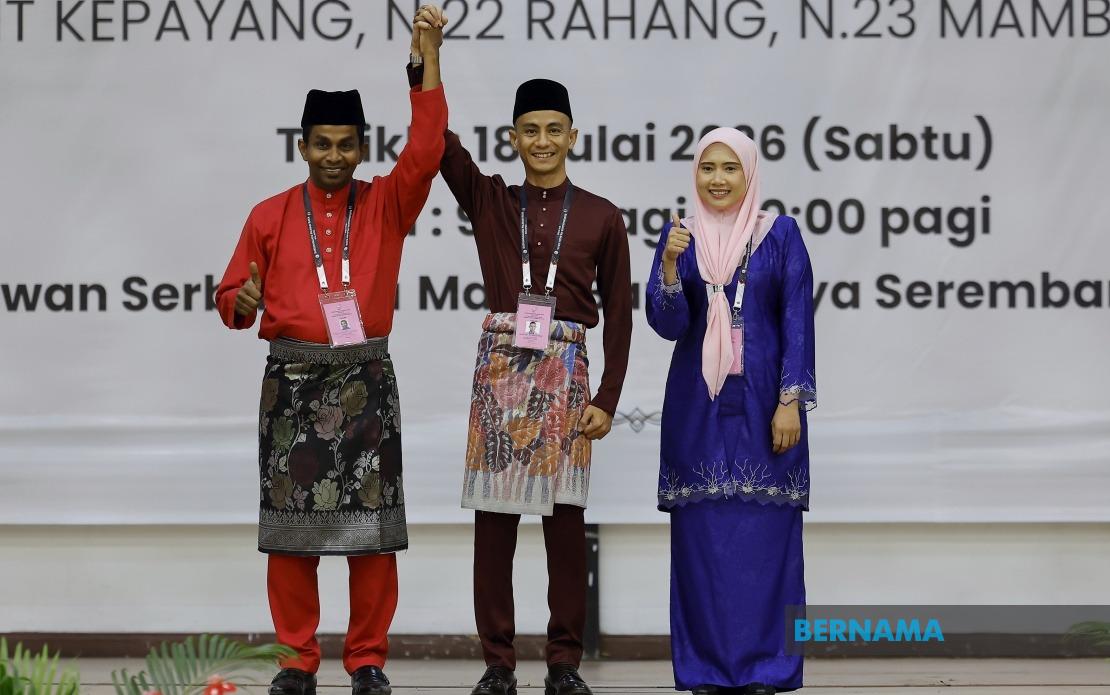
Datuk Ahmad Faez Abdul Razak, the Pakatan Harapan-backed PKR candidate for Labu, has launched his electoral campaign on a promise to harmonise the constituency's rapid development with the welfare concerns of its residents. Making his electoral debut in the 16th Negeri Sembilan state election, Ahmad Faez described the opportunity as both a test of his resolve and a chance for his coalition to reclaim a seat lost in 2023. Speaking after the nomination process in Seremban, he acknowledged the nerves accompanying his first campaign, yet projected confidence based on nearly three years of groundwork among the electorate.
The Labu constituency represents one of Negeri Sembilan's fastest-expanding areas, a dynamic that Ahmad Faez positions as central to his candidacy. His professional background as a property developer furnishes him with credentials to navigate the tension between urban expansion and preserving community identity—a balancing act that will define his campaign messaging. By framing his expertise as directly applicable to local governance, he attempts to distinguish himself from opponents by offering practical solutions rooted in hands-on experience with large-scale projects rather than purely political rhetoric.
A critical anchor for Ahmad Faez's platform is the Malaysia Vision Valley development corridor, a sprawling 11,000 to 12,000-hectare initiative straddling the constituency with significant industrial and residential components. While the project promises employment generation and economic stimulus, he recognises that rapid transformation risks displacing long-established communities and eroding local character. This awareness shapes his campaign strategy: rather than simply cheerleading development, he positions himself as a steward capable of moderating growth's more disruptive aspects. The framing appeals to residents caught between aspirations for prosperity and anxieties about change, a constituency demographic common across Southeast Asian states experiencing rapid industrialisation.
Among his signature proposals is the establishment of a youth community centre and recreational facility, offerings he identifies as currently absent from Labu. This commitment addresses a generational concern—youth engagement and amenity provision—that resonates particularly with younger voters and families. By targeting a tangible gap in local infrastructure, Ahmad Faez demonstrates attentiveness to constituent feedback gathered during his two years and eight months of ground engagement. Such targeted pledges, rooted in direct observation rather than generic party platforms, carry persuasive weight in state elections where local specificity often outweighs national narratives.
Ahmad Faez's electoral calculus unfolds against the backdrop of state-level momentum. He credits aligned initiatives between the Negeri Sembilan government and the federal administration with bolstering public confidence, suggesting that PH's broader governance performance provides tailwinds for his campaign. This narrative cohesion—linking local representation to state and federal policy coherence—serves to position a vote for Ahmad Faez as part of a larger ecosystem of aligned governance rather than an isolated constituency choice. Such framing leverages institutional strength when a party controls multiple administrative tiers.
The electoral landscape in Labu remains competitive and complex. The incumbent, Mohamad Hanifah Abu Baker of Bersatu and Barisan Nasional, secured victory in 2023 with a majority of 1,640 votes over the previous PH-PKR challenger, Datuk Ismail Ahmad. The margin, while decisive, is not insurmountable—a vulnerability that Ahmad Faez's campaign will likely emphasise to mobilise wavering voters. His three-cornered contest against Hanifah and BN nominee Siti Nur Umaira Hasim introduces tactical complexity; vote splitting among opposition-leaning constituencies could prove decisive, particularly if turnout patterns vary by demographic bloc.
The constituency's electoral profile—comprising 32,884 registered voters as of May 31, 2026—includes 32,869 ordinary voters plus 15 police personnel and spouses. The demographic composition of Labu, situated within the rapidly urbanising Seremban-Kuala Lumpur corridor, likely skews toward younger, more mobile populations with mixed attachment to traditional patronage networks. Such voters often respond to candidate-centred campaigns emphasizing competence and specific policy deliverables over party loyalty alone, a dynamic that favours Ahmad Faez's emphasis on his professional credentials and concrete proposals.
The timing of the Negeri Sembilan election—with early voting scheduled for July 28 and main polling day set for August 1—falls within a broader cycle of state and federal contests reshaping Malaysia's political landscape. Negeri Sembilan's outcome will feed into national calculations about coalition viability and momentum, with eyes particularly on whether PH can reclaim constituencies lost in 2023. A victory in Labu would signal recovery in urban-adjacent areas, while loss might suggest that recent administrative performance has failed to fully reverse electoral losses from three years prior.
Ahmad Faez's strategic positioning as a professional outsider to conventional politics carries both advantages and constraints. His property development expertise offers tangible credibility on development issues, yet may alienate constituencies sceptical of developer-politician alignments, particularly given ongoing controversies surrounding land acquisition and environmental impact in Malaysian development corridors. Managing this tension—presenting himself as pro-development yet environmentally and socially conscious—will require sustained messaging discipline throughout the campaign.
The broader context of Labu's rapid growth within Malaysia Vision Valley also situates this constituency as a microcosm of national development dilemmas. How effectively Ahmad Faez articulates solutions to balancing economic expansion with quality-of-life preservation may resonate beyond Labu, offering insights into voter priorities across similar constituencies nationwide. His candidacy thus doubles as a test case for whether PH can successfully bridge development pragmatism with community welfare concerns—a nexus that will likely define electoral competition across Malaysia's urbanising periphery.

