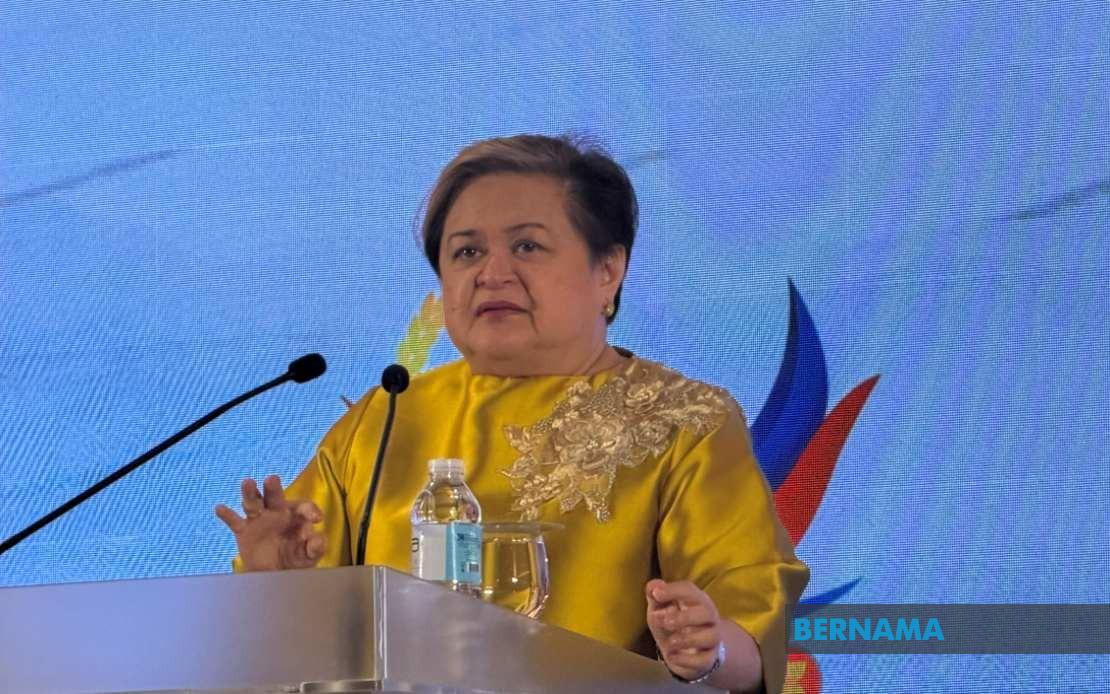
The Philippines has escalated calls for ASEAN to reinforce security and stability along vital maritime corridors that underpin regional prosperity, particularly the Strait of Malacca and South China Sea, as geopolitical tensions threaten to disrupt trade flows and destabilise energy markets across Southeast Asia. Philippine Foreign Affairs Secretary Ma. Theresa P. Lazaro articulated the concerns during a discussion with regional media, emphasising that the bloc cannot afford to assume these critical arteries will remain insulated from external shocks or deliberate interference.
Lazaro cited the recent turmoil affecting the Strait of Hormuz as a cautionary precedent for Southeast Asia. Disruptions in that distant waterway had rippled through global commodity markets, pushing up energy costs and exacerbating inflationary pressures worldwide. She warned that if similar upheavals were to strike the Strait of Malacca or the South China Sea—routes through which trillions of dollars in merchandise flow annually—the consequences for ASEAN would be severe and multifaceted. Rising fuel and shipping costs would squeeze operating margins for manufacturers and exporters throughout the region, while delayed deliveries could undermine supply chains that depend on just-in-time logistics.
The interconnectedness of ASEAN economies with global production networks means that the region remains acutely vulnerable to maritime disruptions. Unlike developed economies with diversified supply sources and alternative logistics corridors, Southeast Asian nations have fewer fallback options. Lazaro underscored this asymmetry, noting that heightened operating costs, production bottlenecks, or erosion of competitive advantage could threaten the economic model that has sustained rapid growth in countries like Malaysia, Thailand, and Vietnam. For smaller nations reliant on maritime trade, the vulnerability is even more pronounced.
Beyond immediate commercial concerns, Lazaro highlighted the broader systemic risks: food security across a region dependent on international grain shipments, energy security for nations that import the majority of their oil and liquefied natural gas, and the stability of supply chains for critical materials and components. A prolonged disruption would expose how fragile regional resilience remains despite decades of economic integration and development.
In response, Lazaro outlined a comprehensive framework centred on preparedness and practical multilateral action. The cornerstone of this approach is maintaining open, secure sea lanes through coordinated monitoring and policing efforts. She called for ASEAN to deepen technical cooperation on information-sharing and early warning systems that could detect emerging threats—whether from piracy, accidents, or deliberate blockades—before they metastasise into full-scale crises. Enhanced early warning capabilities would buy time for diplomatic interventions and allow regional governments to activate contingency measures in energy stockpiling, food reserves, and alternative routing.
Lazaro also proposed institutional innovations to accelerate crisis response. A formalised communication protocol among ASEAN foreign ministers would enable rapid collective decision-making when incidents occur, replacing ad hoc consultations with pre-arranged escalation procedures. Transparency and predictability in how ASEAN handles maritime incidents would, she argued, bolster confidence among traders and investors that the region can manage shocks without degenerating into panic or protectionism.
The proposed protocol reflects growing recognition within ASEAN that the bloc's decision-making processes—often characterised by consensus-building and quiet diplomacy—may be too slow for fast-moving maritime crises. A financial ship hijacking or unexpected blockade could trigger market panic within hours, long before traditional ASEAN consultation mechanisms yield unified statements. Institutionalising rapid-response protocols at the foreign ministers' level would signal credibility to international markets.
Lazaro's advocacy for strengthened supply chain resilience extends beyond the maritime domain. She called for ASEAN to develop redundancies in food procurement networks, diversify energy suppliers, and invest in intra-regional logistics infrastructure that could reduce dependence on any single shipping corridor. Such measures would take years to implement but would materially reduce vulnerability to future disruptions. Malaysia, with its significant port infrastructure and petrochemical refineries, could emerge as a regional logistics hub under such a strategy, though coordination challenges remain substantial.
Central to the Philippines' regional agenda under its 2026 ASEAN Chairship is the establishment of an ASEAN Maritime Centre based in the Philippines. The centre is conceived as a dedicated institutional platform for addressing maritime challenges collaboratively, serving as a secretariat for information-sharing, capacity-building, and coordination on maritime security and economic issues. By housing this facility in Manila, the Philippines positions itself as the intellectual and organisational hub for ASEAN's maritime strategy, a role that carries both prestige and responsibility.
The Maritime Centre would facilitate cross-sectoral engagement across ASEAN's three pillars—the Political-Security Community, Economic Community, and Socio-Cultural Community. Maritime issues inherently span all three: security concerns fall within the political pillar, trade and logistics fall within the economic pillar, and maritime heritage and disaster risk reduction involve the socio-cultural dimension. A dedicated centre could break down silos and encourage holistic thinking about maritime challenges in ways that ad hoc ministerial meetings often fail to achieve.
For Malaysia, these Philippine initiatives align with Kuala Lumpur's existing interests in maritime safety and freedom of navigation, particularly given Malaysia's critical stake in Strait of Malacca traffic. As the largest stakeholder in the strait's security alongside Singapore and Indonesia, Malaysia has long championed multilateral approaches to monitoring and securing the waterway. The proposed ASEAN Maritime Centre could complement Malaysia's existing bilateral and trilateral arrangements, providing a broader regional framework within which narrower bilateral interests are embedded.
The Philippines' push for maritime resilience also carries implicit messaging about the South China Sea disputes. While Lazaro framed her remarks around economic stability and supply chain security, strengthening ASEAN's institutional capacity on maritime affairs indirectly bolsters the bloc's collective voice on South China Sea governance. A unified, well-resourced ASEAN Maritime Centre could support member states in developing coast guard capabilities, conducting joint surveys, and producing shared data on maritime activities—all foundational to asserting regional agency in contested waters.
The timing of these initiatives reflects broader anxieties within ASEAN about the sustainability of the rules-based international order. Rising geopolitical competition between major powers, recent disruptions in global shipping, and climate-related risks to maritime infrastructure have exposed how precarious maritime stability can be. By championing proactive institutional measures and multilateral protocols, the Philippines is attempting to position ASEAN not as a passive victim of external shocks but as an agent capable of shaping its maritime destiny through collective action and strategic foresight.

