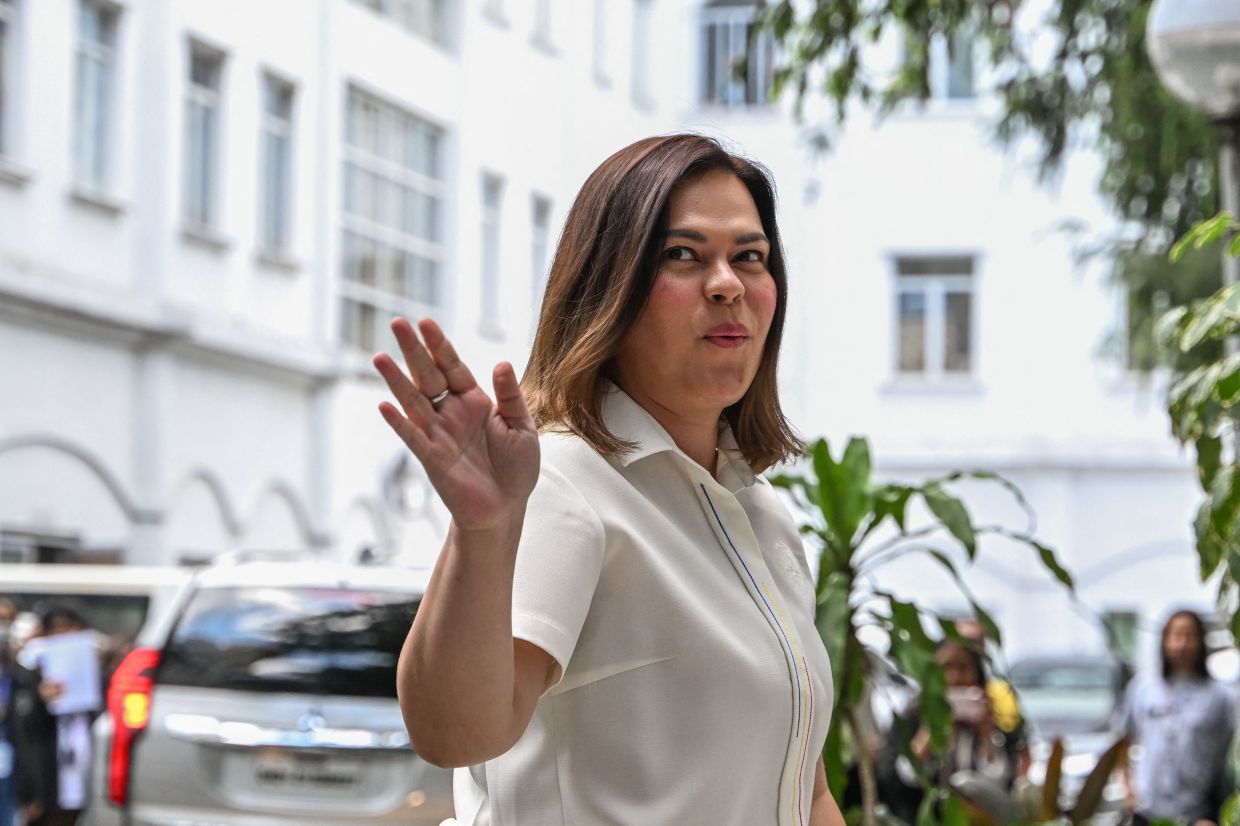
Vice President Sara Duterte is currently outside the Philippines on an officially sanctioned foreign journey that will extend through July 31, according to confirmation from the Presidential Palace on Tuesday. The Office of the Executive Secretary, acting on behalf of President Ferdinand Marcos Jr, granted approval for the Vice President's travels across multiple nations during a period marked by significant political turbulence in Manila.
At a presidential press briefing, Palace communications officer Claire Castro laid out details of the itinerary, which spans from July 16 through the final day of the month. The Vice President's approved destinations encompass Qatar, Germany, the United Kingdom, Northern Ireland, and the Netherlands, with the Palace characterizing the journey as personal in nature. Castro's statement represented an official acknowledgment of the Vice President's absence from the country during what remains one of the most contentious moments of her political career.
The timing of Duterte's absence proves particularly significant given that her impeachment trial is proceeding in her physical absence. The Casa Presidencial indicated that Marcos made a deliberate choice to permit the Vice President to undertake this international sojourn despite the escalating institutional conflict unfolding in the capital. This approval signals either an acceptance within the executive branch of her departure or potentially reflects constitutional protocols that allow officials to travel while facing legislative proceedings.
Current reporting places Duterte in The Hague, the Netherlands, where she is said to be attending to family matters of considerable gravity. Her father, former President Rodrigo Duterte, has been held in detention at a facility in the Dutch capital since March of the previous year, pending proceedings before the International Criminal Court scheduled for late November. The younger Duterte's presence in Europe appears directly connected to visiting her incarcerated parent during what constitutes one of the most troubling episodes in Philippine political history.
The former president faces charges related to crimes against humanity stemming from extrajudicial killings conducted throughout his tenure as both Davao City mayor and subsequently as the nation's leader between 2011 and 2019. The ICC alleges that Rodrigo Duterte functioned as an indirect co-perpetrator in killings executed during the government's aggressive anti-drug and anti-criminality campaigns that claimed tens of thousands of lives. His March 2025 arrest by Philippine authorities followed an ICC warrant, marking an unprecedented moment in Southeast Asian politics when a sitting president's successor allowed the detention of his predecessor on international charges.
The international legal proceedings against the former chief executive represent a watershed moment for the region. No sitting or former leader from the Philippines has previously faced ICC prosecution, reflecting growing international accountability mechanisms and the willingness of governments to cooperate with The Hague despite historical concerns about national sovereignty. For Malaysian observers, the case demonstrates how international criminal courts increasingly influence domestic political calculations in the region, with potential implications for other nations navigating similar transitions of power.
Defence counsel Michael Poa acknowledged the Vice President's European location during remarks made before Tuesday's formal trial proceedings commenced. His confirmation that "she is in the Hague" corroborated the Palace's timeline while his assertion that "she'll be back soon" appeared designed to signal that the Vice President intends to resume participation in her trial proceedings upon return. This statement balanced respect for her current location with reassurances to the impeachment tribunal regarding her eventual availability.
The impeachment trajectory has accelerated dramatically in recent months, with the House of Representatives voting to impeach Duterte on grounds that have become increasingly pointed. Her removal from the country during active trial phases raises questions about legislative procedure and whether officials may continue serving while abroad, issues that Malaysian constitutional scholars and political observers are likely monitoring closely given analogies to Commonwealth parliamentary traditions.
The Vice President's status as both a political figure under institutional attack and a family member of an imprisoned former leader creates unusual political positioning. Her decision to maintain contact with her detained father while simultaneously defending herself against charges in Manila reflects personal and institutional pressures converging on her public role. The Palace's approval of her travel suggests either institutional acceptance of her position or tactical decisions about handling a politically volatile situation.
For Southeast Asian politics more broadly, the Duterte family's trajectory illuminates how regional leaders navigate post-presidency challenges in an era of strengthened international legal mechanisms. The availability of travel to multiple democracies, combined with ICC jurisdiction, means that former autocratic leaders can no longer assume impunity regardless of domestic political circumstances. Malaysia and other regional governments are observing how the Philippines manages this transition and what precedents emerge for future transitions of power.

