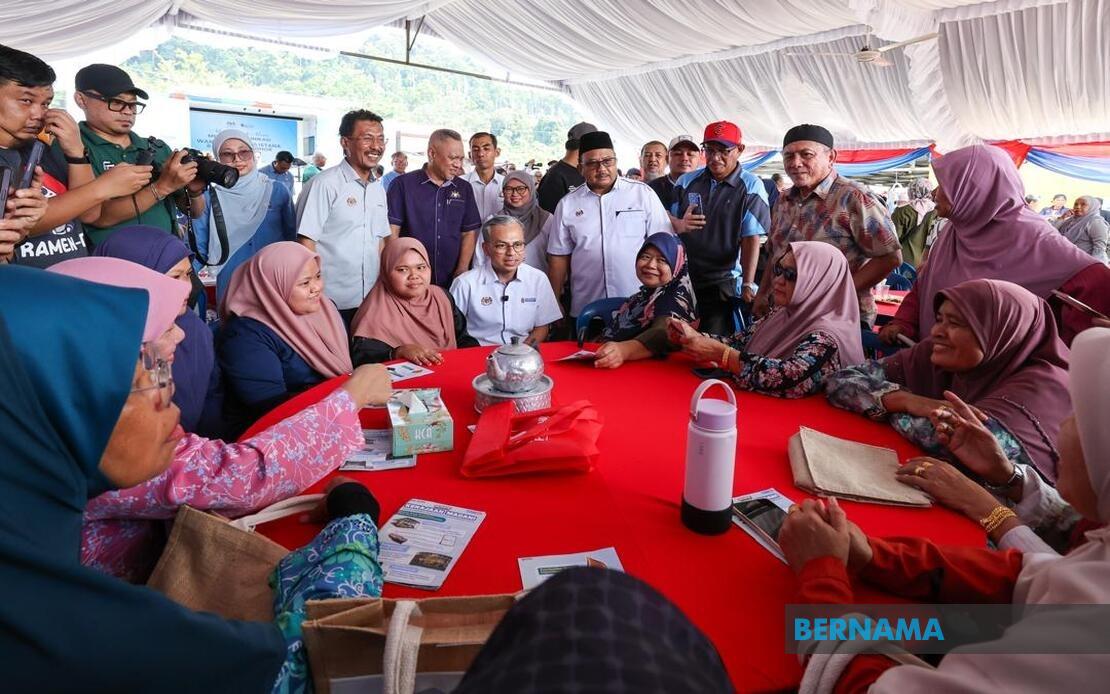
Pakatan Harapan's decision to unveil its campaign platform for the upcoming Johor state election came at precisely the right moment, according to Communications Minister Datuk Fahmi Fadzil, who pushed back against mounting criticism from within and outside the coalition about the timing of the 'Johor for All' manifesto. Speaking after a community engagement session in Batu Pahat on July 4, Fahmi emphasised that the coalition had deliberately waited until the second week of active campaigning to introduce its comprehensive policy document, having ensured thorough internal vetting and endorsement from senior party leadership, including the Prime Minister himself.
The manifesto's launch timeline had drawn scrutiny from former Bangi Member of Parliament Ong Kian Ming, who contended that the delayed introduction would handicap PH's campaign machinery and messaging coherence during a pivotal election period. However, Fahmi dismissed such concerns as disconnected from the realities of modern political campaigning, arguing instead that substance should take precedence over speed when presenting policy platforms to voters. He framed the Friday launch as strategically sound, noting it coincided naturally with the introduction of manifestos from competing coalitions, allowing both major blocs to present their respective visions to an attentive electorate without creating artificial urgency or appearing reactive rather than principled.
The broader political context surrounding the Johor election reveals deeper anxieties within opposition ranks. Ong had predicted a decisive Barisan Nasional victory, citing multiple PH weaknesses including the absence of a publicly named menteri besar candidate, limited presence of party luminaries as direct candidates, lack of a compelling campaign narrative, and what he characterised as organisational inertia reflected in the manifesto delay. These critiques reflect growing confidence among BN strategists that the ruling coalition faces significant structural disadvantages in positioning itself as a credible alternative government, particularly given the state's political complexities and voter sentiment.
Fahmi shifted the conversation toward rival campaign intensity, drawing unflattering comparisons between Johor Menteri Besar Datuk Onn Hafiz Ghazi's visible campaign presence and the more aggressive efforts of former UMNO Youth chief Khairy Jamaluddin. The Communications Minister suggested somewhat sarcastically that Khairy appeared more energised and battle-ready than the state's chief executive, implying that BN's leadership lacked coherence and unified messaging. He further rebutted Khairy's accusation that PH's manifesto merely replicated BN's platform by inverting the criticism, suggesting that Onn Hafiz would benefit from acquiring Khairy's apparent vigour and public profile, thereby highlighting what PH characterised as leadership gaps within the incumbent coalition.
Internal party dynamics also featured prominently in Fahmi's remarks, particularly concerning allegations circulating on social media platforms regarding DAP leaders' purported positions on pardoning former Prime Minister Datuk Seri Najib Tun Razak. These narratives have created potential vulnerabilities for the coalition, especially among voters sensitive to governance and judicial independence questions. Former Skudai assemblyman Marina Ibrahim had announced her retirement from politics, attributing her decision partly to disillusionment with what she described as orchestrated positions adopted by DAP leadership regarding the controversial pardon issue, a sensitive matter given Malaysia's ongoing political divisions over the 1MDB scandal and its ramifications.
Yet Fahmi expressed confidence that such controversies would not significantly diminish PH's electoral momentum, resting his assessment on observed grassroots energy and voter turnout at coalition events throughout the campaign period. The strength of community response, he suggested, indicated that voters remained focused on substantive policy differences rather than becoming distracted by social media narratives and internal party disagreements. He specifically noted that DAP candidate Ng Yak Howe for the Bentayan state seat, along with other party representatives, had continued generating positive engagement despite the swirling allegations about party leadership positions on the pardon question.
This confidence in grassroots resilience reflects a broader PH strategy of emphasising direct voter contact and community-level organisation rather than relying predominantly on traditional media narratives or top-down messaging frameworks. The coalition appears to believe that sustained ground-level activity, candidate quality, and visible engagement with constituent concerns remain more influential than either opposition criticism or internally generated controversies. The presence of Communications Ministry secretary-general Datuk Abdul Halim Hamzah and PH candidate Felicia Poh Rui Ling at the Batu Pahat event underscored the coalition's commitment to systematic community outreach across contested constituencies.
The Johor state election itself represents a significant test of PH's political viability and organisational capacity outside its traditional strongholds. With 172 candidates contesting 56 state seats, the electoral contest encompasses diverse communities, economic interests, and political preferences across the southern state. The election's timing, set for July 11 with early voting scheduled for July 7, has compressed the campaign period, adding urgency to both coalitions' ground operations and messaging strategies. This compression arguably strengthens arguments both for and against the timing of manifesto releases, as voters face an accelerated decision-making window.
For Malaysian observers assessing coalition dynamics and electoral prospects, the exchange between PH leadership and internal critics reveals the movement's struggle to maintain narrative control and organisational unity while navigating complex state-level politics. The defence of manifesto timing, while seemingly technical, encapsulates broader questions about PH's strategic decision-making, leadership confidence, and ability to manage the difficult balance between careful policy development and responsive political campaigning. The coalition's assertion that comprehensive vetting and senior leadership endorsement justified the manifesto's release schedule suggests a commitment to substantive governance over tactical manoeuvring.
The Malaysian political landscape increasingly reflects tensions between those who prioritise rapid response to opposition attacks and those who emphasise methodical policy development and consensual decision-making within broad coalitions comprising diverse parties with occasionally divergent interests. PH's approach in Johor appears to lean toward the latter philosophy, betting that voters will reward what the coalition frames as principled deliberation over reactive speed. However, the persistence of criticism from figures like Ong Kian Ming and Khairy Jamaluddin indicates that this strategic choice remains contested even among those theoretically aligned with or sympathetic to the opposition coalition's broader objectives.

