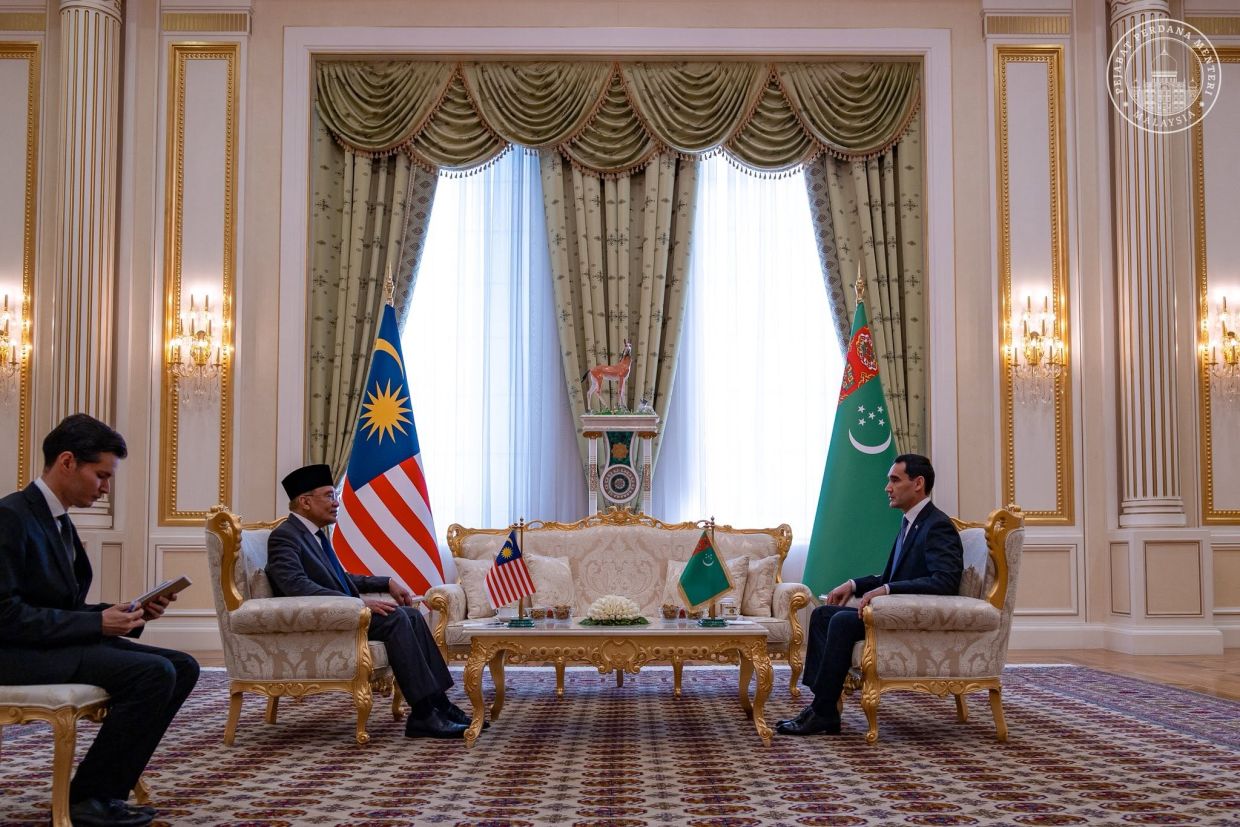
Prime Minister Datuk Seri Anwar Ibrahim and Turkmenistan President Serdar Berdimuhamedov oversaw the formal execution of a strategic partnership accord between national oil and gas company Petronas and Turkmenistan authorities during an official state visit to Ashgabat. The agreement represents a pivotal expansion of Malaysia-Turkmenistan cooperation, particularly in the energy sector where the two nations have maintained continuous engagement for the past three decades. Officials from the Prime Minister's Office emphasised that this formalised partnership signals renewed commitment to deepening bilateral economic and strategic ties in a region increasingly important to global energy security.
The timing of this accord carries significant symbolic weight, coinciding precisely with three decades of collaborative work between Malaysia and Turkmenistan in the energy arena. Throughout this extended partnership period, the energy sector has served as the primary vehicle for bilateral engagement, driving knowledge transfer and technological advancement between the two nations. Rather than representing a departure from established practice, the strategic partnership should be understood as institutionalising and expanding upon foundations laid over the previous 30 years of productive cooperation. This continuity underscores the stability and mutual benefit both nations have derived from their longstanding relationship.
The partnership framework explicitly acknowledges the multifaceted nature of cooperation beyond immediate commercial transactions. According to statements from the Prime Minister's Office, the arrangement encompasses talent development initiatives and knowledge-technology transfer mechanisms designed to strengthen Malaysia's broader capabilities in the energy sector. This educational and capacity-building dimension distinguishes the partnership from purely transactional energy deals, positioning it as an investment in human capital and institutional knowledge. For Malaysian firms and professionals, such arrangements create pathways to expertise development in complex energy operations, particularly relevant given the technical sophistication required for managing Central Asian hydrocarbon resources.
Turkmenistan's natural gas reserves represent one of the world's largest concentrations of this critical energy resource, making the nation a strategically vital location for long-term energy exploration and development. The partnership explicitly highlights exploration opportunities within Turkmenistan's expansive gas sector, suggesting that Petronas anticipates substantial future investment and operational involvement in developing these reserves. For Southeast Asia, securing access to natural gas supplies from geographically and politically stable Central Asian sources provides diversification benefits and potential hedge against supply concentration risks in other regions. The agreement signals Malaysian recognition of Turkmenistan's importance to regional and global energy stability.
Beyond the immediate energy dimensions, government statements characterise the partnership as a validation of Malaysian technological prowess and industrial capabilities on the international stage. Officials argued that the arrangement demonstrates Malaysia's competitive position in energy sector expertise, suggesting that global confidence in Malaysian companies' ability to execute complex energy projects remains robust. This international validation carries implications for Malaysian companies seeking contracts and partnerships elsewhere, reinforcing perceptions of Malaysian competence in strategic industries. The government framed the development as evidence supporting its broader development agenda and industrial positioning within the regional economy.
Petronas' cumulative investments in Turkmenistan have reached RM52.73 billion since commencing operations in 1996, making the company's presence substantially embedded within the Turkmenistan energy economy. This extended investment history indicates that Petronas operations represent a significant and mature commercial presence rather than a speculative or exploratory foray. The partnership agreement likely formalises expanded operational scope and investment commitments building upon this decades-long foundation. For Petronas shareholders and Malaysian stakeholders, the continued deepening of engagement in Turkmenistan suggests confidence in long-term value generation from these operations despite broader geopolitical complexities in the Central Asian region.
Trade data demonstrates Malaysia's economic footprint within Turkmenistan's import market. During 2025, bilateral trade reached RM75.80 million, with Malaysian exports comprising RM75.50 million of this total, representing a nine per cent year-on-year increase. While these figures reflect Malaysia's fourth-largest trading partnership position among Central Asian countries, they also suggest substantial untapped commercial potential given the geographic distance and limited historical trade infrastructure between the two nations. The partnership agreement may catalyse expansion of non-energy trade flows as the deepening relationship creates broader commercial linkages and business confidence between Malaysian and Turkmenistan enterprises.
Anwar's two-day official visit provided the diplomatic platform for formalising the Petronas partnership and permitted bilateral discussions addressing broader cooperation frameworks. The Prime Minister's personal attendance at the partnership signing ceremony, alongside President Berdimuhamedov's participation, signals the political importance both governments attach to deepening Malaysia-Turkmenistan relations. Such high-level engagement typically precedes or accompanies expansion of bilateral engagement mechanisms beyond the energy sector, potentially opening pathways for cooperation in infrastructure, manufacturing, and financial services.
The MADANI government's welcoming stance toward the Petronas partnership reflects the administration's broader strategic orientation toward expanding Malaysia's international economic footprint and diversifying bilateral relationships beyond traditional Southeast Asian partners. Investment in Central Asian energy partnerships aligns with government efforts to position Malaysia as a significant actor in global energy security architectures. For Malaysian policymakers, successful deepening of Turkmenistan relations potentially creates models for similar partnerships with other Central Asian states, gradually building Malaysia's presence throughout the region.
The strategic partnership agreement appears poised to shape Malaysia-Turkmenistan relations over the coming decade, with implications extending beyond bilateral dynamics into broader Southeast Asian energy security considerations. As regional demand for natural gas continues expanding, secured access to Central Asian supplies through established partnerships with reputable local authorities offers Malaysian energy consumers and industries important supply diversification benefits. The agreement's emphasis on future resource development suggests Petronas anticipates sustained operational presence and commercial opportunity in Turkmenistan throughout the coming years, committing capital and expertise to deepening existing operations within the country's hydrocarbon sectors.

