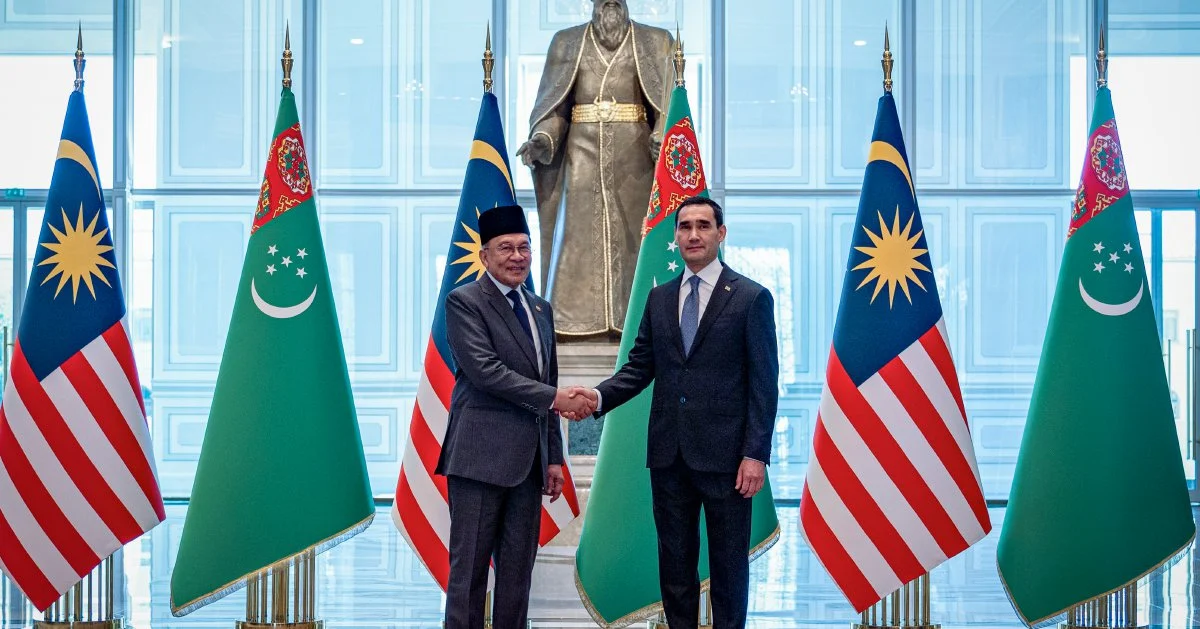
Malaysia's energy sector is experiencing a strategic shift toward Central Asia, with Petroliam Nasional Bhd deepening its operational footprint in Turkmenistan as a means of repositioning bilateral ties. The momentum follows Prime Minister Datuk Seri Anwar Ibrahim's official visit to the resource-rich nation, signalling heightened political commitment to the relationship. Petronas, as Malaysia's primary energy champion, is now positioned as the commercial engine driving this renewed partnership, transforming diplomatic gestures into tangible economic collaboration.
Turkmenistan represents a significant opportunity for Malaysian energy interests given its substantial natural gas reserves and strategic location along historical trade routes connecting Asia and Europe. The country holds the world's fourth-largest proven natural gas reserves, making it an attractive partner for energy-dependent nations seeking to diversify their supply chains and secure long-term energy security. For Malaysia, which itself maintains substantial hydrocarbon reserves but faces growing domestic energy demand, Turkmenistan offers potential for joint exploration, technology transfer, and participation in downstream projects that could enhance returns on Malaysian investments in the region.
Petronas' extended presence in Turkmenistan has already established foundational relationships with local authorities and energy sector players, creating institutional knowledge that newer entrants would require years to develop. This established platform accelerates the pace at which bilateral energy cooperation can advance beyond preliminary discussions into concrete project implementation. The company's experience navigating Central Asian regulatory environments and working alongside state-owned energy entities positions it uniquely to identify and execute opportunities that align with both Malaysian strategic interests and Turkmen development priorities.
The timing of enhanced Malaysia-Turkmenistan engagement reflects broader geopolitical trends in Asia. Rising energy demand across Southeast Asia, coupled with global energy transition pressures, compels nations to reassess their hydrocarbon portfolios and secure reliable long-term supply agreements. Turkmenistan's geographic proximity to Asian markets via multiple transit corridors—including pipelines traversing the Caspian region—makes it an efficient supplier for energy-importing economies. Petronas' role extends beyond simple commodity transactions; the company can facilitate knowledge exchange regarding energy security strategies, upstream technology development, and downstream value-addition that benefit both nations.
Beyond hydrocarbons, the Petronas-anchored relationship opens pathways for Malaysian companies across adjacent sectors. Engineering firms, construction companies, and service providers can piggyback on Petronas' market entry to pursue infrastructure, renewable energy, and industrial projects. Turkmenistan, despite resource wealth, requires significant investment in modern infrastructure, processing facilities, and technological modernisation. Malaysian firms, equipped with relevant expertise and competitive pricing, can capture a portion of these opportunities, generating employment domestically whilst building regional market presence.
The diplomatic visit by Prime Minister Anwar Ibrahim signals governmental support for commercial initiatives Petronas pursues in Turkmenistan, potentially unlining credit facilities, tax incentives, or other policy support mechanisms that ease investment flows. Such political backing transforms corporate expansion into a whole-of-government strategy, enhancing negotiating power when discussing project terms, resource access, or preferential treatment. This alignment between Malaysia's foreign policy objectives and Petronas' commercial strategy multiplies the impact of the energy company's operations across the Caspian region.
Educational and workforce development cooperation between Malaysia and Turkmenistan can accelerate through Petronas-sponsored initiatives. Training programmes for Turkmen technicians at Malaysian facilities, scholarship opportunities for engineers and geologists, and joint research ventures between Malaysian universities and Turkmen institutions create people-to-people connections that solidify bilateral relations beyond transactional energy deals. These human capital investments establish long-term competitive advantages for Malaysian firms seeking contracts in Turkmenistan and neighbouring Central Asian republics.
Regional competitors—including Chinese, Russian, and European energy companies—have already entrenched themselves across Central Asia. Petronas' revitalised engagement in Turkmenistan under political patronage positions Malaysia to retain and expand market share in an increasingly contested landscape. The company's track record in offshore exploration, liquefied natural gas production, and downstream refining provides distinctive capabilities that differentiate Malaysian offerings from competitors relying primarily on capital or geopolitical leverage. Demonstrating technical excellence and reliable partnership becomes crucial for Petronas to command premium positioning in Turkmen energy dialogues.
Looking forward, the deepening Petronas-Turkmenistan connection has implications extending beyond bilateral commerce. Enhanced Malaysian engagement in Central Asia strengthens Southeast Asia's broader connectivity with Eurasian markets, supporting regional integration initiatives such as the Regional Comprehensive Economic Partnership. Energy partnerships often catalyse investments across multiple sectors—telecommunications, finance, manufacturing—as companies establish regional headquarters and supply chain networks. Turkmenistan's geopolitical stability, despite occasional regional tensions, and its resource endowment make it a calculated risk worth Malaysia's strategic attention.
The trajectory established through Petronas' strengthened role in Turkmenistan reflects Malaysia's pragmatic approach to foreign policy and economic development. Rather than pursuing generalist diplomacy across numerous nations, Malaysia concentrates resources where genuine commercial opportunity exists and where established corporate presence can compound benefits. Turkmenistan, with its energy abundance and development imperatives, qualifies on both criteria. Petronas, through its technical prowess and operational networks, becomes the instrument translating political will into measurable economic outcomes that benefit Malaysian stakeholders whilst contributing meaningfully to Turkmen prosperity and development objectives.

