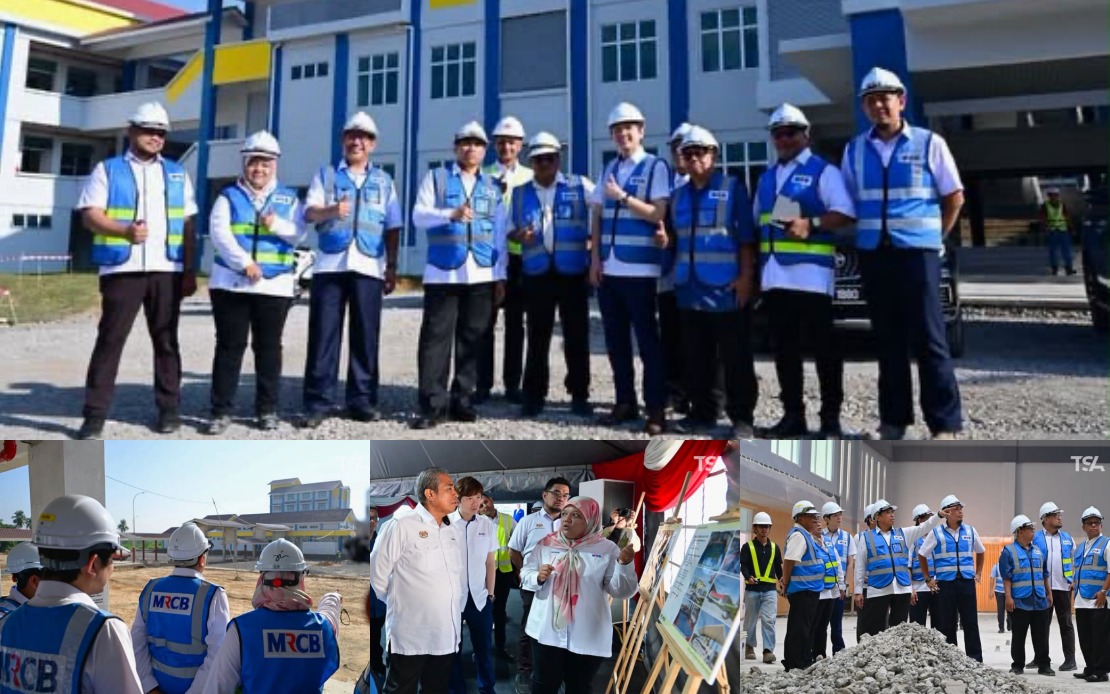
Malaysia's long-neglected Perlis Malaysia Sports School project appears finally poised for completion, with officials confirming that the facility in Bukit Chabang, Padang Besar should be ready for operation by January 2027. The announcement marks a significant development for a scheme that has sat dormant since 2013, representing one of the more visible examples of stalled infrastructure in the nation's northern corridor.
Chief Secretary to the Government Tan Sri Shamsul Azri Abu Bakar delivered the update after inspecting the construction site during his appearance at the Iltizam 2026 Convention at Universiti Utara Malaysia. Based on the current trajectory, the first phase of the project has progressed to between 85 and 90 per cent completion, suggesting that the January 2027 deadline is achievable provided no major obstacles emerge in the coming months. The visible momentum contrasts sharply with the project's earlier history, which saw it languish incomplete for over a decade despite initial funding and planning.
The revitalization of the scheme gained impetus following Prime Minister Datuk Seri Anwar Ibrahim's intervention in April 2024, when he made the strategic decision to transfer responsibility to a capable government-linked company. This administrative restructuring addressed a critical gap identified in the project's earlier management, where coordination failures and contractor difficulties had compounded delays. By consolidating oversight under a single, well-resourced public entity rather than juggling multiple agencies, the government aimed to impose greater accountability and streamline decision-making throughout the construction phases.
During his briefing to reporters, Shamsul Azri attributed the recent acceleration to systematic problem-solving rather than mere good fortune. The manpower shortages that once plagued construction efforts have been resolved through improved recruitment and workforce planning. Similarly, contractor complications that previously stalled progress have been ironed out, suggesting that lessons from the project's troubled first decade have finally informed operational improvements. This hands-on resolution of practical obstacles demonstrates how sustained oversight and political will can translate into tangible results on stalled developments.
For Perlis and the broader northern region, the sports school represents more than just a facility—it signals the government's commitment to developing sporting infrastructure in areas that often receive less attention than the Klang Valley or Johor Bahru corridors. Once operational, the institution will serve as a hub for nurturing young athletic talent in states like Perlis, Kedah, and northern Perak, potentially levelling disparities in access to world-class training environments. The venue's eventual opening will also inject economic activity into Padang Besar, a border locality that could benefit from improved amenities and visitor traffic.
Beyond the sports school specifics, Shamsul Azri used the Iltizam convention to spotlight broader reforms in government operational efficiency. The Government Service Efficiency Commitment Act 2025, gazetted in May and fully operative since December 2025, establishes a formal legal framework for combating bureaucratic delays. This represents a significant step beyond mere policy pronouncements—it creates enforceable standards and accountability mechanisms designed to reshape how government agencies deliver services to citizens and businesses.
The legislative approach reflects recognition that efficiency improvements require more than exhortation; they demand statutory teeth. Rather than treating service delivery reform as an optional priority subject to agency discretion, the Act positions it as a binding obligation. This shift is particularly relevant for Malaysian businesses and investors who have long cited government approval delays and administrative sluggishness as obstacles to growth and competitiveness. By enshrining efficiency commitments in law, the government signals that repeated complaints about red tape should be met with measurable remedies.
Striking evidence of reform momentum came from Shamsul Azri's disclosure that 439 Bureaucratic Red-Tape Reform projects have been completed since implementation began in 2024. The estimated compliance cost savings of RM2.95 billion flowing to people and businesses represents a tangible return on reform efforts. These figures, while requiring independent verification, suggest that piecemeal interventions targeting specific bottlenecks across government systems can collectively produce meaningful economic relief. For small and medium enterprises particularly, such cost reductions can improve cash flow and competitiveness without requiring new government subsidies.
The Bureaucratic Red-Tape Reform initiative operates under the umbrella of the Public Service Reform Agenda, indicating that efficiency drives are integrated across multiple transformation workstreams rather than siloed as isolated projects. This holistic approach increases the likelihood of systemic rather than superficial change. When multiple agencies tackle interconnected obstacles simultaneously—whether in land approvals, business licensing, or procurement—the cumulative effect can transform how government functions relative to the private sector.
Shamsul Azri also addressed questions about the role of civil servants in politics ahead of anticipated elections, reiterating that existing regulations prohibit government employees from political engagement. The absence of complaints to date suggests either strong compliance or limited visibility of infractions. The statement served to remind the bureaucracy of institutional neutrality obligations, an important safeguard for maintaining public service credibility across political transitions. As Malaysia approaches electoral cycles, maintaining this distinction becomes increasingly vital.
For regional observers watching Malaysia, the Perlis Sports School's progress and the broader efficiency reforms offer mixed signals. The ability to resurrect a 14-year stalled project demonstrates that persistence and administrative restructuring can produce results. Yet the fact that such intervention was necessary underscores how institutional weaknesses allowed the scheme to languish so long in the first place. The creation of new legislative frameworks for efficiency similarly acknowledges that previous soft approaches failed to generate sustainable improvements.
Looking ahead, the January 2027 completion date should be treated as a target requiring sustained political and administrative attention rather than a guaranteed outcome. Construction projects frequently encounter unforeseen challenges, particularly in Malaysia's tropical climate and complex logistics environment. Maintaining momentum through 2026 will require continued oversight and resource allocation. If successfully completed, however, the Perlis Malaysia Sports School will demonstrate that even stubborn infrastructure legacies can be resolved through determined governance—a lesson relevant across Southeast Asia's development challenges.

