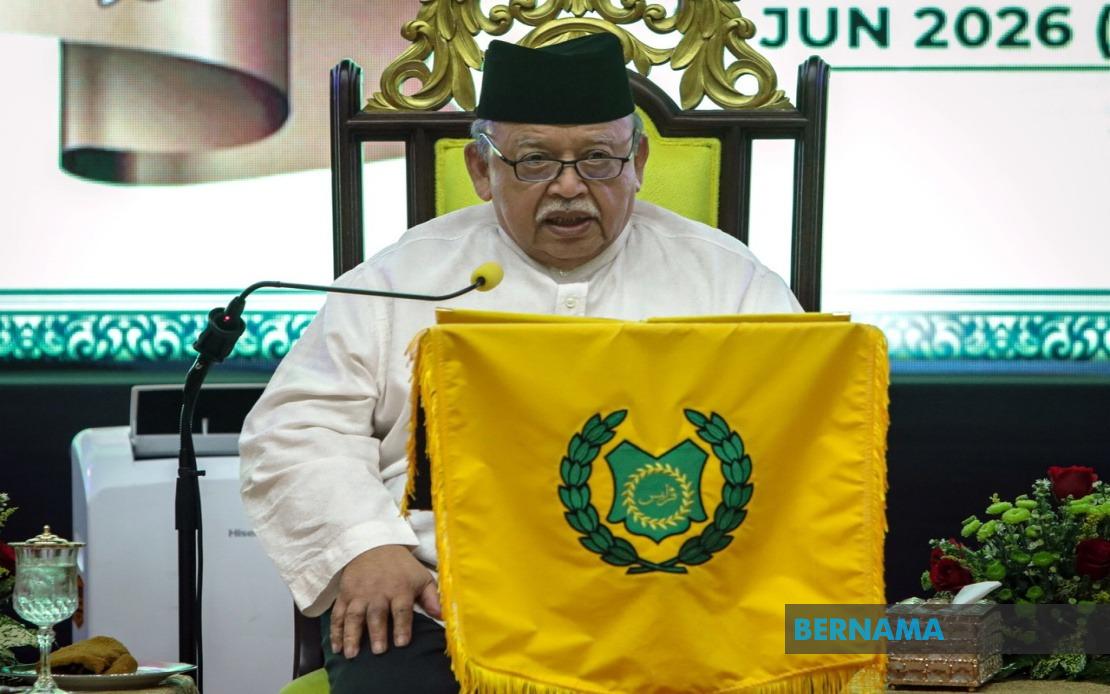
The Raja of Perlis, Tuanku Syed Sirajuddin Jamalullail, has delivered a wide-ranging call for moral regeneration across society, stressing that sustainable development requires citizens to execute their duties with genuine commitment while treating their work as a form of spiritual devotion and steadfastly resisting all manifestations of corruption. Addressing attendees at the state-level Maal Hijrah 1448H/2026M celebration in Kangar, the Ruler articulated a vision of progress that transcends conventional metrics of economic growth and infrastructure expansion, instead anchoring national advancement on the intellectual capacity, ethical standards and social cohesion of the population.
In remarks that reflect broader concerns about governance standards across Malaysia, Tuanku Syed Sirajuddin contended that a state cannot achieve meaningful development unless its citizens possess education and learning, demonstrate strong personal integrity, practice civility in their interactions and maintain social cohesion. His framing of progress as fundamentally dependent on these intangible factors rather than tangible infrastructure alone carries particular resonance in the Malaysian context, where recurring corruption scandals and governance lapses have prompted soul-searching among policymakers and the public.
The Ruler articulated a nuanced understanding of what he termed true MADANI progress, distinguishing it sharply from purely physical or economic advancement. According to his formulation, legitimate development encompasses the growth of intellectual capacity within the population, the cultivation of noble character traits, the strengthening of cultural foundations, the maturation of public discourse and thought, and the maintenance of ethical standards underpinning society. This multi-dimensional framework suggests that infrastructure projects and gross domestic product growth figures, while important, cannot substitute for a population characterised by learning, virtue and accountability.
In practical terms, Tuanku Syed Sirajuddin advocated that citizens should absorb and embody civilised values in their everyday conduct, reinforce bonds of unity across communities, continuously pursue knowledge and self-improvement, maintain courtesy and propriety in dealings with others, and execute their professional and personal responsibilities with transparency and answerability. The emphasis on embedding such qualities in daily life rather than treating them as abstract ideals underscores the belief that systemic change emerges from the accumulated choices and behaviour patterns of individuals within institutions and communities.
The Ruler further stressed the necessity of strengthening authentic Islamic understanding rooted in primary textual sources including the Quran and Sunnah, arguing that this religious foundation should develop alongside a mature and sophisticated political culture that rejects crude or destructive forms of contestation. Simultaneously, he advocated empowering the broader population to achieve greater self-reliance and competitive capacity, suggesting that national strength depends on cultivating these qualities across diverse segments of society rather than concentrating capacity and agency within narrow elite circles.
Tuanku Syed Sirajuddin positioned the development and advancement of the Muslim community and broader society as a multifaceted endeavour spanning religious understanding, political governance, economic prosperity and social welfare dimensions. He called for the cultivation of courage, intellectual rigour and self-determination as defining characteristics of Perlis residents, proposing that embedding these values in the population's identity would establish foundations for constructing a superior future for succeeding generations. The emphasis on actively nurtured values rather than passive inheritance of traditions suggests an understanding that each generation must consciously recommit to foundational principles.
Addressing the contemporary landscape, the Ruler identified multiple interconnected challenges confronting Malaysian and regional societies, ranging from rapid technological transformation and artificial intelligence to broader social metamorphosis and fluctuations in the international economic system. He cautioned against remaining passive observers of these transformations, instead exhorting citizens to position themselves as originators of ideas, catalysts for institutional and social change, and meaningful contributors to collective advancement. This framing suggests that societies passively accepting external changes risk losing agency and control over their futures.
The occasion saw attendance from senior members of Perlis's royal household, including the Raja Muda of Perlis, Tuanku Syed Faizuddin Putra Jamalullail, and the Raja Puan Muda of Perlis, Tuanku Dr Hajah Lailatul Shahreen Akashah Khalil, underlining the formal significance of the gathering. As part of the proceedings, Tuanku Syed Sirajuddin presented the Perlis Tokoh Maal Hijrah award to Yayasan Tuanku Syed Putra board member Datuk Izham Mahmud in acknowledgement of his service to society, demonstrating institutional recognition of individuals embodying the values the Ruler championed.