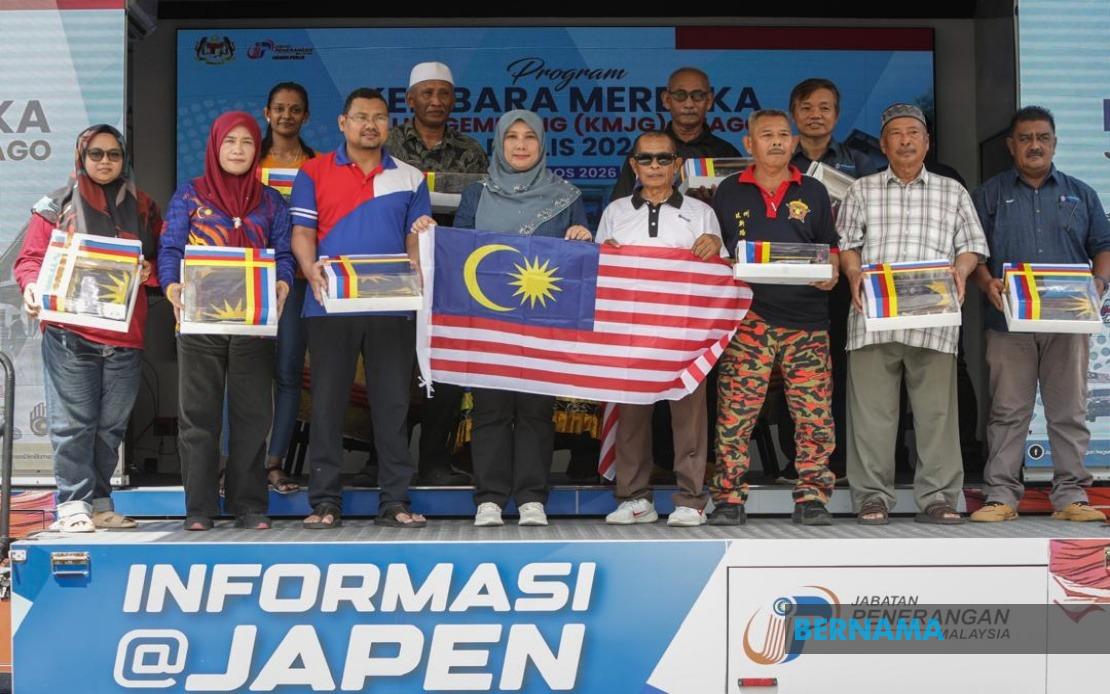
Perlis has launched a comprehensive drive to deepen patriotic sentiment among residents through the 1 House 1 Jalur Gemilang initiative, positioning itself as a pioneer state in promoting the national flag ahead of the 2026 National Day and Malaysia Day celebrations. The campaign represents a strategic effort by the state administration to translate symbolic gestures of nationalism into tangible community participation, moving beyond ceremonial flag displays to create lasting engagement with the public.
State Information director Aidatul Shima Che Hassan outlined the department's multi-pronged approach during the launch of the Kembara Merdeka Jalur Gemilang convoy programme in Kangar on August 1. The initiative harnesses the organisational structure of 45 MADANI Communities distributed across Perlis, tasking these grassroots networks with orchestrating various nation-building activities that reinforce civic consciousness and pride in Malaysia's multicultural identity.
The physical presence of the national flag has become central to the campaign's messaging. Aidatul Shima explicitly urged residents to treat flag maintenance with seriousness, recommending the replacement of tattered or damaged Jalur Gemilang with new ones. This directive acknowledges a practical reality often overlooked in patriotism drives: that neglected or poorly maintained national symbols can paradoxically undermine the sentiments they are meant to inspire. By framing flag care as an expression of genuine love for the nation, the campaign reframes what might otherwise be viewed as bureaucratic messaging into a personal moral commitment.
The campaign's scope extends beyond residential spaces to encompass commercial and institutional settings. The directive encourages flag displays on government buildings, private sector offices, and personal vehicles, creating a comprehensive visual ecosystem of national symbols throughout the state. This saturation approach aims to normalise the sight of the Jalur Gemilang as part of the everyday landscape, potentially strengthening subconscious associations between the flag and daily life.
Perlis Information Department itself has modelled the campaign by installing Jalur Gemilang displays throughout Bangunan Tun Haji Abdul Razak in Kangar, the state's administrative headquarters. This institutional leadership signals seriousness about the initiative and creates a visible reference point for what appropriate flag display looks like, particularly in government facilities.
The media infrastructure supporting the campaign reflects a diversified communication strategy. Beyond traditional awareness-raising through the state-run PERLISfm radio station, the department is leveraging social media platforms to reach younger demographics less engaged with conventional broadcast media. This multi-channel approach recognises that patriotic messaging must adapt to consumption habits across generational lines to maintain relevance and penetration.
Perlis achieved a significant symbolic milestone by becoming the first state to launch the Kembara Merdeka Jalur Gemilang convoy programme in 2026, a distinction that carries implications for state pride and inter-state competition. The convoy itself brought together multiple government agencies including the Federal Development Office, Broadcasting Department, Malaysian Communications and Multimedia Commission, postal services, and civil defence forces, alongside Royal Malaysia Police support. This assembly of institutional actors underscores the government's view of patriotic campaigns as whole-of-government endeavours requiring coordination across diverse bureaucratic silos.
The campaign gains additional national context from Prime Minister Datuk Seri Anwar Ibrahim's July 19 launch of the National Month and Fly the Jalur Gemilang 2026 initiative in Perak. That federal-level programme, themed around Malaysia MADANI and shared prosperity, provides overarching policy direction that Perlis has operationalised through the state-level convoy and community mobilisation efforts. The thematic emphasis on prosperity alongside patriotism reflects a governing philosophy that links national pride to tangible improvements in citizens' welfare, attempting to ground abstract nationalism in material concerns.
The scheduling of these patriotic drives two years before 2026 indicates long-term strategic thinking about community engagement. Rather than concentrating efforts in the months immediately preceding National Day, the extended timeline allows for deeper community integration and habit formation. Residents mobilised through 45 MADANI Communities have time to internalise the campaign messaging, establish routines of flag display, and participate in multiple nation-building activities throughout the lead-up period.
For Malaysian stakeholders, particularly in Perlis, the campaign represents an organised attempt to reconcile top-down patriotic messaging with grassroots community participation. Rather than imposing flag-flying as a bureaucratic requirement, the campaign frames it as a voluntary expression of love for the nation, appealing to intrinsic motivation rather than external coercion. This approach recognises that sustainable patriotism requires genuine buy-in rather than compliance.
The broader regional implications extend to how Southeast Asian governments balance national pride with inclusive citizenship in increasingly multicultural societies. Perlis's emphasis on harmony as central to national pride, implicit in the campaign's language, acknowledges Malaysia's foundational challenge of uniting diverse communities under shared symbols. The decision to mobilise local communities rather than merely broadcasting central messages reflects evolving understanding that patriotic campaigns function more effectively when residents themselves become agents of the initiative.

