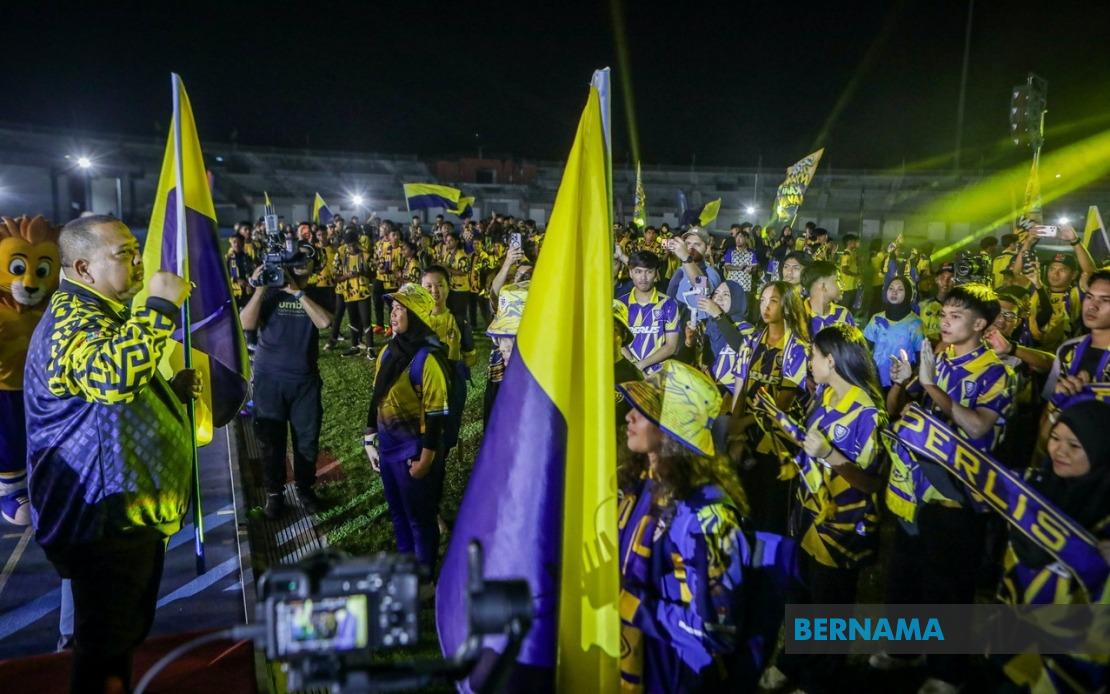
Perlis has delivered its best-ever showing at the Malaysia Games, capturing 17 gold medals at SUKMA 2026 in Selangor—a milestone that underscores the state's accelerating trajectory in athletic excellence. The achievement represents a watershed moment for the northern state, whose sports ecosystem has undergone significant transformation through systematic investment and coordinated development initiatives. Menteri Besar Abu Bakar Hamzah highlighted the accomplishment as validation of the state government's sustained commitment to nurturing competitive athletes and building institutional capacity within the sports sector.
The 42-medal haul—comprising 17 gold, seven silver, and 18 bronze medals—demonstrates that Perlis's sports development strategy is producing measurable returns across multiple disciplines. This diversified medal spread across different colours suggests the state has cultivated depth in talent rather than relying on dominance in isolated events, a sign of maturing athletic infrastructure. The performance places Perlis among the more successful smaller states in Malaysia's competitive sporting landscape, a distinction that carries considerable pride and prestige for a population of approximately 280,000.
Among the standout achievements was Perlis's weightlifting contingent securing the overall championship in their event category, a particularly impressive feat given weightlifting's demanding technical requirements and the need for specialised coaching and facilities. Equally noteworthy, Perlis athletes broke the games' record in shot put, signalling that state-level competitors are now operating at performance levels previously unseen within the SUKMA framework. Such record-breaking performances attract national attention and provide a platform for emerging athletes to gain wider recognition.
The Menteri Besar's announcement came during an Exco meeting in Kangar, reflecting the priority accorded to sports achievements within the state executive's deliberations. His public acknowledgment of the various stakeholders—athletes, coaches, sports associations, and the State Sports Council—underscores that contemporary athletic success is a collaborative enterprise rather than the product of isolated individual brilliance. This institutional approach has become the hallmark of states investing seriously in sports development across Southeast Asia.
Perlis's strategic focus extends beyond immediate medal acquisition to encompass comprehensive talent development frameworks. Abu Bakar articulated the state government's commitment to expanding high-performance training programmes, enhancing coaching standards, and integrating sports science into athletic preparation. Such multi-dimensional approaches require sustained funding and administrative coordination, demonstrating that the state views sports development as integral to broader human capital investment rather than ancillary expenditure.
Athletic welfare provisions represent another pillar of the state's development philosophy. The Menteri Besar's reference to ongoing discussions regarding athlete incentives signals recognition that retaining talented performers demands competitive financial packages and recognition mechanisms. Many Southeast Asian states have discovered that without structured incentive systems, emerging athletes often migrate to better-resourced programmes elsewhere, creating brain drain that undermines long-term development.
The Para SUKMA Selangor 2026 events will follow the main games, meaning the presentation ceremony for medallists from Perlis is still pending. This sequential scheduling allows organisers to maintain momentum within the broader SUKMA ecosystem while ensuring para-athletes receive equivalent recognition. The delay in presenting incentives may also allow state authorities to refine the quantum and structure of rewards based on comprehensive performance data across all competitions.
For Malaysian sports observers, Perlis's performance at SUKMA 2026 carries broader implications for state-level athletics and regional competitiveness. The northern state competes within an increasingly professional and well-funded sporting environment where consistency matters as much as occasional peaks. Maintaining this performance trajectory will require ongoing investment and the ability to transition medal-winning athletes into coaching and mentoring roles that perpetuate success across generations.
The SUKMA games themselves serve as crucial incubators for Malaysian talent, providing a domestic competition framework that feeds into national team selections and international representation. States that perform strongly at SUKMA typically generate disproportionate representation in national squads, creating a virtuous cycle where domestic success translates into international visibility and further attracts investment and talent.
Perlis's achievement also reflects broader democratisation of sporting excellence within Malaysia. Historically, a handful of larger, wealthier states dominated SUKMA medal tallies, but improving performances from smaller states suggests that strategic planning and targeted investment can overcome resource constraints. This trend benefits the national sporting ecosystem by distributing talent development across more regions and creating healthier competition dynamics.

