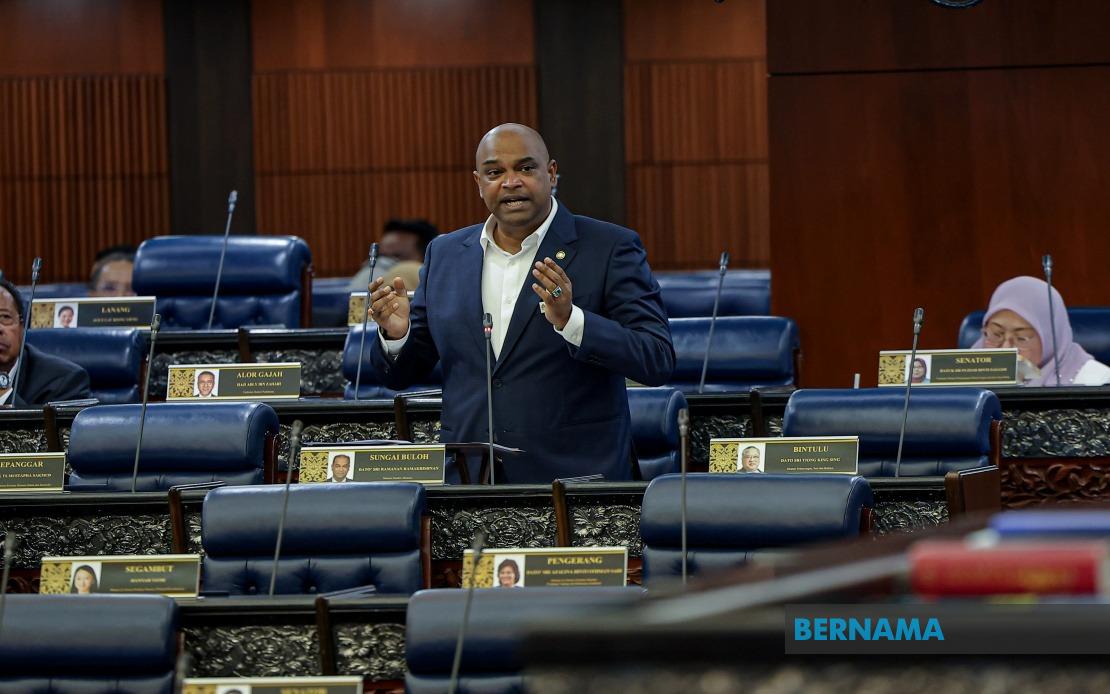
Malaysia's social security administrator has achieved a notable milestone in service efficiency, with the Social Security Organisation (PERKESO) recording compliance rates surpassing 96 per cent in claims and benefit payments throughout the previous financial year. The announcement, made in Parliament by Human Resources Minister Datuk Seri R. Ramanan, underscores the organisation's commitment to delivering timely assistance to contributors across the country. This performance metric becomes increasingly significant as PERKESO expands its role in protecting workers across various employment arrangements, from traditional employees to the self-employed and informal sector participants.
The enhanced performance reflects the introduction of more rigorous service standards introduced by PERKESO in the preceding year. The organisation has implemented what it terms a Customer Charter that sets clear, measurable benchmarks for processing different categories of claims under its three primary insurance schemes: LINDUNG Pekerja, which covers traditional employees; LINDUNG Kendiri, serving self-employed individuals; and LINDUNG Kasih, targeting informal workers. These standards apply only once contributors have submitted complete documentation, emphasizing the importance of thorough initial application preparation to avoid processing delays.
Processing timelines have been explicitly codified to provide contributors with certainty about when they can expect their benefits. For funeral-related claims and temporary disablement cases, PERKESO has committed to a two-day turnaround once documentation is complete. More complex claims involving permanent disability, invalidity pensions, survivor benefits, and dependant allowances require a longer but still manageable three-day processing window. These timeframes represent a significant improvement in service delivery, particularly for claimants who may be facing financial hardship following workplace injuries or worker deaths within their families.
The performance metrics vary across different schemes, with the newer LINDUNG Kerjaya programme achieving even more impressive results. For this scheme, which targets specific worker populations, PERKESO has maintained a 99.68 per cent compliance rate in meeting its Customer Charter obligations during 2025. This exceptional performance suggests that newer systems and processes, refined through operational learning, may be delivering superior outcomes compared to legacy arrangements. The differential performance across schemes provides valuable insight into which operational approaches yield the best results and may inform future system-wide improvements.
Digitalisation has emerged as a cornerstone of PERKESO's service enhancement strategy. The organisation has invested substantially in modernising its operational infrastructure, recognising that technology can dramatically accelerate claim processing while reducing human error. The LINDUNG Faedah PERKESO portal represents a key digital touchpoint, allowing contributors to submit claims and track their status online. This shift mirrors global best practices in social security administration, where digital channels have consistently proven more efficient than paper-based alternatives. For Malaysian contributors, many of whom now expect digital service delivery as standard, these improvements align with broader societal expectations about government service accessibility.
The 1Best system, fully implemented this year, represents a substantial upgrade to PERKESO's internal claims processing infrastructure. This system consolidates multiple back-office functions and enables more streamlined workflows among PERKESO's processing teams. By eliminating manual handoffs and redundant data entry, the system should reduce processing errors and accelerate claim approvals. The investment signals PERKESO's recognition that infrastructure modernisation is essential for maintaining service quality as claim volumes inevitably grow alongside Malaysia's working population and changing employment patterns.
Accessibility has been enhanced through the introduction of the PRIHATIN application, which provides contributors with simplified access to information about PERKESO's services, benefit eligibility criteria, and claim status. This self-service information tool reduces the need for direct enquiries to PERKESO's customer service teams while empowering contributors to make informed decisions about their claims. The application represents a shift toward contributor empowerment, a principle increasingly important in social protection systems where individuals bear greater responsibility for their own social security outcomes.
Beyond digital systems, PERKESO has established the Prihatin Squad, a dedicated support service comprising advisors and field workers who provide direct assistance to contributors and beneficiaries. This hybrid approach—combining digital self-service with personalised advisory support—acknowledges that not all contributors are equally comfortable with technology or able to navigate bureaucratic processes independently. The squad's presence in communities across Malaysia ensures that vulnerable populations, particularly informal workers and the elderly, receive appropriate guidance through claims procedures.
For workplace accident cases, PERKESO has strengthened coordination mechanisms through the INSPIRE System, which creates direct electronic links between hospitals and PERKESO's processing centres. This innovation recognises that accident-related claims require urgent processing, and hospital documentation often forms the foundational evidence for such claims. By eliminating intermediaries and enabling real-time information flow, INSPIRE System facilitates faster claim verification. Emergency cases can now be processed within 24 hours through simplified procedures, a dramatic acceleration that provides critical support during the most vulnerable periods following workplace injuries.
Fraud prevention represents an ongoing concern for social security administrators worldwide, and PERKESO has implemented a multi-layered verification approach combining technology and human judgement. While artificial intelligence conducts preliminary screening of claims to identify potentially suspicious patterns, trained human assessors conduct secondary verification before approvals are finalised. This approach balances the efficiency gains offered by machine learning with the contextual judgment and accountability that human review provides. The dual-verification system should enhance both fraud detection and fairness, preventing automated systems from generating false positives that might wrongly deny legitimate claims.
The performance achievements outlined by Minister Ramanan suggest that Malaysia's social security system is responding effectively to the challenges of modern claims administration. The combination of clear service standards, digital infrastructure investment, direct support services, and coordinated stakeholder engagement has produced measurable improvements in timeliness and reliability. For Malaysian workers—particularly those in vulnerable informal sector employment—these improvements translate into faster access to income protection when they need it most. As employment patterns continue to evolve and PERKESO's coverage expands to reach more non-traditional workers, the organisation's demonstrated capacity to scale and modernise its operations becomes increasingly valuable to the country's broader social protection architecture.

