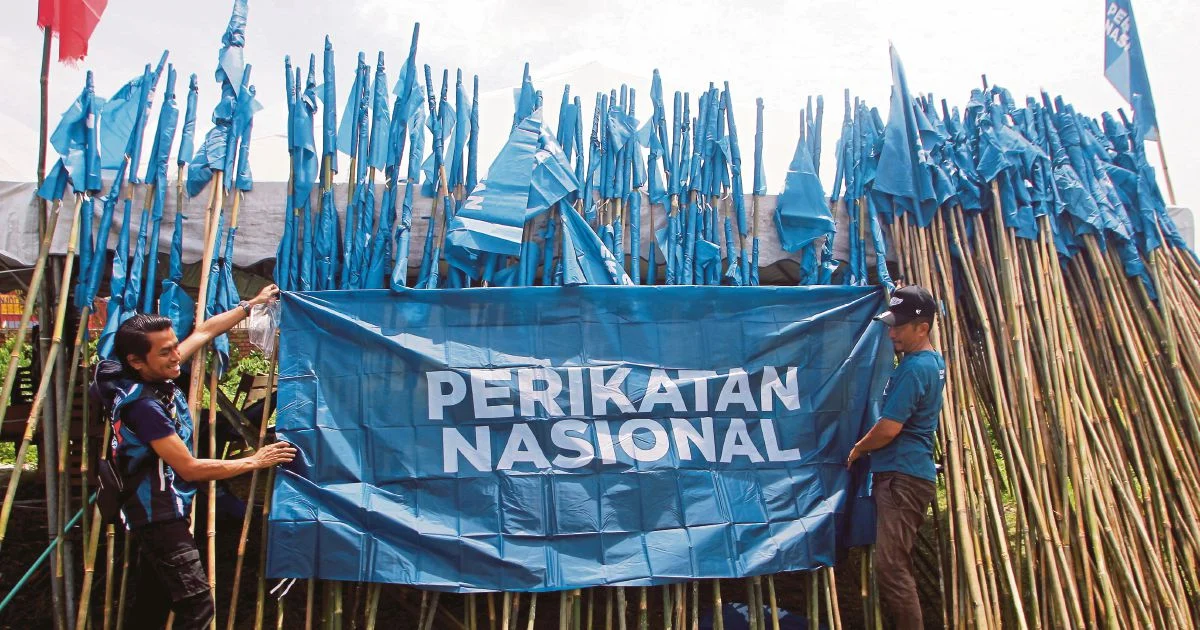
The leadership of Perikatan Nasional will gather on June 22 to confront a series of unresolved tensions that have simmered within the coalition, with disagreements over logo usage and candidate selection emerging as critical flashpoints that require urgent clarification and agreement among member parties.
These discussions represent a crucial juncture for the four-party coalition, which has experienced friction since its formation as a parliamentary alliance and subsequent transition toward becoming a more cohesive electoral vehicle. The logo dispute, in particular, reflects deeper questions about the coalition's identity and the extent to which member parties are willing to subordinate their individual brands to a unified front. Such branding issues have proven contentious in Malaysian politics, where party symbols carry significant emotional weight and voter recognition value that accumulated parties are reluctant to diminish.
Candidate endorsements constitute another complex terrain for coalition management. Decisions about which parties field candidates in specific constituencies and which candidates enjoy official coalition backing determine not only electoral resources but also the symbolic hierarchy within the alliance. Member parties naturally seek favourable seat allocations and support for their preferred candidates, creating inevitable competition and requiring delicate balancing to prevent any faction from feeling marginalised or disadvantaged in the electoral calculus.
For Malaysian political observers, the timing and scope of this gathering signal that Perikatan Nasional recognises the urgency of achieving internal coherence before formal election campaigns commence. Ambiguity over logo standards or candidate status could prove damaging during campaign periods, when clear messaging and unified presentation matter tremendously for voter communication and coalition brand recognition. The June 22 meeting essentially represents a deadline by which the coalition must resolve matters that earlier discussions apparently failed to clarify.
The coalition's composition brings particular complexity to these negotiations. Perikatan Nasional comprises political parties with distinct regional strongholds, ideological orientations, and organisational interests. Reaching consensus requires accommodating divergent preferences while maintaining sufficient cohesion that the alliance functions as a meaningful electoral force rather than fragmenting into competing factions. Previous coalition arrangements in Malaysian politics have sometimes struggled precisely when member parties prioritised internal advancement over collective electoral objectives.
From a Southeast Asian perspective, the Perikatan Nasional experience reflects broader regional patterns in coalition politics. Across Southeast Asia, political alliances frequently confront challenges in maintaining discipline and unity, particularly when component parties view coalition membership primarily as a tactical arrangement rather than a strategic commitment. The Malaysian coalition's difficulties thus exemplify common governance challenges affecting multi-party political arrangements throughout the region.
These discussions also carry implications for Malaysian electoral competitiveness. How successfully Perikatan Nasional resolves these outstanding matters will significantly influence its capacity to present itself as a credible alternative government offering. Voters generally prefer coalitions that appear unified and well-coordinated, viewing internal bickering as reflecting poor administrative capacity and organisational weakness. Therefore, the June 22 meeting's outcomes will likely affect voter perceptions of Perikatan Nasional's readiness for potential electoral victory and governmental responsibility.
The logo controversy deserves particular scrutiny because it touches fundamental questions about coalition identity. Whether the alliance adopts a unified symbol or permits member parties to retain distinct logos signals whether Perikatan Nasional is evolving toward genuine integration or remaining merely a loose alignment of parties pursuing individual interests. Voter messaging depends partly on such symbolic choices, as different approaches convey different implications about the coalition's substantive unity and strategic direction.
Candidate endorsement decisions similarly reflect internal power dynamics that extend beyond immediate electoral considerations. Which parties secure favourable constituencies, whether emerging leaders from specific parties gain coalition nomination and support, and how nominations distribute across ethnic and religious lines all carry long-term consequences for the coalition's structure and future leadership composition. These decisions effectively determine which parties gain prestige and which face limitations in electoral advancement, creating lasting effects on internal relationships and factional dynamics.
The June 22 gathering occurs within Malaysia's broader political context, where coalition stability remains vital for electoral competitiveness. Recent Malaysian electoral history demonstrates that fragmented coalitions frequently underperform compared to unified alliances, partly because voter preference concentrates around perceived governmental alternatives rather than diffuse multi-party arrangements. Perikatan Nasional's capacity to achieve clarity and agreement on these outstanding matters will therefore meaningfully impact its electoral prospects and competitive position relative to other political coalitions.
Successful resolution of these disputes would represent important progress toward Perikatan Nasional's maturation as a cohesive political force. Conversely, failure to achieve agreement might signal deeper tensions requiring more fundamental restructuring. The Supreme Council meeting thus constitutes not merely an administrative gathering but rather a critical test of whether this coalition possesses the internal consensus-building capacity necessary for effective collective political action.

