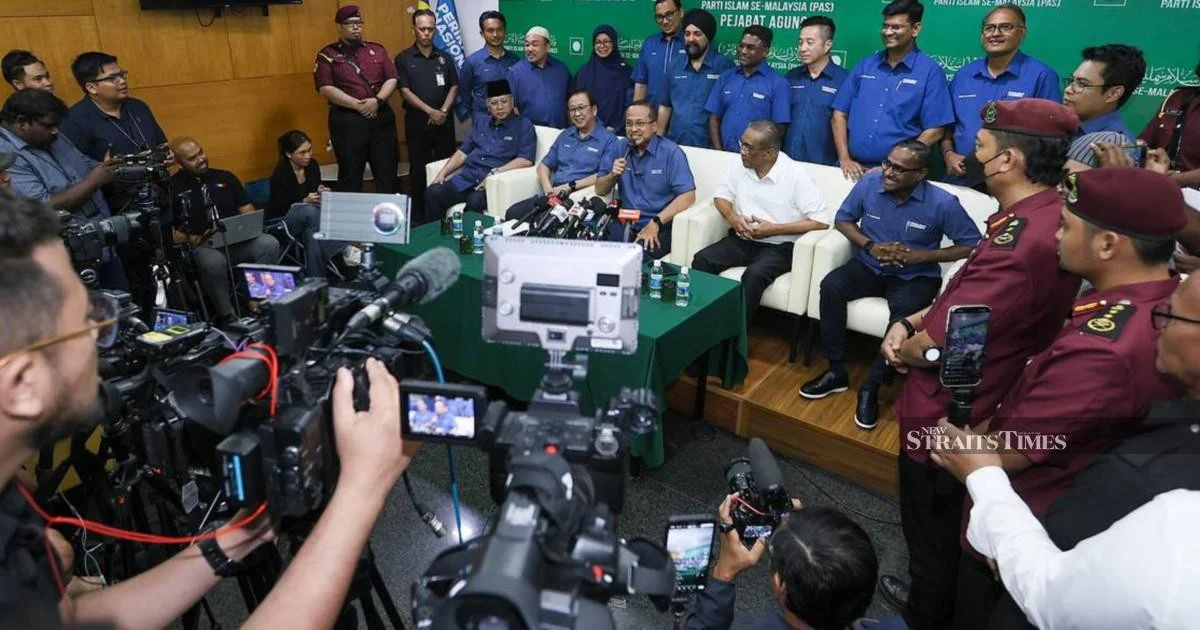
Perikatan Nasional is moving ahead with formalising its electoral blueprint for Johor, with the coalition's leadership convening a special session to hammer out final details on seat distribution among its component parties. This meeting represents a pivotal moment in the opposition bloc's campaign strategy as it prepares to contest what many observers regard as a politically significant contest in Malaysia's second-most populous state.
The seat allocation process serves as a foundational element for any coalition's electoral success. By determining which party contests which constituencies, PN aims to maximise the efficiency of its vote share and avoid wasteful internal competition that could hand victory to rival blocs. This approach has become standard practice for Malaysian political coalitions seeking to project unified strength across multiple regions and demographic groups.
For PN specifically, the Johor contest carries substantial weight in the broader political narrative. The state has historically served as a strategic testing ground for national political movements, given its size, economic importance, and economically diverse electorate spanning urban centres, suburbs, and rural constituencies. Control of Johor's state government would significantly enhance PN's negotiating position in any future federal coalition arrangements while simultaneously weakening the governing coalition's grip on the peninsula's southern corridor.
The deliberations leading up to today's session likely involved complex negotiations between PN's major constituent parties, each seeking to contest winnable seats while respecting the overall coalition's strategic priorities. Component parties must balance their ambitions for representation against the practical reality that losing a seat to a rival coalition due to internal fragmentation damages everyone's interests. These discussions typically hinge on historical performance data, demographic shifts, candidate strength, and the strategic value of particular constituencies.
Johor's political landscape has shifted considerably over recent electoral cycles. The state has experienced swings between different governing coalitions, reflecting changing voter sentiments and the rise of new political movements. PN itself is a relatively recent grouping, formed in response to broader realignments within Malaysia's opposition politics. Its performance in Johor would provide crucial indicators about whether the coalition can translate national opposition appeal into actual state-level electoral victories where ground-level party machinery and candidate quality prove decisive.
The timing of this finalisation is significant as well. Johor voters expect clarity about which parties will represent which constituencies well in advance of polling day. Delayed allocation decisions can hamper campaign preparation, limit candidate campaign time, and create uncertainty among party workers who need clear direction about where to concentrate their efforts. By moving decisively to resolve this matter, PN's leadership is signalling organisational competence and readiness to the electorate.
From a Southeast Asian perspective, Malaysia's state elections frequently foreshadow broader political trends. How PN performs in Johor will offer valuable insights into whether the coalition can effectively challenge incumbents across different contexts and whether its constituent parties can maintain cohesion under electoral pressure. Regional political observers closely track Malaysian state contests as indicators of opposition strength and coalition sustainability in Southeast Asia's largest democracy.
For ordinary Johor residents, the outcome of today's seat allocation meeting will ultimately determine which candidates and parties will be available to cast votes for. The arrangement reflects strategic choices made in boardrooms but translates directly into actual electoral choice at the ballot box. Voters in constituencies allocated to different PN component parties will face different candidate rosters, campaign approaches, and local party machinery supporting them.
The allocation also has implications for Malaysian political pluralism more broadly. A stronger and better-coordinated PN performance in Johor would demonstrate that opposition parties can move beyond purely reactive responses to governing coalition initiatives and proactively construct credible governmental alternatives. Conversely, internal coordination failures or weak seat allocation strategies can undermine even substantial voter discontent with incumbents.
Looking forward, today's decisions will shape campaign dynamics for weeks to come. Party activists need their marching orders. Potential candidates require confirmation of which seats their parties are targeting. Local community leaders and opinion-formers must understand which PN-affiliated representatives will be approaching them for support. These structural elements, determined in today's meeting, provide the framework within which electoral competition unfolds.
The finalisation of PN's Johor strategy also influences timing considerations for the state election itself. Government leadership must decide when to dissolve the state assembly and call for fresh elections. These decisions are frequently calibrated based on opposition preparedness assessments. An opposition coalition that appears fractious or poorly organised may be targeted for earlier elections, while one demonstrating unity and tactical sophistication might face deliberate postponement as incumbents seek more favourable conditions.
Ultimately, PN's seat allocation decisions represent a crucial checkpoint in the coalition's evolution as a serious electoral force capable of governing Malaysia's states. Johor's significance extends beyond its geographical boundaries to encompass broader questions about opposition viability, coalition sustainability, and the direction of Malaysian politics during a period of substantial political fluidity and realignment.

