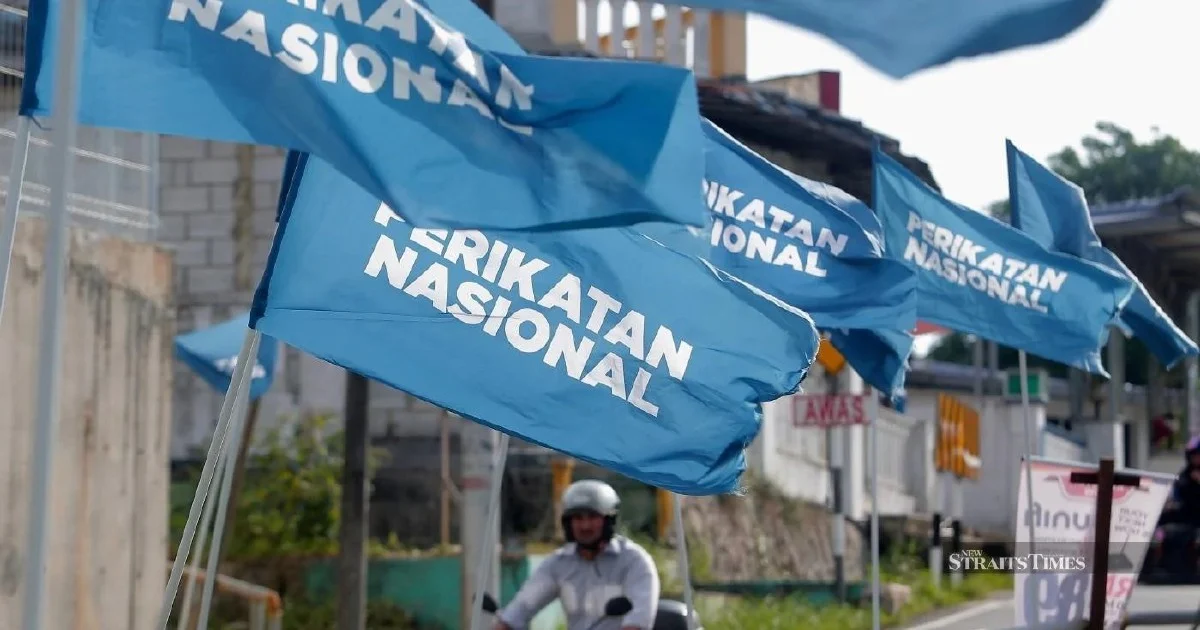
Perikatan Nasional has moved swiftly to extinguish speculation about its participation in the forthcoming Johor state election, with coalition deputy chairman P. Punithan publicly denouncing a widely-shared false statement that has circulated on social media platforms. The fabricated claim, which gained traction among online users in recent days, suggested the opposition alliance would withdraw from electoral competition in Johor, prompting the coalition to issue a categorical denial and clarify its intentions.
The emergence of such misinformation underscores the persistent challenge facing Malaysian politics of distinguishing credible information from deliberate disinformation campaigns during electoral periods. As political temperatures rise ahead of state elections, coordinated efforts to spread false narratives about party strategies have become increasingly common, with various coalitions falling victim to similar manipulation tactics. The fabricated statement attributed to PN leadership contradicts the coalition's stated commitment to contest in all state-level competitions where it holds organizational capacity.
Pesakatan Nasional's response reflects the broader need among political organizations to actively counter false narratives that could undermine public trust and distort electoral dynamics. By publicly addressing the viral claim through its deputy chairman, the coalition has sought to maintain clarity about its electoral strategy and prevent confusion among party members and supporters. Such rapid rebuttal mechanisms have become essential in contemporary Malaysian politics, where unverified claims can proliferate rapidly through messaging applications and social media networks before fact-checking efforts can take effect.
The Johor state election represents a significant political battleground within Malaysia's federal landscape, carrying implications for the broader balance of power between competing coalitions. Perikatan Nasional's participation in the contest would shape the competitive dynamics considerably, influencing how campaign resources are allocated and which constituencies emerge as genuine three-way contests. The false claims about potential abstention therefore held potential to mislead voters about likely electoral configurations in various districts.
Overseas observers and political analysts have noted that Southeast Asian democracies face escalating challenges from coordinated disinformation campaigns targeting electoral processes. Malaysia's experience with viral false statements about party strategies mirrors similar phenomena documented in neighbouring countries, suggesting a regional pattern of attempts to manipulate political outcomes through information warfare. The prevalence of such tactics has prompted election authorities and civil society organizations throughout the region to intensify media literacy initiatives.
Penikatan Nasional's organizational structure and coalition dynamics have undergone significant evolution in recent years, with questions periodically arising about unity among member parties and the coalition's electoral viability in different geographic contexts. The false claim about boycotting the Johor election may have derived from speculation about such internal coordination challenges, though the coalition's categorical rejection indicates confidence in its capacity to mount a competitive campaign. The denial also serves to reinforce cohesion among coalition constituents, signalling unified commitment to electoral participation.
The timing of such misinformation campaigns frequently coincides with heightened political activity and increased public attention to electoral matters, suggesting that actors behind false claims deliberately attempt to capitalize on elevated engagement and information consumption. In Malaysia's context, the period preceding state elections typically witnesses intensified political communication, providing fertile ground for both legitimate campaigning and coordinated disinformation efforts. Election observers have documented how false narratives gain particular traction during such phases when voters actively seek information about party strategies and electoral trajectories.
For Malaysian voters, particularly those in Johor, distinguishing authoritative statements directly issued by political parties from fabricated claims circulating on social media remains challenging. The rapid dissemination of misinformation through instant messaging platforms and social networks can reach substantial audiences before official party communications achieve comparable reach. This structural asymmetry in information distribution has prompted growing calls for digital literacy programs and mechanisms enabling rapid identification of verified party communications.
Peikatan Nasional's position as a coalition encompassing multiple political parties introduces additional complexity regarding coalition-level decision-making and the necessity for unified public messaging. Decisions about electoral participation in specific states involve coordination among constituent parties, each possessing their own organizational structures and strategic considerations. The coalition's clear rebuttal of abstention claims therefore implicitly confirms that member parties have aligned on participating in forthcoming Johor electoral competition, reflecting consensus within the alliance about competitive engagement.
The incident illustrates how Malaysian political discourse continues grappling with digital-era challenges, including the amplification of false information and the difficulty distinguishing legitimate communication channels from unauthorized messages falsely attributed to party leadership. Perikatan Nasional's response through its deputy chairman represents conventional approaches to counter-misinformation, though some analysts argue that political organizations must develop more sophisticated strategies for rapidly authenticating official statements and distinguishing them from fabricated alternatives in ways visible to ordinary social media users.

